

If you’re writing the word clutz or klutz and you’re not sure which spelling is right, you’re not alone. Many English learners see both forms and wonder if they have different meanings. The good news is simple. Klutz is the standard spelling in American English.
A klutz is a person who often moves in an awkward way or drops things and has small accidents. You might call yourself a klutz after spilling your coffee or knocking over a glass. The word is informal and is common in everyday US English.
The spelling clutz does appear in English. However, klutz is the form you should choose in normal American writing. It is also the spelling you’ll most often find in modern dictionaries. Once you learn this simple rule, the clutz or klutz question becomes much easier.
Simple Answer In One Look
Klutz is the standard spelling in American English. It means a clumsy person who often drops things or has small accidents. Clutz is a less common spelling and isn’t the best choice for standard writing.
What This Means In Simple English
Think about a person who walks into a room and bumps into the table. Then they drop their phone. A few minutes later, they spill some water. You might say that person is a klutz. The word usually describes someone who is physically clumsy. It doesn’t mean that the person is bad or unintelligent. It often describes a funny little mistake that happens because someone is awkward with movement.
For example, imagine your friend is carrying three cups. They trip over a shoe and almost drop all three cups. You might smile and say that your friend is such a klutz. The word can also be used for yourself. In fact, people often use it in a friendly or joking way when talking about their own mistakes. You might say that you’re a klutz because you keep dropping your keys. You might also use it after making a silly mistake at home.
Cambridge defines klutz as a mainly US informal noun for a person who moves awkwardly and often has accidents. The dictionary also gives the pronunciation as kluts. That gives us a simple picture. A klutz is usually someone who is clumsy. The word is about actions rather than a person’s overall intelligence or character. Someone can be smart and still be a klutz.
That point matters because English has many words for people who make mistakes. They don’t all mean the same thing. A klutz usually has trouble with physical actions. A person might drop a plate or trip over a chair. A person who makes poor choices may be described in a different way. So if you remember only one idea from this section remember this. Klutz describes clumsy behavior.
Why People Mix These Words
The main reason people mix clutz and klutz is simple. They sound the same when spoken. Both spellings can be read as kluts. That means you can hear the word many times without knowing how to spell it. This happens often in English. A word may have a sound that doesn’t clearly tell you which letters to write.
The word also has a spelling that may look unusual to English learners. The letters k and l appear together at the start. Then the word ends with tz. Because of that unusual spelling some people write clutz instead. The c feels natural because English has many words that begin with cl. For example we have words such as clever and clean. So a learner may naturally write clutz after hearing the word. However the standard spelling is klutz.
Another reason for the confusion is that English has many borrowed words. English has taken words from many languages over hundreds of years. Those words sometimes keep spelling patterns that look different from common English words.
Klutz is one of those words. It came into American English from Yiddish. The Yiddish form is commonly given as klots. Its earlier literal meaning was connected with a block or piece of wood.
That history helps explain why the spelling may feel unusual. There is also a useful learning trick here. When you hear the word klutz think of the k as part of the word. Don’t try to spell it based only on the sound. This is the same kind of spelling challenge you see with many English words. The sound alone doesn’t always give you the full spelling.
Clear Difference Explained Simply
The difference between clutz and klutz is mostly about spelling. Klutz is the standard spelling you should use in American English. Clutz is an alternative spelling that you may see. It is not the form you should normally choose in careful writing. The meaning stays the same when people use clutz as a spelling variant. The main issue is standard usage.
Think of it like this.
- Klutz is the preferred spelling.
- Clutz may appear as a variant.
- Both forms refer to a clumsy person when they are used with this meaning.
- Klutz is the safer choice for school work and normal American writing.
- The word is informal so it fits best in casual speech and friendly writing.
You can also remember the difference with a simple sentence. Klutz has a k. That short memory trick can save you from the most common spelling mistake. The word klutz is listed as a US informal noun by Cambridge. That is useful because it tells you both the meaning and the style. It is a normal English word in American speech but it isn’t formal language.
So you probably wouldn’t use it in a serious business report to describe a worker. You could use it in a conversation with a friend. For example you might say that you’re a klutz because you dropped your phone. That sounds natural. You might also say that your brother is a klutz because he keeps knocking things over. That also sounds natural.
Which Form Should You Use
Use klutz. That is the easiest rule to remember. If you are writing an email to a friend or making a casual social media post you can use klutz. If you are writing a school assignment that discusses informal English you can also use klutz when the context fits.
The word is informal. So always think about your audience before using it. If you’re talking about yourself the word can sound light and playful. For example you might say that you’re such a klutz after dropping your lunch. You’re not making a serious statement about yourself. You’re simply pointing out a funny mistake.
When you call another person a klutz you should think about your relationship with that person. Some people may take it as a joke. Others may feel that you’re calling them foolish.
The safest use is often self description. For example you can say that you’re a klutz because you often spill drinks. That sounds less harsh than calling someone else a klutz. The key spelling rule stays the same. Write klutz. Don’t choose clutz just because it seems easier to spell.
Easy Real Life Sentences You Can Use
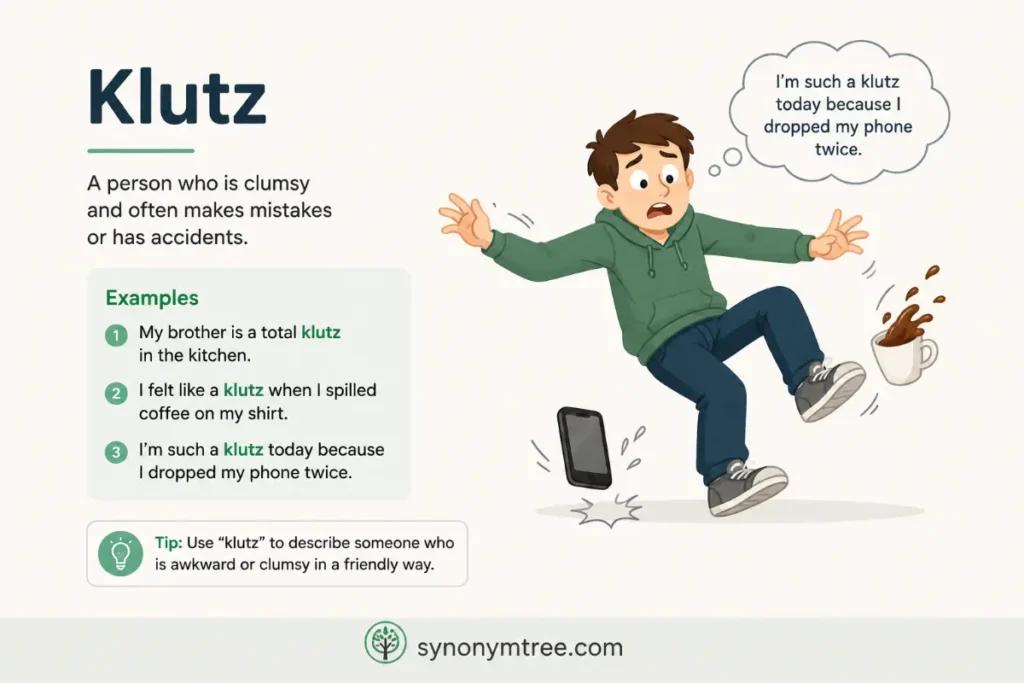
The word works best in casual situations. These examples show how Americans might use it in everyday conversation.
- I’m such a klutz today because I dropped my phone twice.
- My brother is a total klutz in the kitchen.
- I felt like a klutz when I spilled coffee on my shirt.
- She’s a little klutzy but she always laughs at herself.
- Don’t give him the glass because he’s a klutz.
- I can’t believe I broke another plate. I’m such a klutz.
- He tripped over his own shoes like a real klutz.
- I’m usually careful but I can be a klutz sometimes.
Notice something important in these examples. The word describes small accidents and awkward actions.
It does not automatically mean that someone is idiot.
That difference makes the word useful in friendly conversation. A person can be intelligent and successful while still being physically clumsy.
You can also use the related adjective klutzy.
Klutzy means clumsy or awkward. Cambridge lists klutzy as a mainly US informal adjective for someone who moves awkwardly and often has accidents.
For example you could say that you had a klutzy moment when you knocked over your drink.
The noun and adjective work in different ways.
A klutz is the person.
Klutzy describes the person’s behavior.
That simple pattern can help you build more natural sentences.
Where This Word Comes From
Klutz has an interesting history. The word came into English from Yiddish. Sources on Jewish languages connect the English word klutz with the Yiddish word klots. The older word had a literal meaning connected with a block of wood or a wooden beam.
That image makes the modern meaning easier to understand.Imagine a large piece of wood sitting in your way. It doesn’t move easily. It may get in the way and make movement awkward. Over time the word became connected with a person who was clumsy or awkward. English has many words that entered the language from Yiddish. Klutz is one example. Other familiar Yiddish loanwords include bagel and kvetch.
Research on Yiddish words in American English also shows how these words became part of everyday American language. Many Yiddish words entered American English through immigrant communities and later became familiar to a much wider audience. The history is useful but you don’t need to memorize it to use the word correctly. Just remember the modern rule. Klutz is the standard spelling. It means a clumsy person.
It is mainly informal American English. The spelling clutz may appear but klutz is the better choice. That is the core lesson. The next step is understanding how Americans use this word in real conversations and why it often sounds playful instead of harsh.
How This Word Is Understood In Culture And Stories
In American culture the word klutz often appears in funny situations. Think about a movie character who drops a tray of food. Then they try to clean it up and knock over a chair. The character may be smart and kind but very clumsy. That character is often called a klutz.
This kind of character appears in comedy because physical mistakes are easy for people to understand. Almost everyone has had an embarrassing moment. Maybe you walked into the wrong room. Maybe you dropped your keys. Maybe you spilled a drink while trying to look calm. The word gives that moment a name.
It can also make a mistake feel less serious. If you say that you’re a klutz after dropping your phone you may be laughing at yourself. You’re showing that the mistake doesn’t bother you too much. This is one reason the word can sound friendly. Still you should pay attention to tone. Calling a close friend a klutz may sound funny. Calling a stranger a klutz may sound rude. The situation matters.
The word also appears in stories and entertainment because clumsy characters are easy to recognize. Their mistakes can create humor without needing a long explanation. A character doesn’t need to say that they often make awkward physical mistakes. One funny accident can show it. That makes klutz a useful word for storytelling too.
Biblical And Mythological Meaning
Klutz does not have a special biblical meaning or a well known mythological meaning. The word comes from Yiddish rather than from the Bible or from a famous myth. Its history is connected with Yiddish language and American English.
You may sometimes see clumsy characters in religious stories or myths. However that does not give the word klutz a religious meaning. So keep the ideas separate. Klutz means a clumsy person. It is not a biblical term. It is not the name of a mythological figure. It does not carry a special religious symbol.
This distinction matters because online word explanations sometimes connect ordinary words with stories simply because a similar idea appears in a story. That does not mean the word itself came from that story. For this word the language history is much clearer. It came through Yiddish and became part of American English.
Symbolism Explained In Simple Words
The word klutz can have a simple symbolic feeling in stories even though it does not have an official symbol. A klutz can represent human imperfection. People make mistakes. People drop things. People trip. People get embarrassed. A clumsy character reminds us that nobody moves through life perfectly. That can make such characters easy to like.
What One Version Represents
The spelling klutz represents the standard modern form used in American English. It does not carry a special emotional meaning just because it uses a k. It is simply the spelling you should normally choose. The word itself can suggest physical awkwardness. It can also create a light and funny feeling when people use it kindly.
What The Other Version Represents
The spelling clutz does not represent a separate type of person. It does not have a different meaning from klutz when people use it as a spelling variant for the same word. The main difference is spelling preference. So don’t treat clutz and klutz as two separate vocabulary words. In normal use they point to the same idea. If you need the standard American English spelling choose klutz.
Related Words You Should Know
Learning related words can help you speak more naturally. These words overlap with klutz but they are not exact copies.
- Clumsy means awkward when moving or handling things. It is more common and more neutral than klutz.
- Klutzy means showing clumsy behavior. It is the adjective form related to klutz.
- Awkward can describe movement that does not look smooth or natural. It can also describe an uncomfortable social situation.
- Butterfingers describes someone who often drops things. It usually focuses on the hands.
- Careless describes someone who does not pay enough attention. A careless person may make mistakes but that does not mean they are physically clumsy.
- Bungler describes someone who does a task badly or makes a mess of it. It can sound stronger than klutz.
- Oaf can describe a large or awkward person. It can sound insulting so use it carefully.
- Blockhead describes a foolish person. It focuses more on thinking than physical clumsiness.
These differences are worth learning. If someone keeps dropping a cup you can call them clumsy. If they make a funny mistake and laugh about it you might call them a klutz.If they make a bad decision because they did not think carefully you probably need a different word. Good vocabulary is not only about knowing definitions. It is also about knowing the feeling behind each word.
How People Actually Use It In Daily English
Americans often use klutz in casual speech. The word can describe yourself. It can describe a friend. It can also describe a character in a story. The tone often depends on the situation.
Here are natural examples that show different uses.
- I’m such a klutz. I just dropped my keys again.
This sounds like friendly self criticism.
- My dad is a klutz when he tries to cook.
This can sound playful when said about a family member.
- I was a total klutz at the party.
This tells the listener that you had several awkward moments.
- He’s a klutz with tools.
This suggests that he often handles tools awkwardly.
- I felt like a klutz during my first skating lesson.
This focuses on the speaker’s own experience.
- She’s usually careful but she can be a klutz sometimes.
This shows that a person can be careful overall and still have clumsy moments.
- I’m too much of a klutz to carry all those boxes at once.
This sounds casual and natural.
- That character is a lovable klutz.
This use is common in storytelling. It shows that the character is clumsy but still likable.
- I had a klutzy moment and knocked over the lamp.
Here klutzy works as an adjective.
- He dropped the ball again. He can be such a klutz.
This focuses on repeated physical mistakes. The word is especially useful when you want to make a small mistake sound less serious. Instead of giving a long explanation you can simply say that you had a klutzy moment. That makes everyday conversation shorter and more natural.
Common Mistakes People Make
The first common mistake is spelling the word as clutz. The standard spelling is klutz. The second mistake is thinking that klutz means idiot.
It can sometimes carry an older or broader sense of foolishness. However modern American English mainly uses it for a clumsy person. The safest everyday meaning is someone who moves awkwardly or often drops things.
The third mistake is using klutz in a very formal situation. Klutz is informal. It works well in casual speech but may sound too relaxed in formal writing. The fourth mistake is thinking that a klutz must be unintelligent. That is not true. A person can be excellent at math and still drop their phone three times a day. A person can be a great doctor and still trip over a chair.
Clumsiness and intelligence are different things. The fifth mistake is using the word too strongly with someone you don’t know. Even a playful word can hurt if the listener feels mocked. If you are talking about yourself the word is usually easier to use. For example you can say that you’re a klutz because you spilled your drink.
That sounds like you’re laughing at your own mistake. The sixth mistake is assuming that klutz and klutzy are the same part of speech. Klutz is a noun for a person. Klutzy is an adjective that describes behavior or someone’s actions. You can say that he is a klutz. You can also say that he is klutzy. Both can work but the sentence structure changes.
Final Teacher Explanation
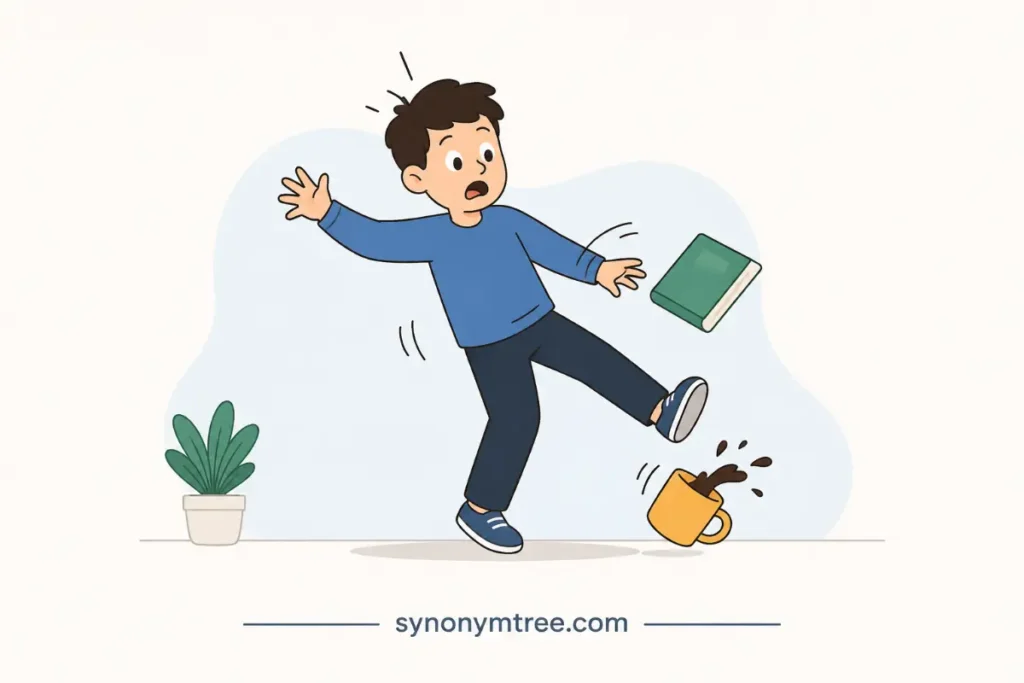
If I were explaining clutz or klutz to a student in class I would give you one simple rule. Spell it klutz. Then remember the meaning. A klutz is a person who is often physically clumsy. Maybe they drop things. Maybe they trip. Maybe they knock things over.
Maybe they spill their drink. The word is informal and common in American English. Cambridge lists it as a mainly US informal noun. You can use it when talking about yourself or someone you know. Just pay attention to your tone because calling another person a klutz can sound teasing. The spelling clutz may appear but klutz is the safer standard form.
The word also has an interesting history. It came into English from Yiddish and is linked with klots which referred to a block or piece of wood. That history gives us a nice picture. A block of wood is heavy and awkward to move. A klutz can seem awkward in the way they move. You don’t need to remember every detail of the history. You only need the modern English rule.
Use klutz when you mean a clumsy person. Use klutzy when you want to describe clumsy behavior. Use clumsy when you want a more common and neutral word. That is enough to use the word with confidence.
Final Answer Quick Recap
Klutz is the standard spelling in American English. It means a clumsy person who often drops things or has small accidents. Clutz is a less common spelling. For normal writing choose klutz. The word is informal and comes into English through Yiddish. The easiest memory trick is simple. Klutz has a k.
Conclusion
The clutz or klutz question has a simple answer once you know the standard form. Use klutz in American English when you mean a clumsy person.
You may see clutz from time to time. Still you should choose klutz for normal writing. The word is informal so it fits best in casual conversations and friendly situations.
It simply means they can be awkward or clumsy with physical actions. Everyone has an awkward moment now and then. That’s why klutz can sound funny and friendly when people use the word in a lighthearted and respectful way.
Frequently Asked Questions
Is Klutz Or Clutz Correct?
Klutz is the standard spelling in American English. Clutz is a less common variant.
What Does Klutz Mean In Simple Words?
A klutz is a clumsy person who often drops things or has small accidents.
How Do You Pronounce Klutz?
Klutz is pronounced like kluts. The final sound is similar to the sound in cuts.
Is Klutz An American Word?
Klutz is mainly used as an informal word in American English. It entered English from Yiddish.
Is Klutz A Bad Word?
No. Klutz is not normally a strong insult. Still it can sound rude if you use it to mock someone.
Can I Use Klutz In Formal Writing?
It is better to avoid klutz in formal writing because it is an informal word. Use clumsy if you need a more neutral choice.
What Is The Adjective Form Of Klutz?
The adjective is klutzy. It means clumsy or awkward.
Why Do People Spell It Clutz?
People often spell it clutz because the word sounds the same when spoken. However klutz is the standard spelling to choose in American English.
