

Many English learners search for arised or arose because both words seem possible. They look similar and come from the same verb. Still only one is correct in standard English. Once you learn the simple rule you will not make this mistake again.
You may see this question in school work job emails books or online discussions. Many people type arised because it feels natural. Still English follows a different pattern for this verb. That is why the confusion is so common.
This guide explains the difference in very simple English. You will learn which word is correct why people mix them up and how to use the right form with confidence.
Simple Answer About These Words
The correct word is arose.
Arised is not a standard English word and should not be used.
What Arised Or Arose Means In Simple English
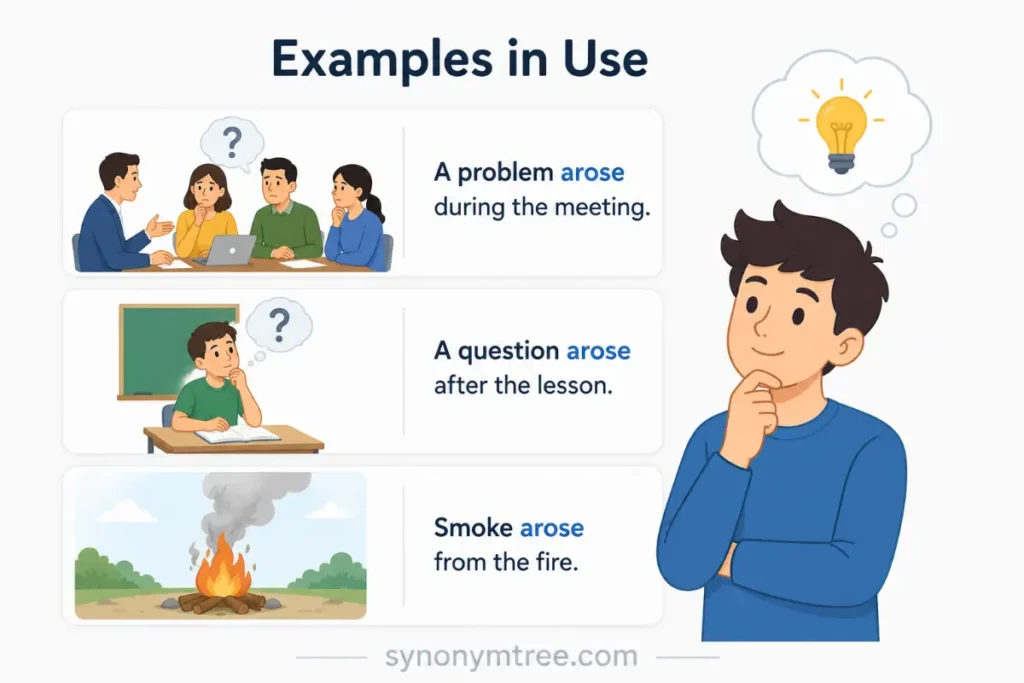
The verb arise means to happen appear or begin. It can also mean to stand up. When something happened in the past you use arose. Here are a few simple examples.
- A problem arose during the meeting.
- A question arose after the lesson.
- Smoke arose from the fire.
In each sentence something happened or appeared. Many learners think they should add ed to make the past form. That works for many English verbs. Still arise is different. It changes to arose instead of adding ed.
Think of it this way.
Today something may arise.
Yesterday it arose.
That simple pattern is easy to remember.
Why People Mix These Words
Many English verbs become past tense by adding ed.
For example.
- Walk becomes walked.
- Open becomes opened.
- Clean becomes cleaned.
Because of this pattern many learners naturally write arised. The problem is that arise does not follow that rule. English has a small group of verbs that change their spelling in the past tense.
For example.
- Begin becomes began.
- Drive becomes drove.
- Sing becomes sang.
- Arise becomes arose.
That is why arised looks possible but is still incorrect. Another reason people get confused is spell check. Some writing tools may not clearly explain why the word is wrong. People also hear the word more often than they read it. That makes the spelling harder to remember.
Clear Difference Explained Simply About These Words
Here is the easiest way to compare the two words.
- Arise is the present form.
- Arose is the correct past form.
- Arised is not accepted in standard English.
You can also remember this simple timeline.
- Today a problem may arise.
- Yesterday a problem arose.
- Tomorrow another problem may arise.
Never replace arose with arised.
If you remember one sentence remember this one.
Problems arose yesterday.
Which Form Should You Use About Arised Or Arose
Use arise when you are talking about the present or the future.
Examples.
- Questions arise every day.
- New ideas may arise soon.
Use arose when talking about the past.
Examples.
- A mistake arose during the test.
- A new challenge arose at work.
Do not use arised in formal writing school work business emails or everyday English.
If you ever stop and wonder which word is right ask yourself this simple question.
Am I talking about the past.
If the answer is yes choose arose.
Easy Real Life Sentences You Can Use About These Words
These examples show the correct way to use arose.
- A problem arose after lunch.
- A question arose during class.
- An idea arose while I was walking.
- Trouble arose before the game started.
- A disagreement arose between the friends.
- A chance arose to visit New York.
- A new plan arose from our meeting.
- Hope arose after the good news.
Notice that every sentence talks about something that happened in the past. You would not replace arose with arised in any of these examples.
Where Arised Or Arose Comes From Simple History
The verb arise has been part of English for hundreds of years.
It comes from very old English words that meant to get up or come into being.
Over time English kept the past form arose instead of creating arised.
Many common English verbs still follow these older patterns.
For example.
- Rise became rose.
- Write became wrote.
- Ride became rode.
- Arise became arose.
These words may seem unusual at first. After reading and hearing them often they become natural. English keeps many old verb forms because people have used them for generations. That is why arose remains the correct choice today.
As you continue learning English you will notice that some verbs follow regular patterns while others keep older forms. Knowing the difference helps you write more clearly and speak with confidence. In the next section you will see how arose appears in daily life stories common mistakes and practical examples that make this lesson even easier to remember.
How Arised Or Arose Is Understood In Culture And Stories
People often hear the word arose in books movies speeches and news stories. It sounds natural because it has been part of English for a very long time. Writers use arose when they describe problems hopes questions or new chances that appeared. For example a story may say that a great challenge arose before the hero reached the end of the journey. A news report may say that a concern arose after a meeting.
You will almost never see arised in published books newspapers or trusted websites. That is because it is not a standard English word. When you read more English you will notice that arose appears again and again. Seeing it in real sentences makes it much easier to remember.
Biblical And Mythological Meaning Of These Words
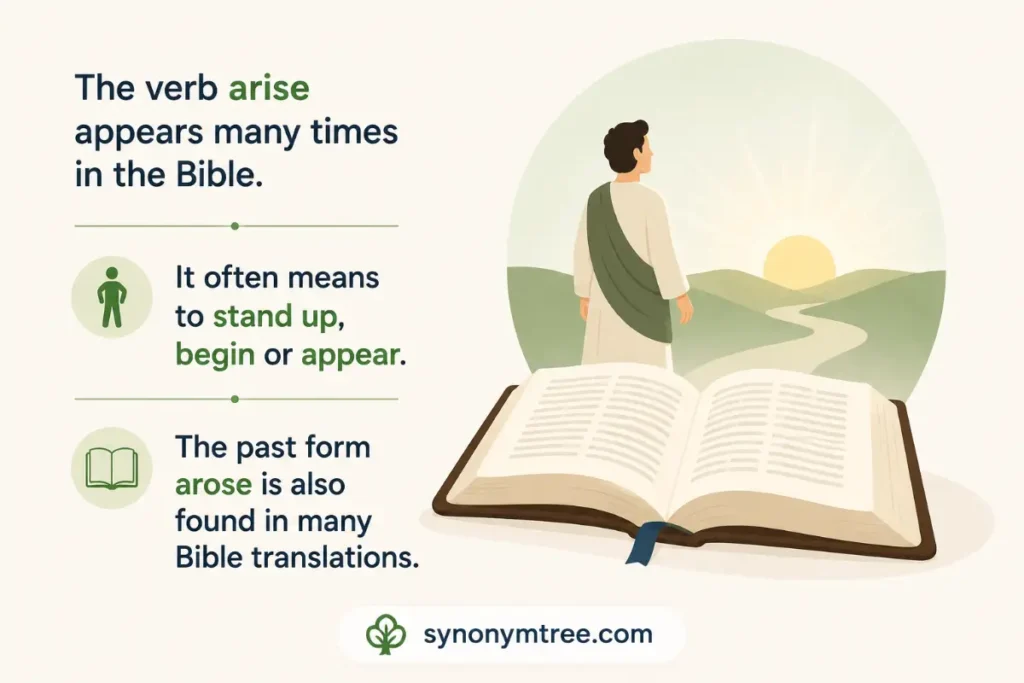
The verb arise appears many times in the Bible. It often means to stand up begin or appear. The past form arose is also found in many Bible translations. For example someone arose to speak travel or help another person. It simply shows that the action happened in the past. The word arised does not appear in standard Bible translations because it is not accepted as a correct English form. In myths and old stories heroes often arose after facing hard times. The word gives the idea of moving forward or beginning something important.
Symbolism Explained In Simple Words About These Words
What Arised Or Arose Represents Through Arised
Arised does not have a symbolic meaning because it is not a standard English word.
People sometimes write it by mistake because they think every past tense ends with ed. It reminds us that English has some verbs that follow older patterns.
What Arised Or Arose Represents Through Arose
Arose often represents a beginning.
A new hope arose after the storm.
A problem arose during the trip.
A question arose in class.
The word can describe something good or something difficult. In both cases it tells us that something appeared or started.
That simple idea makes arose easy to understand.
Related Words You Should Know About These Words
Arise
This is the present form. It means to happen appear or stand up.
Arisen
This is the past participle. It is used with helping verbs.
Example.
A problem has arisen.
Rise
Rise means to move upward or stand up. It is closely related to arise.
Rose
Rose is the past form of rise.
Example.
The sun rose early.
Begin
Begin means to start. It is often close in meaning to arise.
Appear
Appear means to become visible or come into view.
Happen
Happen means something takes place.
Develop
Develop means something grows or becomes stronger over time.
How People Actually Use Arised Or Arose In Daily English
Here are some everyday examples.
- A question arose during the meeting.
- A problem arose after we left home.
- A new chance arose at work.
- Trouble arose because of bad weather.
- An idea arose while I was reading.
- A misunderstanding arose between the friends.
- Hope arose after the doctor shared good news.
- A need arose for more volunteers.
- A discussion arose in class today.
- A smile arose on her face after hearing the surprise.
These examples show the natural way English speakers use arose.
Common Mistakes People Make With These Words
Many learners write arised because they believe every past tense needs ed.
Wrong.
A problem arised yesterday.
Correct.
A problem arose yesterday.
Another mistake is using arisen instead of arose.
Wrong.
A question arisen during class.
Correct.
A question arose during class.
Use arisen only with a helping verb.
Correct examples.
A question has arisen.
Several problems have arisen.
One easy rule can save you from mistakes.
If you need the simple past tense choose arose.
If you use has have or had choose arisen.
Never choose arised.
Final Teacher Explanation About These Words
Think about this lesson like learning the name of an old friend.
English has many verbs that follow regular patterns.
Still a small group follows older patterns.
Arise is one of those verbs.
You do not say arised.
You say arose.
The same pattern appears in other common verbs.
Rise becomes rose.
Drive becomes drove.
Write becomes wrote.
Arise becomes arose.
Do not worry if this felt strange at first.
Every English learner makes this mistake at least once.
The more you read and practice the easier it becomes.
Soon your brain will choose arose without stopping to think.
Final Answer About Arised Or Arose
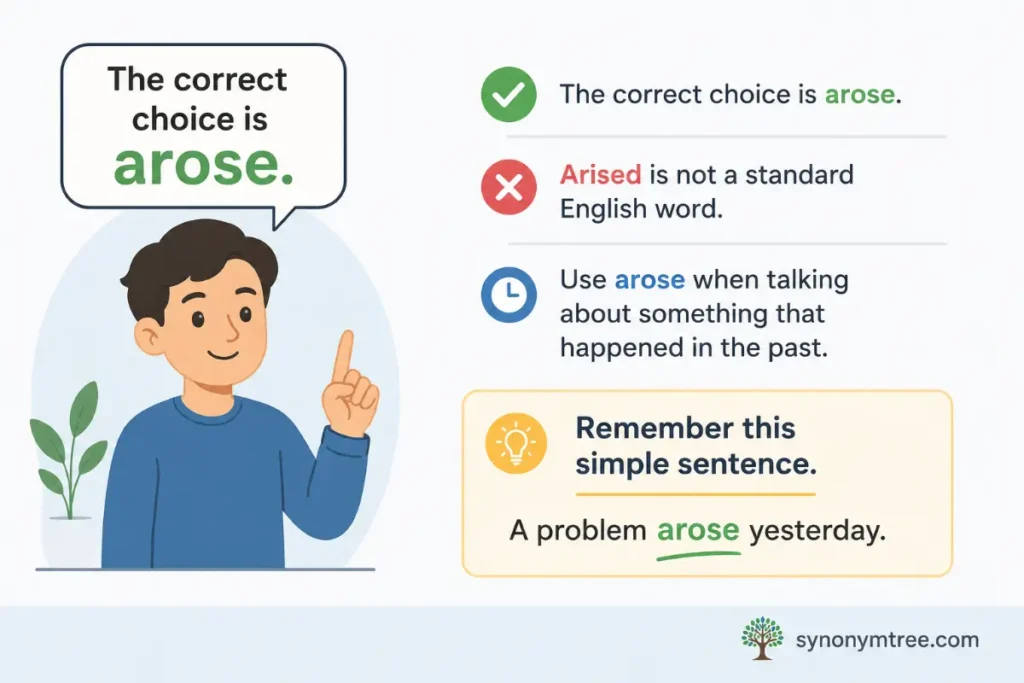
The correct choice is arose.
Arised is not a standard English word.
Use arose when talking about something that happened in the past.
Remember this simple sentence.
A problem arose yesterday.
Conclusion
The confusion between arised or arose is very common because many English verbs added in the past tense. Still arise follows an older pattern. That is why the correct past form is arose.
Keep one simple memory trick with you. Today problems arise. Yesterday problems arose. Tomorrow new questions may arise again. That small pattern is easy to remember and will help you write better English every day.
As you read books listen to conversations and practice writing you will see arose again and again. After enough practice it will feel natural and you will never need to guess.
Frequently Asked Questions About Arised Or Arose
What does arose mean in simple words?
Arose means happened appeared or began in the past.
Is arised or arose correct?
Arose is correct. Arised is not a standard English word.
Why do people say arised?
Many people think every past tense ends with ed. That is why they make this mistake.
When should I use arose?
Use arose when talking about something that happened in the past.
Can I use arised in formal writing?
No. Use arose in school work business writing and everyday English.
What is the present form of arose?
The present form is arise.
What is the past participle of arise?
The past participle is arisen.
How can I remember the difference between these words?
Remember this simple pattern. Today things arise. Yesterday they arose. They have arisen before.
