
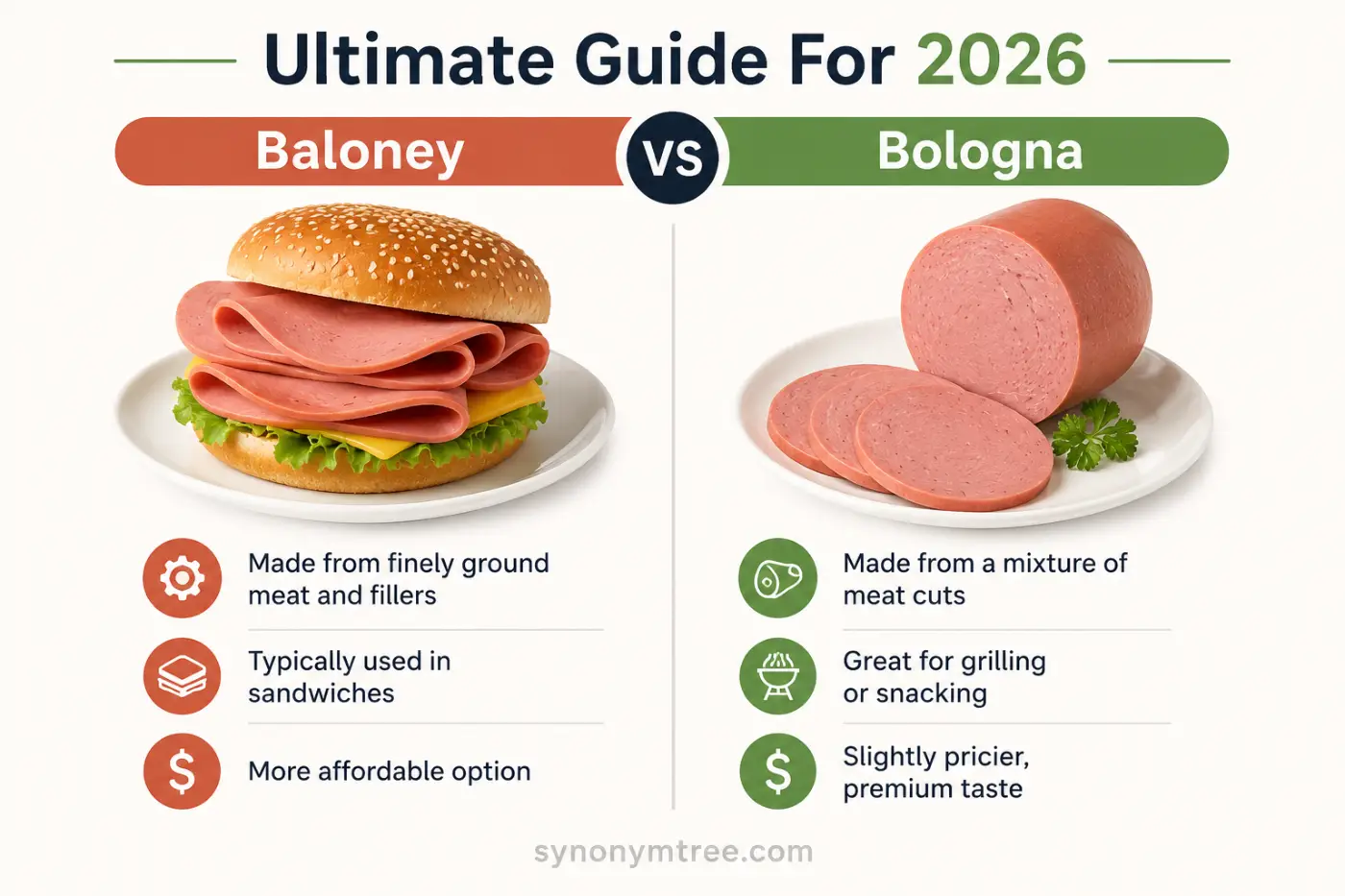
Have you ever looked at a package of lunch meat and wondered about baloney vs bologna? The words sound almost the same but they do not always mean the same thing. This small spelling difference confuses many English learners and even native speakers.
The good news is that this pair is much easier than it looks. Once you know why these words exist and how people use them you will not have to guess again. You will also understand why one spelling often appears in stores while the other appears in everyday conversations.
This guide explains baloney vs bologna in simple English. You will learn the meaning of each word see the difference between them and read easy examples that you can use in real life.
Simple Answer In One Look
Bologna is the correct name for a type of sausage or lunch meat. Baloney is a common spelling used for the same food in everyday English. It also means something that is silly false or not true.
What Baloney Vs Bologna Means In Simple English
Many people think these words have different meanings all the time. They do not.
When people talk about the lunch meat they usually mean the same food.
The official spelling is bologna.
Still many people say the word exactly like baloney. Because of that some writers also spell it as baloney in informal writing.
Now there is another meaning that makes this pair more interesting.
People often use baloney to describe something they do not believe.
For example someone may hear a strange story and reply.
That is baloney.
In this sentence the speaker does not mean food.
The speaker means the story sounds false or silly.
This second meaning belongs only to baloney.
You would not normally use bologna with this meaning.
Think of it this way.
Bologna usually points to food.
Baloney can point to food or to an idea that sounds untrue.
That simple rule helps most people remember the difference.
Why People Mix Baloney Vs Bologna
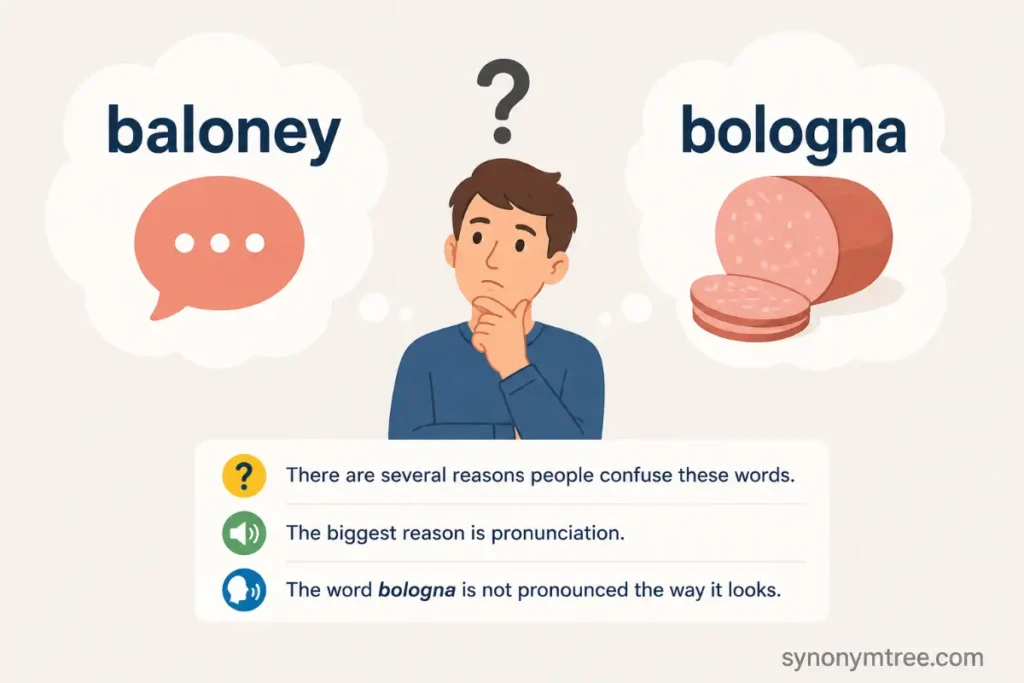
There are several reasons people confuse these words.
The biggest reason is pronunciation.
The word bologna is not pronounced the way it looks.
Most people say it like baloney.
This surprises many English learners.
They expect each letter to make its usual sound.
English does not always work that way.
Another reason is that people grow up hearing the spoken word before they see it written.
A child hears someone ask for a baloney sandwich.
Later the child sees the package in the grocery store.
The package says bologna.
Now the child wonders why the spelling changed.
That question follows many people into adulthood.
Another reason is that both spellings appear online.
Recipes blog posts social media comments and conversations often use baloney because it matches the way people say the word.
Food labels and formal names usually use bologna.
Here are a few situations where confusion happens.
- A student writes baloney in a school report about food.
- A shopper searches for baloney online but sees packages labeled bologna.
- A reader sees the phrase That is baloney and thinks someone is talking about lunch meat.
The meaning becomes clear only after reading the whole sentence.
That is why context matters.
Always ask yourself one simple question.
Is the sentence talking about food or about an idea someone does not believe?
The answer usually tells you which spelling fits best.
Clear Difference Explained Simply About Baloney Vs Bologna
The easiest way to remember these words is to compare their jobs.
- Bologna is the standard spelling for the lunch meat.
- Baloney is an informal spelling for the same food.
- Baloney also means nonsense or something that is not true.
- Bologna almost never means nonsense.
- Grocery stores usually write bologna on packages.
- Casual conversations often use baloney because that matches the pronunciation.
Here is a simple memory trick.
Picture yourself making a sandwich.
The package in your hand says bologna.
Now picture someone telling an unbelievable story.
You smile and say.
That is baloney.
One picture belongs in the kitchen.
The other belongs in a conversation.
Those pictures make the difference much easier to remember.
Which Form Should You Use In Baloney Vs Bologna
The correct choice depends on your sentence.
Use bologna when you write about the lunch meat in formal writing.
This spelling appears on food packages recipes menus and many dictionaries.
Use baloney when you write casual dialogue or when you mean nonsense.
For example.
That excuse is baloney.
Nobody will think you are talking about food.
If you are writing a school paper about food bologna is usually the better choice.
If you are writing a story with natural conversation baloney may sound more relaxed.
Reading the whole sentence helps you choose the right word.
The surrounding words give useful clues.
Words like sandwich meat deli lunch recipe and sausage usually point to bologna.
Words like excuse story claim idea or rumor often point to baloney.
When you match the word to the meaning your writing becomes much clearer.
Easy Real Life Sentences You Can Use With Baloney Vs Bologna
Reading examples helps you remember new words much faster.
Here are some simple sentences.
- I made a bologna sandwich for lunch.
- The grocery store had fresh bologna at the deli counter.
- My grandfather likes fried bologna for breakfast.
- That story sounds like baloney.
- I think that excuse is complete baloney.
- She laughed and said the rumor was baloney.
- We bought sliced bologna for our picnic.
- Do not believe everything you hear because some of it is baloney.
Notice how the meaning changes.
When the sentence talks about eating the word is usually bologna.
When the sentence talks about an unbelievable idea the word is baloney.
That small difference makes a big change in meaning.
Where Baloney Vs Bologna Comes From
The history of these words is interesting and easy to understand.
The word bologna comes from the Italian city of Bologna.
Many years ago people there became known for making a famous type of sausage.
As the food became popular in other countries the name stayed the same.
Over time English speakers began saying the word in a simpler way.
Instead of trying to match the Italian pronunciation many people said it like baloney.
After many years the spelling baloney started appearing in informal English because it matched the way people spoke.
Later the word baloney also gained a new meaning.
People began using it to describe ideas that sounded foolish false or hard to believe.
Nobody knows the exact moment this change happened but it became a common part of American English.
Today both spellings are familiar but they do different jobs depending on the sentence.
Understanding this history makes the spelling much easier to remember.
You can think of it like this.
Bologna began as the name of a place and became the name of a food.
Baloney grew from everyday pronunciation and later became another way to say nonsense.
As you can see one small spelling change created two useful meanings. In the next section you will learn how baloney vs bologna appears in culture everyday conversations common expressions and frequently asked questions. You will also learn simple memory tricks that will help you remember the correct word every time.
How Baloney Vs Bologna Is Understood In Culture And Stories
The words baloney vs bologna are more than simple vocabulary words. They also show how language changes as people speak over many years. When people hear bologna they often think about family lunches school sandwiches picnics and neighborhood grocery stores. It reminds many people of simple meals shared with friends and family.
The word baloney brings another picture to mind.
In many American movies books and TV shows someone says That is baloney after hearing a story that sounds impossible.
The speaker is not talking about food.
The speaker means I do not believe that.
This meaning has become part of everyday American English.
Children also hear adults use this word in funny conversations.
Someone might say.
You caught a fish bigger than a car.
That is baloney.
The word makes the conversation playful instead of rude.
That is one reason it has stayed popular for many years.
Biblical And Mythological Meaning Of Baloney Vs Bologna
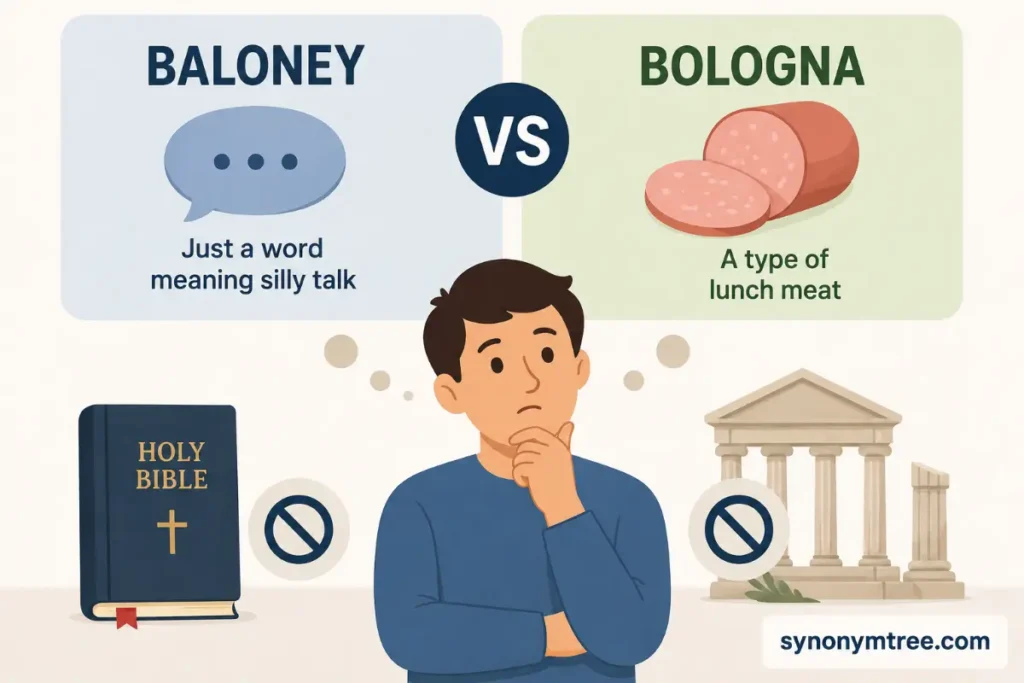
There is no special biblical meaning for baloney vs bologna.
Neither word appears as an important symbol in the Bible.
The same is true for Greek Roman or other famous myths.
Still the idea behind baloney can remind people to think carefully before believing every story they hear.
Many religious and cultural stories teach people to look for truth and to avoid false claims.
That idea matches the everyday meaning of baloney as something that is not true.
This is only a simple comparison.
It is not an official religious meaning.
Symbolism Explained In Simple Words About Baloney Vs Bologna
What Baloney Vs Bologna Represents As Bologna
Bologna often represents simple comfort food.
It reminds people of family meals packed lunches and childhood memories.
For some families it brings back memories of eating sandwiches after school or during summer picnics.
Because of this the word often feels warm familiar and friendly.
What Baloney Vs Bologna Represents As Baloney
Baloney usually represents doubt.
People use it when they think a statement sounds silly false or exaggerated.
It also shows confidence.
Instead of quietly believing everything someone hears the person questions the story.
That makes the word useful in everyday conversations.
One spelling reminds people of food.
The other often reminds people to think before believing something.
Related Words You Should Know About Baloney Vs Bologna
Learning related words helps you understand these meanings even better.
- Sausage.
A food made from seasoned meat placed inside a casing.
- Deli.
A store or section of a grocery store that sells prepared meats and cheeses.
- Sandwich.
A meal made with bread and fillings like bologna.
- Lunch Meat.
Thin slices of meat used for sandwiches.
- Nonsense.
Ideas or words that do not make sense. This is close to one meaning of baloney.
- Excuse.
A reason someone gives to explain something. If people do not believe it they may call it baloney.
- Rumor.
A story that spreads from person to person without clear proof.
- Claim.
Something a person says is true. Others may call it baloney if they do not believe it.
These related words help you understand the different situations where each spelling belongs.
How People Actually Use Baloney Vs Bologna In Daily English
Most people use these words in simple everyday conversations.
Here are some real examples.
- I packed a bologna sandwich for work.
- My kids like bologna with cheese.
- The deli sliced fresh bologna for us.
- That excuse is baloney.
- Everything he said sounded like baloney.
- Do not give me that baloney.
- She laughed because the story was pure baloney.
- Grandma still buys bologna every week.
- I think that rumor is baloney.
- We made sandwiches with bologna for the picnic.
Notice something simple.
Food usually points to bologna.
Ideas conversations excuses and unbelievable stories usually point to baloney.
The sentence tells you the correct answer.
Common Mistakes People Make With Baloney Vs Bologna
People often make the same mistakes with these words.
Here are the most common ones.
- Using bologna when they mean nonsense.
Correct sentence.
That excuse is baloney.
- Writing baloney in a formal recipe.
Correct sentence.
The recipe uses sliced bologna.
- Thinking only one spelling is correct.
Both spellings are correct.
They simply have different uses.
- Forgetting that pronunciation and spelling are different.
People say bologna like baloney.
That is why this pair confuses so many learners.
- Guessing without reading the whole sentence.
Always read the complete sentence first.
The surrounding words usually show the correct spelling.
A simple trick can help.
If you can eat it choose bologna.
If you cannot believe it choose baloney.
That little memory trick is easy to remember.
Final Teacher Explanation About Baloney Vs Bologna
Imagine we are finishing today’s English lesson together.
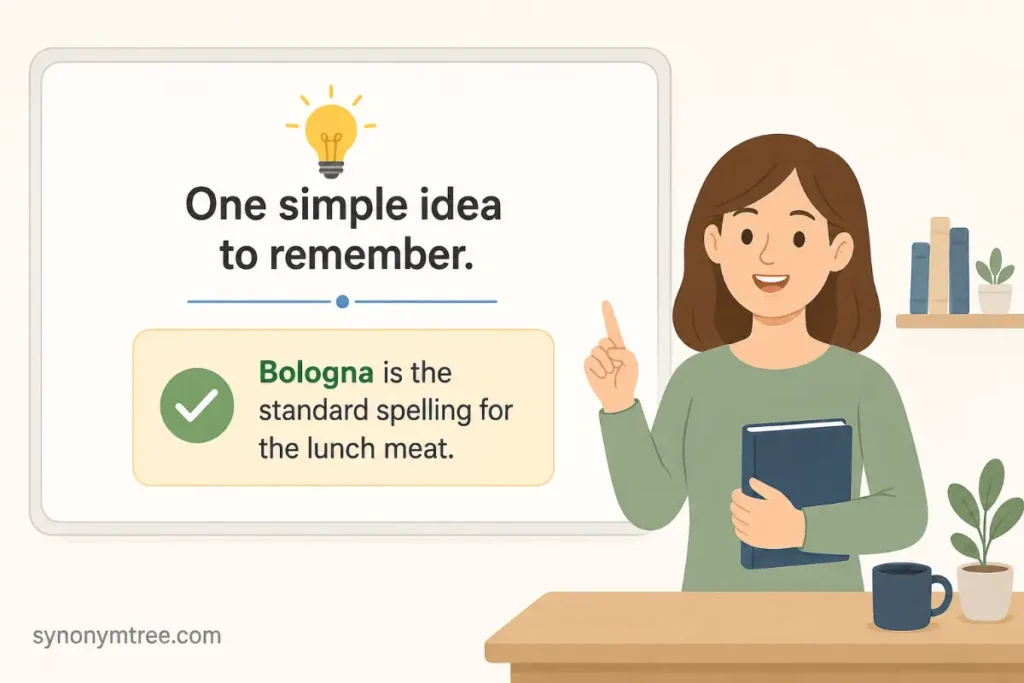
You only need to remember one simple idea.
Bologna is the standard spelling for the lunch meat.
Baloney can also refer to the same food in casual writing because that matches the pronunciation.
Still baloney has another important meaning.
It also means something that is false silly or hard to believe.
When you see these words ask one question.
Is this sentence talking about food or about an unbelievable idea?
That single question will help you choose the correct spelling almost every time.
English has many words that look confusing at first.
Once you understand the meaning behind them they become much easier to remember.
Final Answer About Baloney Vs Bologna
Use bologna when writing about the lunch meat especially in formal writing. Use baloney when you mean nonsense or when using the informal spelling for the food. Think food for bologna and think nonsense for baloney. That simple rule is easy to remember.
Conclusion
The difference between baloney vs bologna becomes simple once you know how each word is used. Even though both words sound alike they do not always carry the same meaning. One usually belongs in the kitchen while the other often belongs in everyday conversation.
The best way to remember them is through context. If the sentence talks about sandwiches lunch meat or a deli choose bologna. If someone is calling an idea false or silly choose baloney. After a little practice you will recognize the correct spelling without stopping to think. Keep reading real English every day and pay attention to the words around these spellings. The more examples you see the easier they become. Small lessons like this build strong writing skills over time.
Frequently Asked Questions About Baloney Vs Bologna
What does baloney mean in simple words?
Baloney can mean the lunch meat in informal writing or something that is false or silly.
What does bologna mean in simple words?
Bologna is a type of cooked sausage that people often use in sandwiches.
Is baloney or bologna correct?
Both are correct. Bologna is the standard spelling for the food. Baloney is also used for the food in casual writing and for nonsense.
Why do people confuse baloney vs bologna?
People say bologna like baloney. The pronunciation and spelling do not match.
Can I use both words in writing?
Yes. Choose the one that matches your meaning and the style of your writing.
When should I use baloney?
Use baloney when talking about something that is false silly or hard to believe. It also works as an informal spelling for the food.
When should I use bologna?
Use bologna when writing about the lunch meat in recipes menus school work and formal writing.
How can I remember the difference?
If you can make a sandwich use bologna. If you hear a story that sounds false use baloney.
