
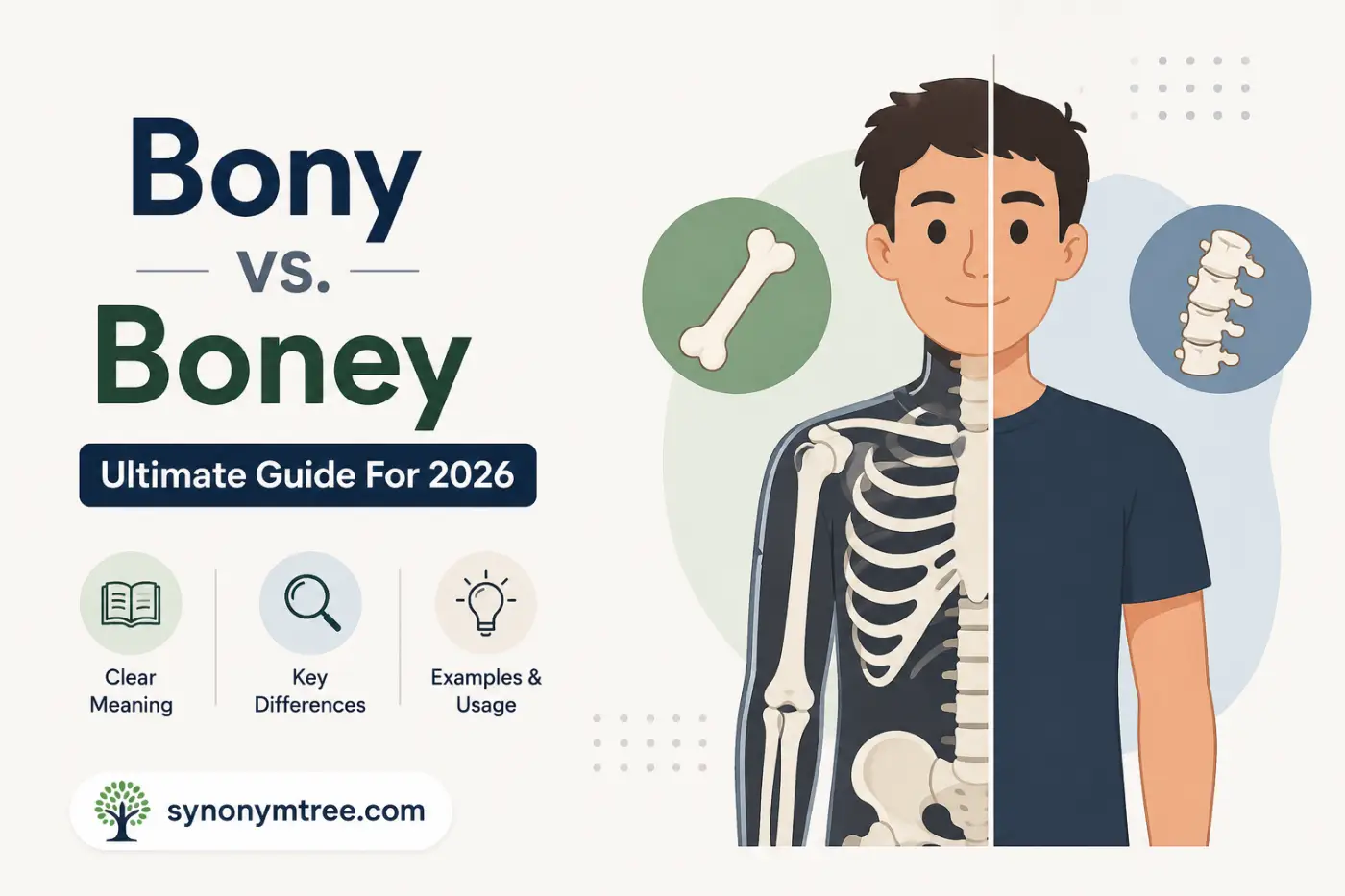
Many English learners wonder about bony vs boney because both spellings appear in books websites and everyday writing. They sound exactly the same and have the same basic meaning. That makes it easy to think they are always used in the same way.
The good news is that this word pair is much easier than it looks. Both spellings are accepted in English. Still one spelling is far more common and is usually the better choice for most writing.
This guide explains bony vs boney in simple English. You will learn what each word means why people get confused and how to choose the spelling that fits your sentence.
Simple Answer In One Look About These Words
Both bony and boney are correct. Bony is the preferred spelling in modern English and is used much more often.
What Bony Vs Boney Means In Simple English
The words bony and boney describe something that has many visible bones or bones that are easy to see. They can describe a person, an animal, or even food. For example, you might say, “The dog looked bony after being lost,” “The fish was too bony to eat easily,” or “His hands were bony.” In each sentence, the word means that the bones are easy to notice.
The spelling boney has the same meaning and may appear in older books, regional writing, or personal style choices. However, bony is the more common spelling and is generally listed as the main form in dictionaries. For standard writing, bony is usually the better choice, especially in school, professional, and edited content.
Why People Mix These Words
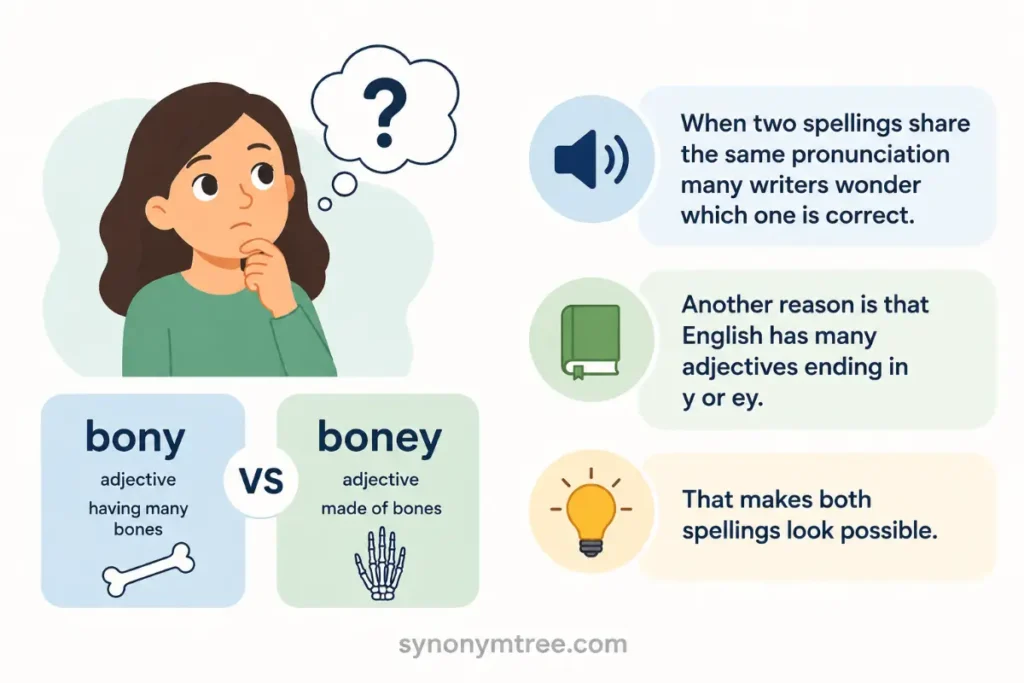
People often confuse these words because they sound exactly alike. When two spellings share the same pronunciation many writers wonder which one is correct. Another reason is that English has many adjectives ending in y or ey which can make both spellings look possible.
For example someone may write The dog looked bony. Another person may write The dog looked boney. Both sentences are understandable. Still bony is much more common in modern English.
Many people also see boney in older novels family writing or local publications. That can make both spellings seem equally popular. However bony is usually the preferred spelling in modern English.
Clear Difference Explained Simply About These Words
Both words share the same meaning.
The difference is mainly spelling preference.
- Bony is the standard modern spelling.
- Boney is an accepted but less common spelling.
- Both describe something with noticeable bones.
- Most dictionaries place bony first.
- Most professional writers choose bony.
Think of it this way.
If you want the spelling that most readers expect choose bony. That simple choice works in almost every situation.
Which Form Should You Use In These Words
For school work business writing blog posts and general communication choose bony. It is the spelling most readers know and the one that will sound natural to most English speakers.
You may still see boney in novels poems family writing or older publications. There is nothing wrong with that spelling. It is simply less common in modern English. If you’re writing for a general audience choose bony. That simple choice will help your writing feel clear natural and familiar to most readers.
Easy Real Life Sentences You Can Use With These Words
Reading examples makes the difference easier to remember.
Here are some simple sentences.
- The rescued dog looked bony but healthy again after a few weeks.
- The fish was too bony for small children.
- His bony fingers held the pencil tightly.
- The horse became bony during the cold winter.
- The old tree had bony branches reaching into the sky.
- Her bony knees showed through her jeans.
- The bird looked bony after its long journey.
- The soup contained a very bony piece of fish.
Every sentence could use boney instead.
Still bony is the spelling most readers expect to see.
Where These Words Comes From
The words bony and boney both come from the noun bone. English often creates adjectives by adding the letter y to a noun. In this case bone became bony. Over time some writers also added ey and created boney.
For many years both spellings appeared in English writing. As dictionaries became more consistent bony gradually became the preferred form. That is why modern dictionaries schools newspapers and publishers generally favor bony. Language changes over time and spelling can change with it. Sometimes two forms exist side by side before one becomes more common. That is exactly what happened with bony and boney.
How Bony Vs Boney Is Understood In Culture And Stories
The words bony vs boney often appear in books movies and everyday conversations. Most of the time they describe someone or something with bones that are easy to see.
In stories a bony character may look old tired or very thin. The word helps readers picture the person without using many extra words. Animals can also be described as bony. A rescued dog that has not eaten for days may look bony. A horse that needs better care may also be described this way.
The word does not always describe people or animals. Some foods are called bony because they contain many bones. Fish is a common example. You may also hear someone describe tree branches as bony because they look thin and stick out like bones. The spelling boney carries the same meaning. It simply appears less often in modern English.
Biblical And Mythological Meaning Of These Words
There is no special biblical meaning for bony vs boney. The Bible does mention bones many times. Bones often represent life strength or the human body. Still the words bony and boney themselves are not special biblical terms.
The same is true in mythology. Many old stories include skeletons or bones as symbols of life death or change. The spellings bony and boney simply describe something with noticeable bones.
Symbolism Explained In Simple Words About These Words
What Bony Vs Boney Represents As Bony
The word bony can represent thinness.
It may also suggest age weakness or hunger depending on the situation.
Sometimes it simply describes shape without any positive or negative feeling.
For example.
The bird had long bony legs.
That sentence only describes appearance.
What Bony Vs Boney Represents As Boney
The spelling boney carries the same meaning.
It does not create a different image.
The only real difference is spelling preference.
Since bony is much more common most readers expect that form first.
Related Words You Should Know About These Words
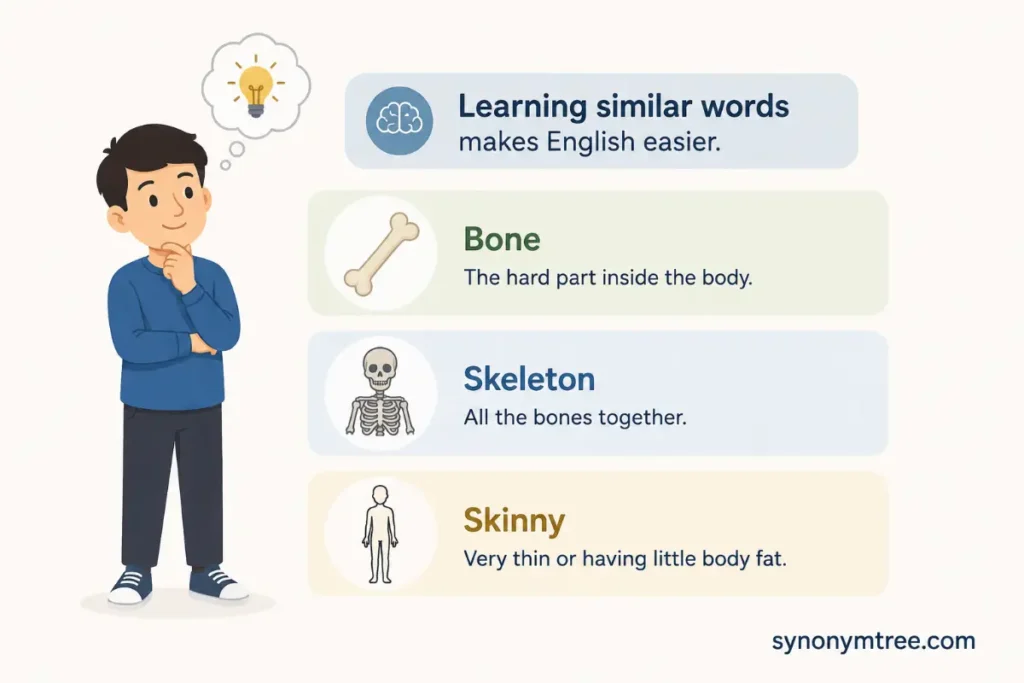
Learning similar words makes English easier.
- Bone.
The hard part inside the body.
- Skeleton.
All the bones together.
- Skinny.
Very thin. This word often describes a person’s body.
- Lean.
Thin in a healthy or natural way.
- Thin.
Not wide or not carrying much body fat.
- Frail.
Weak or delicate.
- Bony fish.
Fish with many bones.
- Rib.
One of the curved bones in the chest.
These words often appear with bony in everyday English.
How People Actually Use Bony Vs Boney In Daily English
People use bony far more often than boney.
Here are some simple examples.
- The puppy looked bony before it found a new home.
- My grandfather had bony hands.
- This fish is too bony for young children.
- The cat became bony after being sick.
- She has bony shoulders.
- Those winter trees look bony without leaves.
- The old horse looked bony but remained strong.
- His bony knees showed through his pants.
- That soup has several bony pieces of fish.
- The rescued bird was bony but recovered quickly.
Some people may use boney in these examples.
The meaning stays the same.
Still bony is the spelling most readers expect.
Common Mistakes People Make With These Words
People often make the same mistakes.
Here are the most common ones.
- Thinking boney is always wrong.
It is not wrong.
It is simply less common.
- Thinking the two spellings have different meanings.
They do not.
Both describe something with noticeable bones.
- Using boney in formal writing without knowing the audience.
Most teachers editors and publishers prefer bony.
- Confusing bony with skinny.
These words are similar but not identical.
Someone can be skinny without having clearly visible bones.
- Thinking bony always sounds negative.
It depends on the sentence.
Sometimes it is simply a description.
Bony Vs Boney In Dictionaries And Style Guides
If you check several English dictionaries you will usually find bony listed as the main spelling. Some dictionaries also include boney but often identify it as a less common form. This gives us a useful point to remember. Both spellings exist but one is clearly more common in modern English.
Many newspapers magazines schools and publishers also prefer bony in their writing. That is why you are more likely to see it in articles books and online lessons. If you’re unsure which spelling to use follow the main dictionary entry. In most cases that choice will be bony. This simple habit can make your writing look more natural clear and familiar to readers.
Bony Vs Boney In American And British English
Many people wonder if bony and boney differ between American English and British English. The answer is no. Both American English and British English generally prefer bony as the standard spelling.
You may still find boney in older books or personal writing from both countries. This does not mean one country favors boney while another favors bony. The difference mainly comes from personal style and older spelling traditions.
If you’re writing for readers in the United States Canada the United Kingdom or Australia bony is the safest choice. Using the more common spelling also keeps your writing consistent and familiar to your audience.
Memory Trick For These Words
A simple memory trick can help you remember the correct spelling. Start with the word bone and add the letter y. You get bony. This is the spelling used most often in modern English.
Another easy trick is to notice how the word appears in books news articles school materials and everyday writing. You will usually see bony more often than boney. The more often you notice the spelling the easier it becomes to remember. You don’t need to memorize complicated grammar rules. Just keep one simple idea in mind. When you’re unsure choose bony.
Bony Vs Boney Practice Quiz
Test yourself with these easy questions.
- Which spelling is more common in modern English?
Answer. Bony.
- Which sentence looks more natural?
The fish was bony.
The fish was boney.
Answer. The fish was bony.
- Do bony and boney have different meanings?
Answer. No. They mean the same thing.
- Which spelling should you use in school assignments?
Answer. Bony.
- Is boney completely wrong?
Answer. No. It is an accepted but less common spelling.
If you answered these questions correctly, you now understand bony vs boney and can choose the right spelling with confidence.

Final Teacher Explanation About These Words
Imagine we are finishing today’s lesson together.
The answer is simple.
Both bony and boney are correct spellings.
They share the same meaning.
The biggest difference is usage.
Modern English strongly prefers bony.
That is the spelling you will see most often in dictionaries newspapers books and websites.
If you are writing an essay article email or school assignment choose bony.
It is the safest and most natural choice.
If you come across boney while reading do not worry.
It means exactly the same thing.
Final Answer About These Words
Both bony and boney are correct.
Bony is the preferred modern spelling and is the best choice for most writing.
Boney is less common but still accepted in English.
Conclusion
The difference between bony vs boney is mainly about spelling rather than meaning. Both words describe someone or something with noticeable bones. The spelling bony has become the standard form in modern English, so it is the better choice for most readers.
When you are writing for school work blogs business documents or everyday communication use bony with confidence. If you see boney in older books or personal writing remember that it is still an accepted spelling.
English often keeps older and newer spellings side by side for many years. Learning the more common form helps your writing look natural and easy to understand.
Frequently Asked Questions About Bony Vs Boney
Which is correct bony or boney?
Both are correct. Bony is the preferred spelling in modern English.
What does bony mean?
It means that bones are easy to see or that something contains many bones.
Is boney a real word?
Yes. It is an accepted spelling but it is much less common than bony.
Why do people confuse these words?
They sound exactly the same and have the same meaning, so many writers are unsure which spelling to choose.
Can I use both forms in writing?
Yes. For most readers and formal writing bony is the better choice.
Is bony used for people and animals?
Yes. It can describe people animals and even foods such as fish.
Does bony always mean unhealthy?
No. Sometimes it simply describes a person’s shape or an object with visible bones.
How can I remember the correct spelling?
Think of bony as the spelling used by most dictionaries teachers and professional writers.
