
Many parents writers and English learners search for blankie vs blanky because both spellings appear online. At first they seem identical. They sound the same and describe the same soft comfort blanket. Still one spelling is much more common in modern English.
The good news is that this is not a difficult lesson. You do not need long grammar rules to understand it. You only need to know which spelling people use most often and why both forms exist.
This guide explains blankie vs blanky in simple English. You will learn the difference which spelling is more common and how to choose the best one for everyday writing.
Simple Answer In One Look About Blankie Vs Blanky
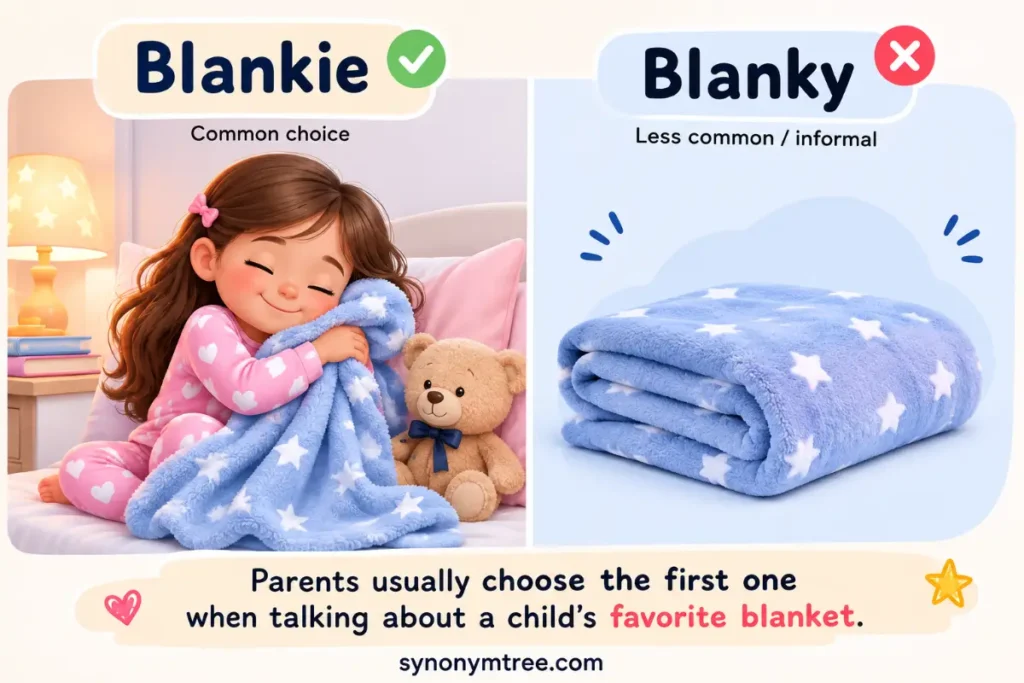
Both blankie and blanky can mean a small comfort blanket. Blankie is much more common and is the spelling most people recognize.
What Blankie Vs Blanky Means In Simple English
A blankie is an informal word for a soft blanket that provides comfort, especially for babies and young children. Many children become attached to a favorite blanket and carry it with them when they sleep, travel, or feel upset. Adults may also use the word blankie in a playful or affectionate way, such as saying, “The baby cannot sleep without her blankie.”
The spelling blanky has the same meaning, and some families may prefer using it. You may see both forms in children’s books, social media posts, text messages, and personal conversations. Because blankie and blanky are informal terms, neither spelling is a formal standard English word. However, blankie appears more often in general writing. If you are unsure which spelling to use, blankie is usually the more familiar choice.
Why People Mix These Words
People often confuse blankie and blanky because both spellings have the same pronunciation. When two words sound alike, writers may choose a spelling based on how the word sounds rather than on common usage. These terms are also part of informal family language, where parents, grandparents, and children often create cute or shortened versions of familiar words.
Different families may spell these affectionate words in different ways. For example:
- One family may write, “Where is your blankie?”
- Another family may write, “Go get your blanky.”
Both sentences have the same meaning. The difference is only in the spelling. English has many informal and affectionate words that can vary between families or regions, making their spelling less predictable. Even so, blankie is the more common spelling in modern English.
Clear Difference Explained Simply About These Words
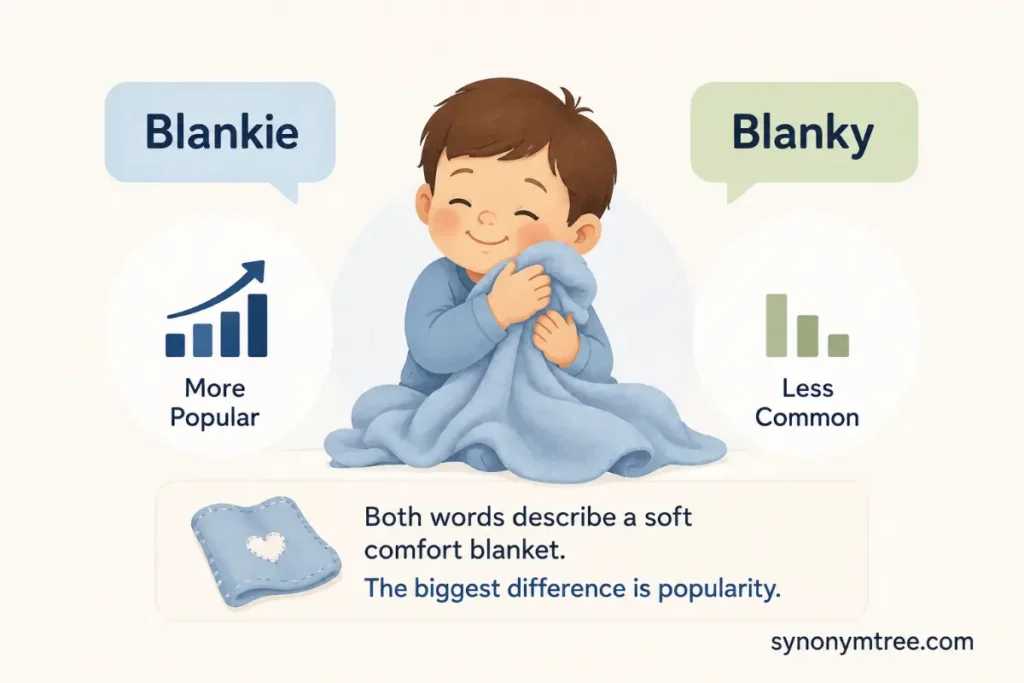
Both words describe the same object. The main difference is popularity.
- Blankie is the most common spelling.
- Blanky is less common.
- Both mean a soft comfort blanket.
- Both are informal words.
- Blankie is usually the better choice for general writing.
Think of it this way.
If you are writing for many readers choose the spelling that most people expect.
That spelling is blankie.
If you are writing a personal message to family you can use the spelling your family has always used.
Which Form Should You Use In These Words
Most writers should choose blankie because it is more familiar and easier for most readers to recognize. You may see this spelling in children’s books, parenting content, and informal online writing. The spelling blanky can still be used when it reflects a family’s preferred spelling or the natural speech of a character in a story.
For school assignments, blog posts, business writing, and general communication, blankie is usually the safer choice. A simple question can help you decide: Am I writing for everyone or only for my family? If your writing is intended for a general audience, choose blankie.
Easy Real Life Sentences You Can Use With These Words
Reading examples makes learning easier.
Here are some simple sentences.
- The baby hugged her blankie before bedtime.
- My son carries his blankie everywhere.
- She washed the blankie after the picnic.
- The little girl smiled when she found her blankie.
- The puppy slept on a soft blankie.
- Grandma made a colorful blankie for the new baby.
- He packed his favorite blankie for the trip.
- The child would not leave home without the blankie.
You could replace blankie with blanky in these sentences and the meaning would stay the same.
Still blankie is the spelling most readers expect.
Where These Words Comes From
The words blankie and blanky come from the word blanket. Over time, parents and children began using shorter and more playful forms of familiar words. English often develops this kind of family language, especially when adults speak with young children. Similar examples include doggie from dog, horsie from horse, and birdie from bird. These forms sound gentle and affectionate, which makes them common in conversations with children.
The word blankie follows the same pattern. The spelling blanky also developed because some people wrote the word according to how they heard it. This explains why both spellings exist today. However, blankie has become the more widely used form in books, parenting articles, and everyday informal writing. This is a common way language develops: people create affectionate forms naturally, and one spelling gradually becomes more common than others.
How Blankie Vs Blanky Is Understood In Culture And Stories
The words blankie vs blanky are closely connected with childhood. Many people remember having a favorite blanket when they were young. It gave them comfort during bedtime naps or long trips. Parents often call this special blanket a blankie. The word sounds gentle and loving. That is one reason it appears in children’s books bedtime stories and family conversations.
Many movies and television shows also include young children carrying a favorite blanket. The blanket often helps the child feel safe in a new place or during a scary moment. Some families use blanky instead. The meaning stays the same. The choice usually depends on family habit rather than grammar. Because blankie is more common many readers recognize it more quickly.
Biblical And Mythological Meaning Of These Words
There is no special biblical meaning for blankie vs blanky. The Bible does not use these words because they are modern informal expressions. The same is true for mythology. Still the idea of comfort protection and warmth appears in many religious and traditional stories. A blanket often reminds people of safety care and kindness. These ideas connect naturally with the word blankie even though the word itself has no special religious meaning.
Symbolism Explained In Simple Words About These Words
What Blankie Vs Blanky Represents As Blankie
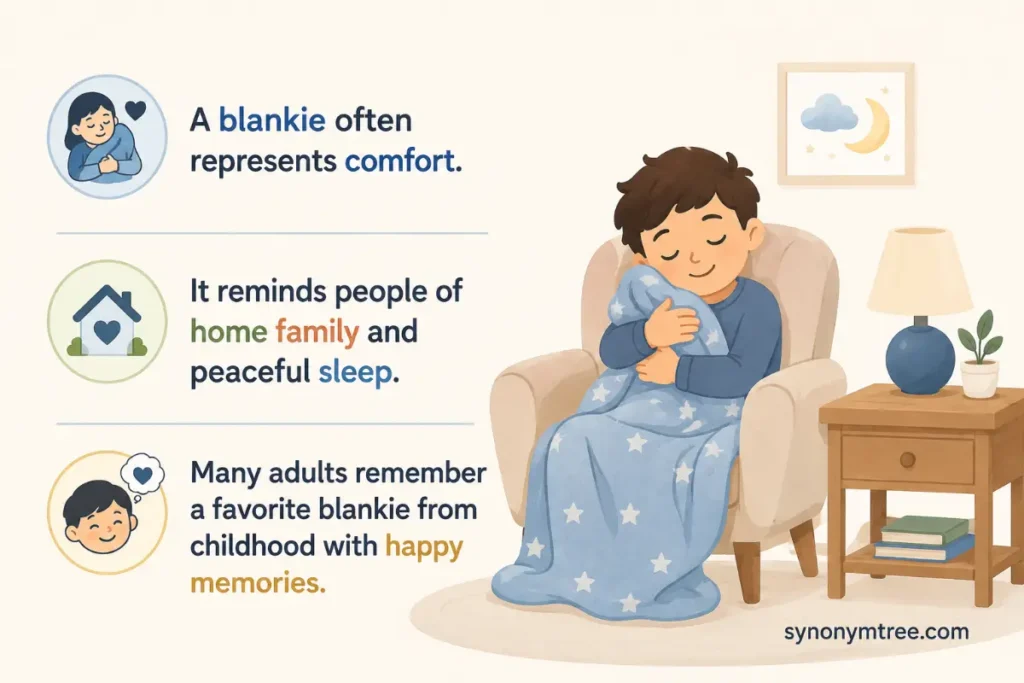
A blankie often represents comfort. It reminds people of home family and peaceful sleep. Many adults remember a favorite blankie from childhood with happy memories. The word can also represent love because a parent or grandparent may have given the blanket as a gift.
What Blankie Vs Blanky Represents As Blanky
The spelling blanky carries the same meaning. It also represents comfort warmth and security. The difference is simply spelling. Since blankie is more common many writers choose it when writing for a wide audience.
Related Words You Should Know About These Words
Learning related words helps you understand this topic better.
- Blanket.
A large piece of fabric used for warmth.
- Comfort blanket.
A blanket that helps someone feel safe.
- Baby blanket.
A small blanket made for babies.
- Security blanket.
A blanket that gives emotional comfort.
- Quilt.
A warm blanket made from stitched layers of fabric.
- Throw.
A small blanket used on chairs or sofas.
- Comforter.
A thick bed covering used for warmth.
- Bedding.
The general name for blankets sheets and pillows.
These words often appear in the same conversations as blankie.
How People Actually Use Blankie Vs Blanky In Daily English
People use these words in warm friendly conversations.
Here are some examples.
- The baby will not sleep without her blankie.
- Did you pack your blankie for the trip?
- Grandma washed the blankie this morning.
- The puppy curled up on a soft blankie.
- My little brother carries his blankie everywhere.
- She hugged her blankie during the storm.
- The toddler smiled after finding the blankie.
- That old blankie still makes him happy.
- The child left the blankie in the car.
- Mom bought a new blankie for the baby.
Some families would naturally say blanky instead.
Both versions sound loving and informal.
Common Mistakes People Make With These Words
Many writers make small mistakes with these words.
Here are the most common ones.
- Thinking one spelling changes the meaning.
It does not.
Both words describe the same thing.
- Believing blanky is incorrect.
It is an accepted informal spelling but it is much less common than blankie.
- Using the words in formal writing.
These words are best for casual conversations family stories and children’s books.
In formal writing use blanket.
- Assuming every family uses the same spelling.
Different families often choose different spellings.
- Forgetting the audience.
For most readers blankie is easier to recognize.
Final Teacher Explanation About These Words
Imagine we are ending today’s lesson. The meaning is simple: both blankie and blanky describe a soft blanket used for comfort. The main difference is how commonly each spelling is used. Blankie is more familiar to most English readers because it appears more often in children’s books, parenting content, and everyday informal writing.
If you are writing a school assignment, article, blog post, or other content for a general audience, blankie is usually the better choice. If your family has always used blanky, you can continue using that spelling in personal conversations and messages. Always consider who will read your writing, because the audience can help you decide which informal spelling is clearer.
Final Answer About These Words
Both blankie and blanky mean a soft comfort blanket.
Blankie is the more common spelling and is usually the best choice for general writing.
Blanky is less common but still used by some families.
Conclusion
The difference between blankie vs blanky is not about meaning. It is mainly about spelling preference. Both words describe the same comforting that many children love. The spelling blankie has simply become more popular in modern English.
When writing for a large audience choose blankie because most readers will recognize it right away. If you are writing a personal message or family story you can use the spelling your family prefers.
English includes many affectionate words like this. The more you read the easier it becomes to recognize the most common forms. Small lessons like this help you write naturally and with confidence.
Frequently Asked Questions About Blankie Vs Blanky
Which is correct blankie or blanky?
Both spellings are used. Blankie is much more common in everyday English.
What does blankie mean?
A blankie is a small blanket that gives comfort especially to a baby or young child.
Is blanky a real word?
Yes. It is an informal spelling used by some families but it is less common than blankie.
Why do people confuse blankie vs blanky?
Both words sound exactly the same. Different families also spell the word differently.
Can I use both forms in writing?
Yes. For most readers blankie is the better choice because it is more widely recognized.
Is blankie a formal English word?
No. It is an informal affectionate word. In formal writing use blanket.
Do adults use the word blankie?
Yes. Adults often use it when talking to children or remembering childhood.
How can I remember the better spelling?
Think of blankie as the spelling you will usually see in books parenting articles and everyday writing.
