
Many English learners get confused about borrow vs barrow because the two words sound almost the same. They are easy to mix up when speaking and writing. Even native English speakers sometimes stop and think before choosing the right word.
The good news is that these words have completely different meanings. Once you understand what each word means and where it is used, choosing the correct one becomes easy.
This guide explains these words in simple English. You will learn the difference, see real examples, and discover easy tips that help you remember the right word every time.
Simple Answer In One Look About These Words
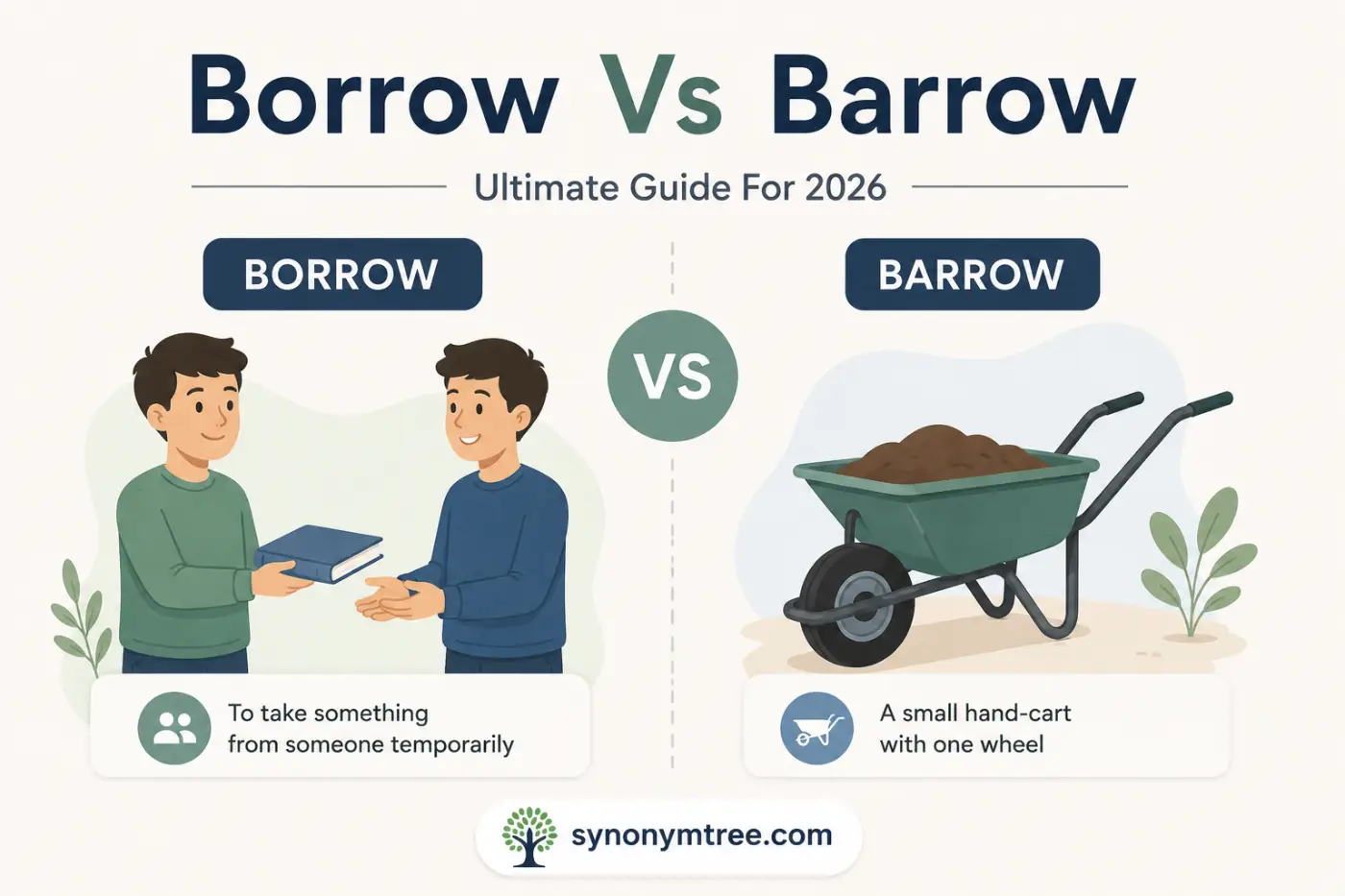
Borrow means to take something for a short time and return it later. Barrow is a noun that usually means a handcart used for carrying things or, in some cases, a small mound of earth.
What Borrow Vs Barrow Means In Simple English
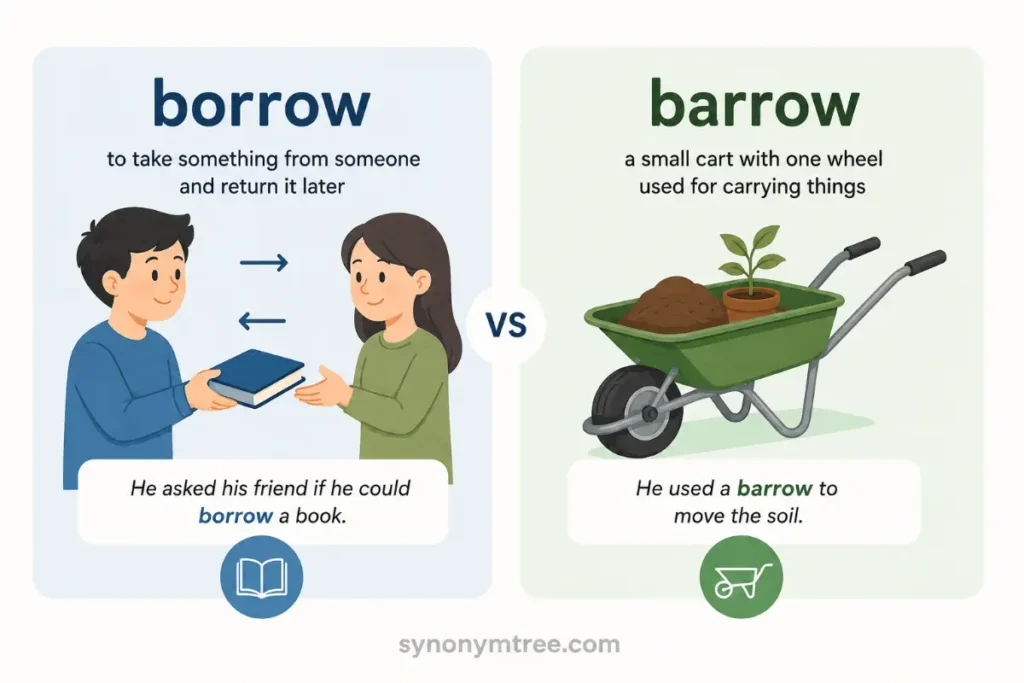
The word borrow is a verb. You use it when you take something from another person with the plan to give it back later. For example you may borrow a book from the library. You can borrow a pencil from a classmate or borrow money from a friend. The key idea is that you do not keep the item permanently.
The word barrow is different. It is a noun. Most people know it from wheelbarrow which is a small cart with one wheel used to carry heavy materials. Gardeners and builders often use a barrow to move soil rocks plants or tools. Barrow can also describe an old burial mound found in historical and archaeological sites. This meaning is much less common in everyday English.
Because borrow and barrow have different meanings they cannot replace each other. Remember that borrow relates to taking something temporarily while barrow usually refers to a type of cart or an ancient burial mound.
Why People Mix These Words
People often confuse these words because they sound very similar. When spoken quickly borrow and barrow can sound almost alike. English has many word pairs like this. They are often called homophones or near homophones because their sounds are similar while their meanings are different.
Spelling also makes these words easy to mix up. Both words contain the same letters near the beginning and people can choose the wrong one when typing quickly. For example someone might write Can I barrow your pen. The correct sentence is Can I borrow your pen.
This mistake changes the meaning because barrow is not an action. It is a noun that usually refers to a type of cart or an old burial mound. Reading your writing carefully before sending a message can help you catch these small but common spelling mistakes.
Clear Difference Explained Simply About These Words
The easiest way to remember the difference is to focus on the job each word does.
- Borrow is a verb.
- Barrow is usually a noun.
- Borrow means to take something for a short time and return it.
- Barrow means a cart used to carry heavy items.
- Borrow is common in daily conversation.
- Barrow is mostly used in gardening, farming, construction, or history.
Think about these examples. I want to borrow your notebook. The gardener pushed a barrow full of flowers. One sentence talks about taking something. The other talks about a piece of equipment.
Which Form Should You Use In These Words
Choose borrow when you’re talking about using something that belongs to another person for a limited time. Choose barrow when you’re talking about a handcart or an ancient burial mound.
Ask yourself one simple question. Are you talking about taking something temporarily. If yes use borrow. Are you talking about a cart or a mound of earth. If yes use barrow. This quick check makes the correct choice much easier.
Easy Real Life Sentences You Can Use With These Words
These examples show how both words are used.
- May I borrow your phone for a minute?
- She borrowed a book from the library.
- We borrow camping gear every summer.
- He forgot to return the jacket he borrowed.
- I need to borrow a ladder this weekend.
- The gardener filled the barrow with fresh soil.
- The worker pushed a heavy barrow across the yard.
- The farmer loaded vegetables into the barrow.
Notice how borrow always describes an action.
Barrow always names an object.
Where Borrow Vs Barrow Comes From
The word borrow comes from an old English term connected with taking or receiving something with the intention of returning it. People have used the word for hundreds of years in everyday language and its basic meaning has remained remarkably consistent.
The word barrow has a different history. It comes from old English words connected with carrying or transporting loads. Over time the word became associated with a small handcart. Barrow also developed another meaning for a burial mound. This meaning has roots in old English as well.
Although both words have long histories they developed from different linguistic roots and have never shared the same meaning. Understanding their meanings makes the difference between borrow and barrow much easier to remember.
How Borrow Vs Barrow Is Understood In Culture And Stories
The words borrow and barrow appear in very different situations. The word borrow is part of everyday life. People borrow books from libraries tools from neighbors and notes from classmates. Stories often use this word to describe kindness trust and sharing.
For example a child may borrow a favorite book from a friend. A neighbor may borrow a ladder to repair a roof. These simple actions show how people help each other by sharing things for a short time.
The word barrow appears more often in writing about farming gardening building and history. You might read about a farmer pushing a barrow filled with vegetables or a gardener carrying flowers and soil in one.
In history books barrow can also refer to an ancient burial mound. These mounds were built by past communities and can provide valuable clues about earlier cultures.
Although borrow and barrow sound similar they belong to very different areas of everyday language. Knowing the meaning and context makes it easier to choose the right word.
Biblical And Mythological Meaning Of These Words
The word borrow appears in ideas found throughout the Bible because people often borrowed money, food, or other items. These stories teach honesty, kindness, and returning what belongs to others.
The word barrow does not have a special biblical meaning. In mythology, the burial mound meaning of barrow appears in some old European legends. Ancient heroes and kings were sometimes buried inside large earth mounds. These stories are part of history and folklore rather than modern English.
Symbolism Explained In Simple Words About These Words
What Borrow Vs Barrow Represents As Borrow
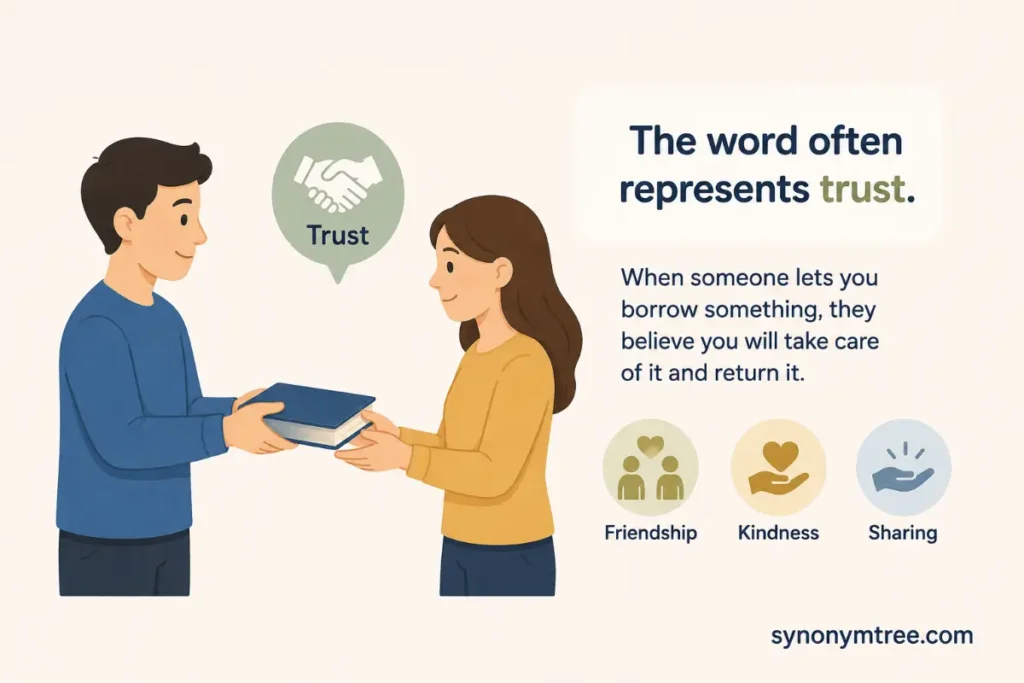
The word borrow often represents trust.
When someone lets you borrow something, they believe you will take care of it and return it.
It can also represent friendship, kindness, and sharing.
These simple ideas make the word common in daily life.
What Borrow Vs Barrow Represents As Barrow
The word barrow often represents hard work.
A gardener pushing a barrow reminds people of effort and patience.
The historical meaning of barrow can represent memory and respect for people from long ago.
Even though both meanings are different, they both connect with carrying something important.
Related Words You Should Know About These Words
Learning related words makes this lesson easier.
- Lend.
To give something to another person for a short time.
- Return.
To give borrowed items back.
- Loan.
Something that is borrowed for a period of time.
- Wheelbarrow.
A small cart with one wheel used to carry heavy things.
- Cart.
A vehicle used to move objects.
- Carry.
To move something from one place to another.
- Share.
To let someone else use something.
- Borrower.
A person who borrows something.
These words often appear with borrow or barrow in everyday English.
How People Actually Use Borrow Vs Barrow In Daily English
These examples show how people naturally use the words.
- Can I borrow your notebook for class?
- She borrowed my jacket because it was cold.
- We always borrow books from the public library.
- Please remember to return what you borrow.
- My brother borrowed my bike yesterday.
- The gardener pushed a barrow full of fresh plants.
- The worker filled the barrow with bricks.
- The farmer moved soil using a barrow.
- They bought a new wheelbarrow for the garden.
- The old barrow carried heavy bags of sand.
Notice that borrow always describes an action. Barrow always names an object or, less commonly, a historical mound.
Common Mistakes People Make With These Words
Many learners make the same mistakes.
Here are the most common ones.
- Writing barrow instead of borrow.
Wrong.
Can I barrow your pen?
Correct.
Can I borrow your pen?
- Thinking the words have related meanings.
They do not.
One is an action.
The other is an object.
- Using borrow as a noun.
Borrow is a verb.
The noun is usually loan or borrowing, depending on the sentence.
- Forgetting to return borrowed items.
This is not a grammar mistake, but it changes the real meaning of borrow.
Borrowing always suggests that the item will be returned.
- Confusing barrow with wheelbarrow.
A wheelbarrow is a specific kind of barrow with one wheel.
Final Teacher Explanation About These Words
Imagine today’s lesson is coming to an end. The difference between borrow and barrow is actually quite simple once you focus on their meanings.
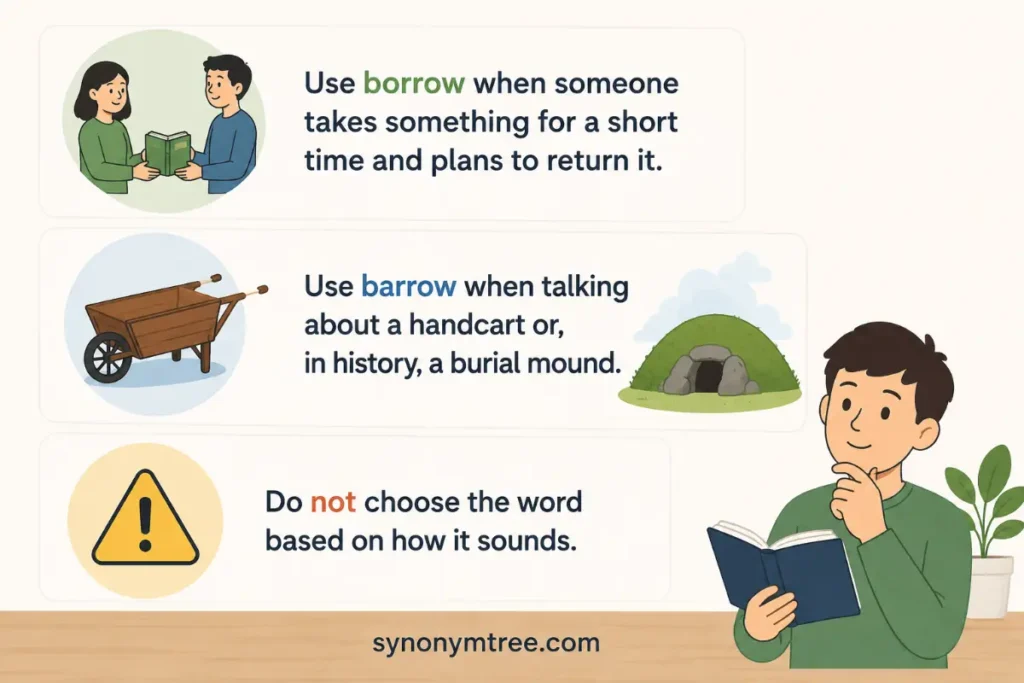
Use borrow when someone takes something for a short time and plans to return it later. Use barrow when you’re talking about a handcart or an ancient burial mound.
Don’t choose the word based on how it sounds. Choose it based on what you want to say. If you remember that borrow describes an action while barrow usually names an object you will rarely make a mistake.
Final Answer About These Words
The difference between borrow vs barrow is easy once you know the meaning. Borrow means to take something temporarily and return it later. Barrow means a handcart or, less commonly, an ancient burial mound.
Conclusion
The confusion between borrow vs barrow comes from their similar pronunciation, not from their meanings. These words belong to different parts of English and cannot replace each other. One describes an action while the other names an object.
When you write or speak, think about the meaning first. If you are taking something with permission and plan to return it, choose borrow. If you are talking about a cart used to carry heavy loads or an ancient earth mound, choose barrow.
The more you read and practice, the more natural this word pair will become. Small differences like this help you build stronger English skills and write with greater confidence.
Frequently Asked Questions About Borrow Vs Barrow
What is the difference between borrow and barrow?
Borrow means to take something for a short time and return it. Barrow is a handcart or an ancient burial mound.
Is borrow or barrow correct?
Both are correct words, but they have different meanings.
Why do people confuse borrow vs barrow?
They sound very similar, so people sometimes choose the wrong spelling.
Can I say barrow your book?
No. The correct sentence is borrow your book.
What is a barrow in simple words?
A barrow is a small cart used to carry heavy things. It can also mean an old burial mound.
Is borrow a verb or a noun?
Borrow is a verb. It describes the action of taking something for a short time.
What is the opposite of borrow?
The opposite is usually lend, which means giving something to another person for a short time.
How can I remember borrow vs barrow?
Remember that borrow is something you do. Barrow is something you use.
