
Have you ever seen someone describe a fancy coffee shop expensive shoes or a stylish vacation and call it bougie or boujee? Many people use these words every day. They often mean the same thing. Still many English learners and even native speakers wonder which spelling is correct.
The short answer is simple. Both spellings are used in modern English. Bougie is the older and more common spelling. Boujee became popular through music social media and everyday online conversations. The meaning is almost always the same.
This guide explains these words in very simple English. You will learn what each word means why people confuse them and how to choose the best spelling in different situations. By the end you will feel comfortable using both words.
Bougie Or Boujee Simple Answer In One Look
Both bougie and boujee describe a person thing or lifestyle that seems fancy expensive stylish or connected with luxury. Bougie is the standard spelling in most writing. Boujee is a modern spelling that is common in pop culture and online conversations.
What Bougie Or Boujee Means In Simple English
Think about a friend who only wants to eat at expensive restaurants. They buy designer clothes drink costly coffee and stay in luxury hotels. Someone might smile and say that friend is bougie or boujee. The word does not always describe someone who is actually rich. Sometimes it simply means a person enjoys things that look expensive or classy. A student who saves money for one nice pair of shoes can still be called bougie by friends. A family picnic with fancy cheese fruit and sparkling drinks might also be called bougie even if it did not cost much.
People also use the word as a joke. Friends may laugh when someone refuses to drink regular coffee and only wants a special latte. They may say You are so bougie. The comment is often playful instead of rude. The meaning changes a little depending on the situation. Sometimes it is a compliment because it shows someone has good taste. Other times it is gentle teasing because someone seems to enjoy luxury too much. The speaker and the situation help you understand the real meaning.
You can also use the word to describe places objects food clothes vacations and events. A small hotel with beautiful rooms soft beds and amazing service may be called bougie. A birthday party with elegant decorations and expensive desserts may also earn the same description. The easiest way to remember the meaning is this.
Why People Mix These Words
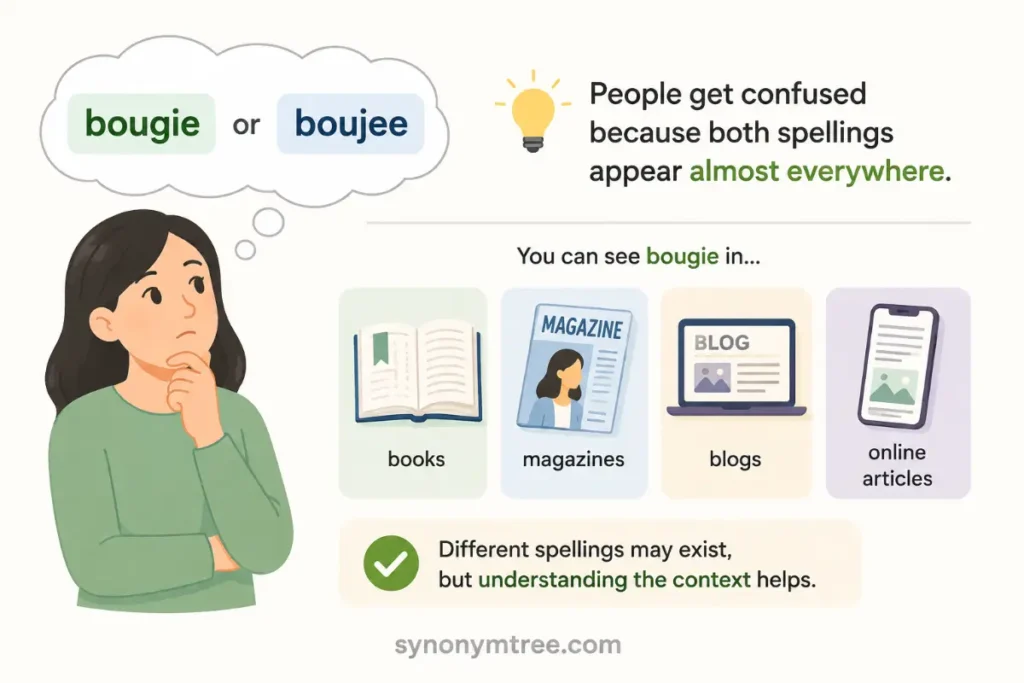
People get confused because both spellings appear almost everywhere. You can see bougie in books magazines blogs and online articles. You can also see boujee on social media in song lyrics and in everyday posts. After seeing both spellings so often many people wonder if one is wrong. Another reason is that both words sound almost the same. When people hear the word in a conversation they cannot tell which spelling the speaker has in mind. They simply hear the same sound and later guess how to write it.
The history of the word also adds to the confusion. Bougie came first and has been used for many years. Later boujee became a popular spelling through music internet culture and everyday online conversations. Since both versions became common people started using them almost like twins. The meaning stays nearly the same in most situations. Both words describe someone or something that feels fancy stylish expensive or connected with luxury. That is why many people switch between the two spellings without changing the meaning.
Here are a few situations where people often become unsure.
- They hear the word in a song and write boujee because that is the spelling they remember.
- They read an article that uses bougie and think boujee must be incorrect.
- They see friends using different spellings on social media and believe the words have different meanings.
- They think one spelling is formal and the other is informal in every situation.
- They are learning English and cannot find a simple explanation that compares both spellings.
The good news is that you do not need to worry too much. Once you understand where each spelling is commonly used the confusion becomes much easier to handle.
Clear Difference Explained Simply
The meaning of both words is almost the same. The biggest difference is the style and the place where people use each spelling.
Here is an easy comparison.
- Bougie is the older spelling. It appears more often in articles blogs dictionaries and everyday writing.
- Boujee is the newer popular spelling. It is common on social media in music and in casual conversations.
- Bougie may look slightly more natural in formal writing.
- Boujee feels more playful modern and connected with pop culture.
- Both words usually describe someone or something that seems fancy stylish or expensive.
Imagine you are writing an English paper for school. Bougie is usually the better choice because readers know it well and it looks more standard. Now imagine you are posting a funny picture of a fancy dessert on social media. Boujee can feel more natural because many people use that spelling in casual online conversations. No matter which spelling you choose most native English speakers will understand what you mean. The context matters much more than the spelling.
Which Form Should You Use
If you are learning English and want one simple rule use bougie. It is the safer choice for most situations. Teachers writers editors and many dictionaries recognize this spelling more often. You can choose boujee when you are writing in a casual style. It fits well in text messages social media posts friendly chats and content that has a fun relaxed tone.
Think about your audience before you decide.
- Use bougie for school assignments articles reports and general writing.
- Use boujee for casual posts memes friendly messages and pop culture discussions.
- If you are not sure choose bougie because it works well in almost every situation.
Remember one important point. People care much more about your message than the spelling. Both words usually express the same idea. Choosing the spelling that matches your audience will help your writing sound more natural.
Easy Real Life Sentences You Can Use With These Words
The best way to remember a new word is to see it in everyday situations. These examples sound natural and show how people really use bougie or boujee in conversations. Notice that the word usually describes a person a place an object or an experience that feels fancy stylish or more expensive than normal.
- My sister bought a bougie coffee maker for her kitchen.
- That hotel looks so boujee with its beautiful pool and large rooms.
- We laughed because our dog has a bougie bed that is softer than ours.
- His birthday dinner was so bougie with candles flowers and fancy food.
- She likes simple clothes but carries a bougie designer handbag.
- Our friends planned a boujee picnic with fresh fruit sparkling drinks and pretty decorations.
- That small bakery feels bougie because every dessert looks like a piece of art.
- I am not rich. I just enjoy a few bougie treats once in a while.
You can also hear these words during friendly conversations. They often add humor instead of criticism. If someone spends extra money on something special friends may jokingly call that choice bougie or boujee. The tone of voice usually tells you if the speaker is giving a compliment making a light joke or gently teasing someone. As you practice using the word think about real life instead of memorizing rules. Picture a luxury vacation an elegant restaurant or a stylish outfit. Those images make the meaning much easier to remember.
Where Bougie Or Boujee Comes From Simple History
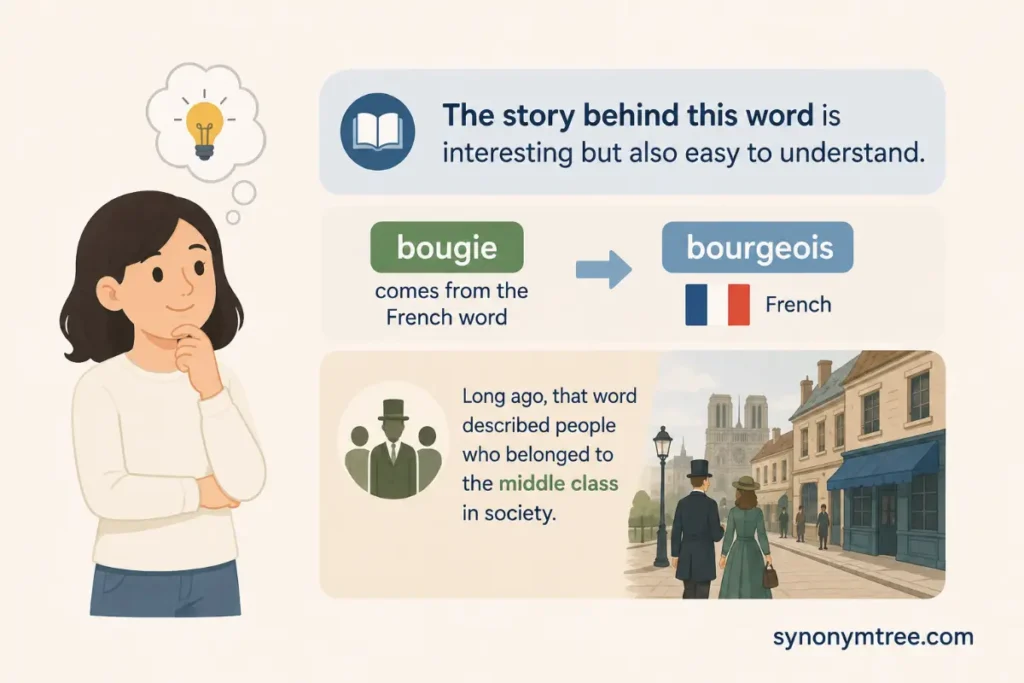
The story behind this word is interesting but also easy to understand. The spelling bougie comes from the French word bourgeois. Long ago that word described people who belonged to the middle class in society. Over time the meaning changed as English speakers borrowed the word and used it in new ways.
As the years passed people started using bougie to describe someone who liked expensive things or wanted a rich looking lifestyle. The meaning slowly became less about social class and more about taste fashion and luxury. Later another spelling became popular. Many people began writing boujee instead of bougie. Music artists social media users and online creators helped spread this version. The newer spelling matched the way many people pronounced the word and quickly became part of everyday internet language.
Today both spellings are easy to find. You might see bougie in articles magazines books and dictionaries. You will often see boujee in song titles online videos social media captions and friendly text messages. Even though the spellings are different the main idea stays almost the same. Both words describe something that feels fancy stylish expensive or connected with luxury. That is why many native English speakers understand both versions without stopping to think about the spelling.
Words change over time because people change the way they speak and write. Bougie and boujee are a good example of how language grows with culture music fashion and everyday conversation. The meaning has stayed simple even as the spelling has changed. That is why both words continue to be popular today.
The story does not end with spelling. These words also carry different feelings in culture popular stories and everyday life. In the next section you will see how people understand bougie and boujee beyond their basic meaning. You will also learn why these words can sound positive funny or even slightly critical depending on the situation.
How Bougie Or Boujee Is Understood In Culture And Stories
Words often become more than simple descriptions. They also reflect the way people think about life. Bougie and boujee are good examples. They can describe money style dreams success and even a person’s personality. Many people use these words in a positive way. They may call someone bougie because that person enjoys beautiful clothes fine food or well designed homes. In this case the word suggests good taste. It can even sound like a compliment.
Other people use the word as a friendly joke. Imagine a friend who refuses to drink regular coffee and only wants a special handmade drink from an expensive café. Another friend may smile and say You are so bougie. Everyone laughs because the comment is playful instead of mean. Sometimes the word carries a little criticism. A person may spend too much time trying to impress others with expensive things. Friends may describe that behavior as bougie because it seems more focused on appearance than real happiness.
Movies television shows music and social media have also helped these words become popular. Characters who wear designer clothes travel to luxury places or enjoy expensive hobbies are often described as bougie or boujee. The words quickly create a picture in the listener’s mind. The meaning also changes from one conversation to another. The same word can sound warm funny teasing or slightly negative. That is why listening to the speaker’s tone is just as important as understanding the dictionary meaning.
Biblical And Mythological Meaning Of These Words
Bougie and boujee do not have a biblical meaning. These words do not appear in the Bible and they are not part of biblical teaching. They also have no direct connection with Greek Roman or other ancient myths. You will not find heroes gods or famous stories using these words.
Even so some people compare the idea of being bougie with stories about wealth pride or luxury. Those comparisons come from personal opinions instead of the actual meaning of the word. The safest way to understand bougie or boujee is as a modern slang word. It belongs to everyday English instead of religion or mythology.
Symbolism Explained In Simple Words
What Bougie Represents
Bougie often represents elegance comfort and a love for quality. It can describe someone who enjoys beautiful things and pays attention to small details. The word may also suggest confidence and personal style. At the same time bougie can remind people not to judge others by expensive clothes cars or brands. Looking rich does not always mean someone is happy kind or successful.
What Boujee Represents
Boujee represents modern culture fun and self expression. It often appears in music social media and casual conversations. The spelling feels relaxed and trendy.
Many people use boujee to celebrate success. Buying something special after working hard may be called a boujee moment. The word can show pride excitement and enjoyment without sounding too serious.
In most situations the two spellings represent the same basic idea. The feeling depends more on the conversation than on the spelling itself.

Related Words You Should Know
Learning similar words makes your English stronger. These words have meanings that are close to bougie or boujee but each one has its own small difference.
- Fancy. This describes something elegant beautiful or more expensive than usual.
- Luxurious. This means very comfortable high quality or connected with wealth.
- Classy. This describes someone or something that looks stylish and has good taste.
- Elegant. This means simple beautiful and attractive in a graceful way.
- Upscale. This describes places products or services that are more expensive and higher in quality.
- Glamorous. This describes someone or something that looks exciting fashionable and attractive.
- Chic. This means fashionable in a simple stylish way.
- Sophisticated. This describes someone or something that appears refined experienced or polished.
These words are not perfect replacements for bougie or boujee. Each one has its own shade of meaning. Still knowing them helps you understand conversations more easily and gives you more choices when you speak or write. The next part will explain how people actually use these words in daily English. You will also learn the most common mistakes and the easiest way to remember the correct usage for life.
How People Actually Use Bougie Or Boujee In Daily English
Now that you know the meaning of bougie and boujee it is time to see how people really use these words. You will hear them in conversations with friends on social media in television shows and sometimes in everyday articles. Most of the time the speaker is talking about something that looks fancy stylish or more expensive than usual.
People often use these words in a light and friendly way. They are not always serious. A person may laugh while calling a friend bougie because that friend likes expensive coffee or luxury vacations. Another person may proudly describe a beautiful dinner as boujee because they are excited about how nice it looks. The situation and the speaker’s tone help you understand the meaning. The same word can sound like a compliment a joke or gentle teasing. That is why it is always helpful to listen to the whole conversation instead of focusing on the word alone.
Here are some real life examples that sound natural in everyday English.
- My cousin always buys fancy candles. We call her a little bougie.
- This restaurant is small but it feels very boujee inside.
- We had a simple picnic but made it look bougie with nice plates and flowers.
- He bought a luxury watch and everyone joked that he was getting bougie.
- Her apartment looks boujee because of the modern furniture and soft lighting.
- They planned a bougie birthday party with beautiful decorations and great food.
- I usually save money but I enjoy one bougie vacation every year.
- That bakery is famous because every cake looks boujee and tastes amazing.
- My friend turned an ordinary breakfast into a bougie meal with fresh fruit and homemade bread.
- We laughed because our cat has a bougie bed that costs more than ours.
You may also hear these words when people talk about fashion. Someone wearing designer clothes or carrying a luxury handbag might be described as bougie. The same idea works for expensive cars beautiful homes and stylish hotels. Food is another common topic. A simple meal can become bougie if it is served in an elegant way. Fancy desserts colorful drinks and carefully prepared dishes often earn this description.
Travel is another area where these words appear. A relaxing stay at a luxury resort or a first class flight may be called bougie or boujee. The speaker is simply saying that the experience feels special and comfortable. Remember that these words belong mostly to casual English. They sound natural with friends family and social media. They are less common in formal reports business writing or school assignments.
Common Mistakes People Make
Many English learners make small mistakes with bougie and boujee. The good news is that these mistakes are easy to fix once you understand how the words are used. One common mistake is thinking the words have completely different meanings. They do not. In most conversations they describe the same idea. The biggest difference is the spelling and the style of writing.
Another mistake is believing that only one spelling is correct. Both spellings are widely used. Bougie is more common in general writing while boujee is popular in music internet culture and casual conversations. Some people also think these words always describe rich people. That is not true. A person does not need to be wealthy to enjoy nice things. Someone can save money for one special dinner or buy a stylish jacket and friends may still call that choice bougie.
Another mistake is using the word in very formal writing. If you are writing a school report business document or academic paper it is usually better to choose more formal words like elegant stylish luxurious or upscale. Bougie and boujee work best in relaxed conversations. Some learners worry too much about choosing the perfect spelling. Native English speakers usually understand both versions without any problem. Your message matters much more than the spelling.
Keep these simple tips in mind.
- Remember that both spellings are accepted in everyday English.
- Use bougie when you want the safer and more common spelling.
- Use boujee in casual writing social media and pop culture conversations.
- Think about your audience before choosing the word.
- Focus on communicating clearly instead of worrying about tiny spelling differences.
Once you follow these simple rules you will feel much more confident using both words in everyday English.

Final Teacher Explanation
If you remember only one lesson from this guide remember this. Bougie and boujee almost always mean the same thing. Both words describe a person place object or experience that feels fancy stylish or connected with luxury.
The biggest difference is the spelling. Bougie is the older and more common spelling. You will often see it in articles blogs and general writing. Boujee is a newer spelling that became popular through music social media and everyday conversations. Do not worry too much about choosing the perfect spelling. Most native English speakers understand both words. Instead think about who will read your writing. If you want a safe choice use bougie. If you are writing a fun social media post or chatting with friends boujee also fits naturally.
Language changes over time. New words and new spellings appear because people use them in different ways. Bougie and boujee show how English grows with culture music and everyday life. The best way to remember these words is to notice how people use them in real conversations. Read articles watch videos and listen to native speakers. The more examples you see the easier the meaning becomes.
Final Answer Quick Recap
Bougie and boujee both describe something that feels fancy stylish or luxurious. Bougie is the more common spelling for general writing. Boujee is popular in music social media and casual conversations. Both are widely understood and usually have the same meaning.
Conclusion
English becomes easier when you learn words the way people actually use them. Bougie and boujee are a great example. Even though the spellings are different they almost always share the same meaning. Once you know the small difference in style you can choose the spelling that matches your audience.
Keep practicing with real conversations books videos and social media posts. Every new example helps the word feel more natural. Before long you will recognize it right away and use it with confidence in your own English.
Frequently Asked Questions
What does bougie mean in simple words?
Bougie means fancy stylish or connected with expensive things. It often describes people places food clothes or experiences.
Is bougie or boujee correct?
Both spellings are correct in everyday English. Bougie is more common in general writing while boujee is popular in casual conversations and online.
Why do people get confused between bougie and boujee?
They sound the same and have almost the same meaning. People also see both spellings on the internet which makes the choice confusing.
When should I use bougie?
Use bougie when you want the safer and more common spelling. It works well in most types of writing.
When should I use boujee?
Use boujee in friendly conversations social media posts text messages and other casual situations.
Can I use both words in writing?
Yes. Both are widely understood. Choose the spelling that best matches your audience and the style of your writing.
Is bougie a compliment or an insult?
It can be either. Sometimes it praises someone’s style. Other times it playfully teases someone for liking expensive things. The meaning depends on the situation and the speaker’s tone.
Does bougie always mean someone is rich?
No. A person does not have to be wealthy to be called bougie. The word often describes someone’s style or love for nice things instead of their income.
