

Many people get confused about catchup or catch up because they look almost the same. You may see both in books websites messages and social media. Still they do not always mean the same thing. Once you learn the simple rule you will know which one fits your sentence.
The short answer is easy. Catch up is the correct form when you talk about reaching someone talking after a long time or getting up to date. Catchup is sometimes used as a noun in informal writing but many people use ketchup for the sauce instead. Knowing this small difference will help you write and speak with more confidence.
This lesson explains catchup vs catch up in very simple English. You will learn the meaning the difference common mistakes easy examples and a little history. By the end you will know exactly which form to use in everyday life.
Catchup Or Catch Up Simple Answer In One Look
When talking about people work school or getting updated use catch up. Catchup is sometimes used as an informal noun that means a meeting or conversation after some time apart. It is much less common than catch up.
What Does Catchup Or Catch Up Mean In Simple English
The easiest way to understand catchup vs catch up is to think about reconnecting or reaching the same point as someone or something. Catch up is usually a verb phrase. It means you reach the same place as someone else after falling behind. It also means you spend time talking with someone after not seeing them for a while. Another common meaning is finishing work that you missed. Imagine that your friends started walking before you. You walk faster until you reach them. You catch up. Now imagine you missed two days of school. You study your lessons so you know everything your classmates know. You catch up again.
People also say catch up when they meet an old friend for coffee and talk about life. They share news stories and memories. They catch up because they are learning what happened while they were apart. This simple idea stays the same in almost every situation. You are closing a gap. That gap may be distance time work knowledge or friendship.

Why Do People Mix These Words
People often mix these words because they sound exactly the same when spoken. English has many words that sound alike but have different spellings or uses. This is one reason learners become confused. Another reason is that people see catchup written online. Some writers use it as one word when they mean a friendly meeting. Others write catch up as two words because it is the standard verb form. Seeing both forms makes people wonder which one is right. The confusion also grows because English changes over time. Some words that began as two words later became one word. Even so catch up is still the standard choice when you are using it as a verb.
Here are some common situations where people become unsure.
- I need to catch up on my homework.
- We should have a catchup after work.
- I want to catch up with my cousin.
- We had a quick catchup before dinner.
- She stayed late to catch up on her reading.
These examples show that the meaning changes a little depending on how the words are used.
Catchup Or Catch Up Clear Difference Explained Simply
The best way to remember the difference is to think about the job each form does in a sentence. Catch up usually shows an action. Someone is doing something.
- I need to catch up on my homework.
- We should catch up next weekend.
- He ran faster to catch up with his brother.
- She worked late to catch up on her emails.
- They met to catch up after many years.
Catchup is usually used as a noun in informal writing. It means a meeting or conversation.
- We had a nice catchup yesterday.
- Our family catchup lasted two hours.
- Thanks for the fun catchup.
- The team planned a quick catchup before lunch.
- The catchup helped everyone feel connected again.
Most teachers editors and style guides still prefer catch up for the verb. If you are writing for school work or a formal paper this is the safest choice.
Which Form Should You Use In Catchup Or Catch Up
The easiest rule is simple. If someone is doing an action use catch up. If you mean a friendly meeting or conversation some people write catchup as one word. Even then many writers still choose catch up or use another word like meeting conversation or chat. If you are ever unsure choose catch up. It is the form that works correctly in most everyday situations.
Think about these examples.
- I need to catch up on my reading before class.
- We will catch up after the holiday.
- She wants to catch up with her old teacher.
- They planned a catchup after work.
- We enjoyed our catch up over coffee.
Notice that the action stays as catch up. The noun form appears less often and depends on writing style.
Easy Real Life Sentences Using Catchup Vs Catch Up
The best way to remember new English is by seeing it in real conversations. Read these sentences slowly and imagine yourself saying them.
- I need to catch up on my homework tonight.
- We should catch up this weekend.
- She called her sister to catch up.
- He stayed late to catch up on work.
- They met after ten years to catch up.
- I cannot wait to catch up with my best friend.
- We had a quick catchup before the meeting.
- Our family enjoys a catchup every Sunday evening.
Reading simple examples like these helps your brain remember the correct pattern naturally.
Where Does Catchup Or Catch Up Come From
The phrase catch up has been part of English for a long time. At first it described someone moving fast enough to reach another person. Later people began using it for many other situations. Over time the meaning grew. Students could catch up on lessons. Workers could catch up on unfinished tasks. Friends could catch up by talking after spending time apart.
The one word form catchup appeared later as an informal noun. People used it to describe a short meeting or conversation. Even now it is much less common than the two word form. This small change shows how English grows over many years. Some words become shorter while others keep their original form. Even with these changes the meaning stays easy to understand. As you continue learning English you will notice many similar examples. Small spelling differences can change how a word works in a sentence. Learning those patterns makes reading and writing much easier.
How Catchup Or Catch Up Is Understood In Culture And Stories
Language grows from the way people live. That is why catchup vs catch up is more than just a spelling lesson. It also shows how people connect with each other. The words often bring the idea of friendship family and staying close even after spending time apart. Many stories include a moment when two people meet again after a long time. They sit together share news laugh about old memories and learn what has changed. In everyday English people often say they are going to catch up. The words make the meeting feel warm and friendly. You can also hear this phrase when someone has fallen behind. A student may miss school because of a cold. A worker may take time off for a family event. After coming back they want to catch up. The phrase gives hope because it means getting back on track.
Here are a few simple examples.
- Two brothers catch up after living in different states.
- Old classmates catch up at a school reunion.
- A student catches up after missing class.
- A family catches up during a holiday dinner.
- Friends catch up over coffee every month.
These examples show that catch up is connected with progress learning and relationships.
Catchup Or Catch Up In Biblical And Mythological Meaning
Catchup and catch up does not have a direct meaning in the Bible or in old myths. Still the idea behind the words appears in many stories. In the Bible people often return to loved ones after long journeys. Families meet again after years apart. Friends reconnect after hard times. These moments remind us of the meaning behind catch up because people are closing the distance between them. Many old myths also tell stories about heroes returning home. They meet family members after many years. They learn what changed and rebuild old relationships. Even though the exact phrase is not used the idea is very similar.
These stories teach simple lessons.
- Good relationships matter.
- Time apart does not always end friendship.
- People can reconnect with care and kindness.
- Learning and growing never stop.
That is why catch up often carries a positive feeling.
Catchup Or Catch Up Symbolism Explained In Simple Words
What Catch Up Represents
Catch up represents progress. It reminds us that falling behind does not mean giving up. Life gives everyone different challenges. Sometimes people need extra time. Catching up means moving forward again. It also represents friendship. When friends catch up they show that their relationship still matters. A simple conversation can make people feel close again. Another meaning is learning. Students often catch up after missing lessons. This shows that learning is a journey and everyone moves at a different speed.
What Catchup Represents
Catchup as one word is usually seen as a friendly meeting or conversation. It represents sharing stories laughing together and building stronger relationships. People may use the word for a quick meeting before work or a relaxed chat after many months apart. Even though it is less common it still carries a warm feeling. The biggest difference is simple. Catch up usually describes an action. Catchup usually names the meeting itself.
Related Words You Should Know About These Words
Learning similar words makes English easier because many expressions share the same idea.
- Meet. This means seeing another person in the same place.
- Chat. This means talking in a relaxed and friendly way.
- Reconnect. This means becoming close again after time apart.
- Update. This means giving new information.
- Review. This means looking at something again to remember it.
- Improve. This means becoming better little by little.
- Continue. This means keeping something going without stopping.
- Reach. This means getting to the same place as another person.
- Recover. This means returning to your normal condition after a problem.
- Progress. This means moving forward and getting better.
These words help you understand catchup vs catch up in many different situations.
How People Actually Use Catchup And Catch Up In Daily English
Native English speakers use catch up every day. You will hear it at school at work at home and in casual conversations. The phrase sounds friendly and natural. Someone may ask if you want to meet for coffee. Another person may say they need to finish homework before the weekend. Both situations can use catch up.
Read these examples and notice how natural they sound.
- We should catch up sometime next week.
- I need to catch up on my reading tonight.
- She wants to catch up with her cousin after the holiday.
- They stayed late to catch up on work.
- We finally caught up after five years apart.
- He is catching up with the rest of the class.
- Thanks for taking time to catch up today.
- Our team had a quick catchup before the meeting.
- I hope we can catch up again soon.
- She spent the weekend catching up on sleep.
The more you hear these examples the easier they become to remember.
Common Mistakes People Make With Catchup Vs Catch Up
Many English learners make the same mistakes. The good news is that each mistake has a simple fix. Some people write catchup every time because they think one word is always correct. In most cases this is not true. The action should almost always be written as catch up.
Some people also forget the extra word after the phrase.
Incorrect.
- I need catch up my homework.
Correct.
- I need to catch up on my homework.
Another common mistake happens during conversations.
Incorrect.
- We catchup every Friday.
Correct.
- We catch up every Friday.
Some writers also use catchup in formal school writing. That can confuse readers because catch up is the standard choice for actions. A simple trick can help you remember. If someone is doing something use catch up. If you mean an informal meeting some people may write catchup as one word but catch up is still the safer choice in most writing.
Final Teacher Explanation About Catchup Or Catch Up
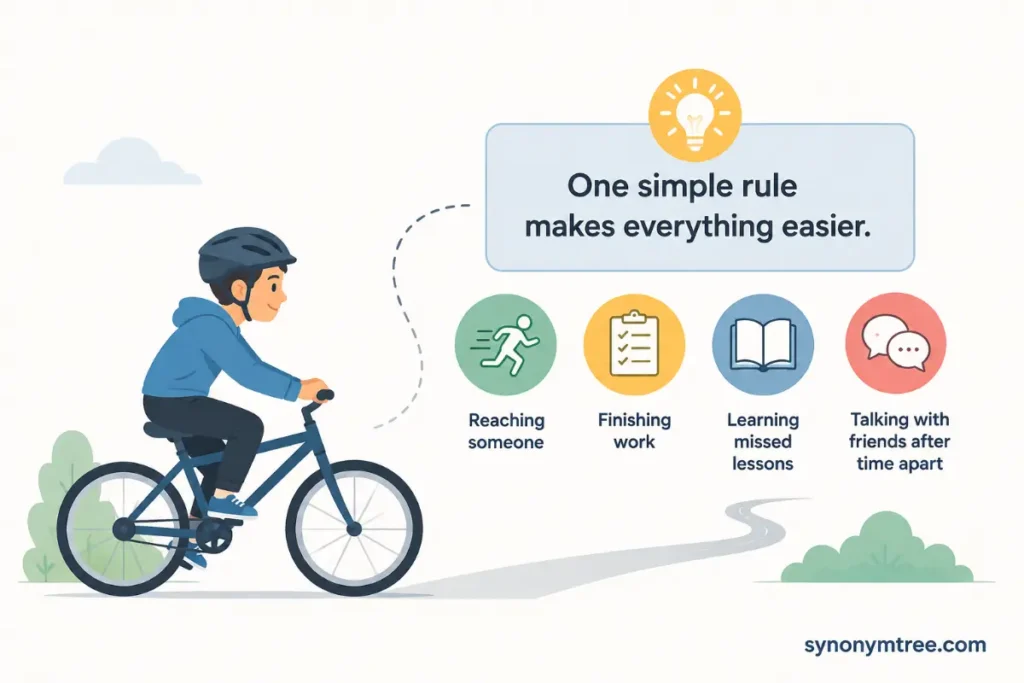
Think about this lesson the same way you would think about riding a bike. At first it feels confusing. Then one simple rule makes everything easier. When you are talking about reaching someone finishing work learning missed lessons or talking with friends after time apart use catch up. You may see catchup used as a noun for an informal meeting but it is much less common. If you are writing for school work or a professional setting catch up is almost always the better choice.
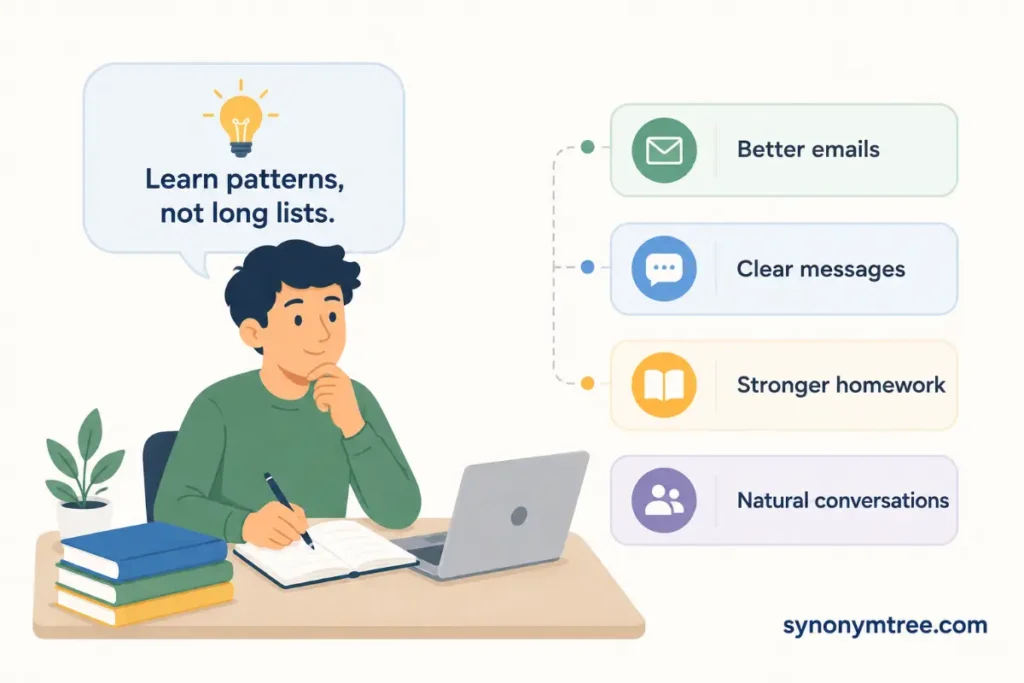
Remember that English becomes easier when you learn patterns instead of memorizing long lists. This small rule will help you write better emails messages homework and everyday conversations. Keep reading real English. Keep listening to native speakers. The more examples you see the more natural the correct form will feel.
Final Answer About These Words
The correct choice in most situations is catch up. Use it when talking about reaching someone finishing missed work learning missed lessons or talking after time apart. Catchup is sometimes used as an informal noun for a friendly meeting but it is much less common. When in doubt choose catch up.
Conclusion
English has many words that look almost the same but work in different ways. Catchup or catch up is one of those pairs. Once you know the simple rule the confusion quickly disappears.
The best habit is to think about the action. If someone is reaching another person finishing missed work or reconnecting with friends use catch up. That is the form you will see most often in books schools workplaces and everyday conversations.
Keep practicing with real sentences instead of trying to remember long grammar rules. A little practice each day will help you build confidence and make the correct choice naturally.
Frequently Asked Questions About Catchup Or Catch Up
What does catch up mean in simple words?
Catch up means reaching the same point as someone else or talking with someone after being apart.
Is catchup or catch up correct?
Catch up is correct in most situations. Catchup is sometimes used as an informal noun.
When should I use catch up?
Use catch up when talking about missed work missed lessons reaching someone or reconnecting with people.
Why do people get confused between these words?
They sound the same when spoken and both forms appear online. That makes many learners unsure.
Can I use catchup in school writing?
It is better to use catch up because it is the standard form in formal writing.
Is catch up one word or two words?
For the action it is normally written as two words.
Can catch up mean talking with friends?
Yes. It often means meeting someone after a long time to share news and stories.
Is catchup common in everyday English?
It appears sometimes as an informal noun but catch up is much more common.
