
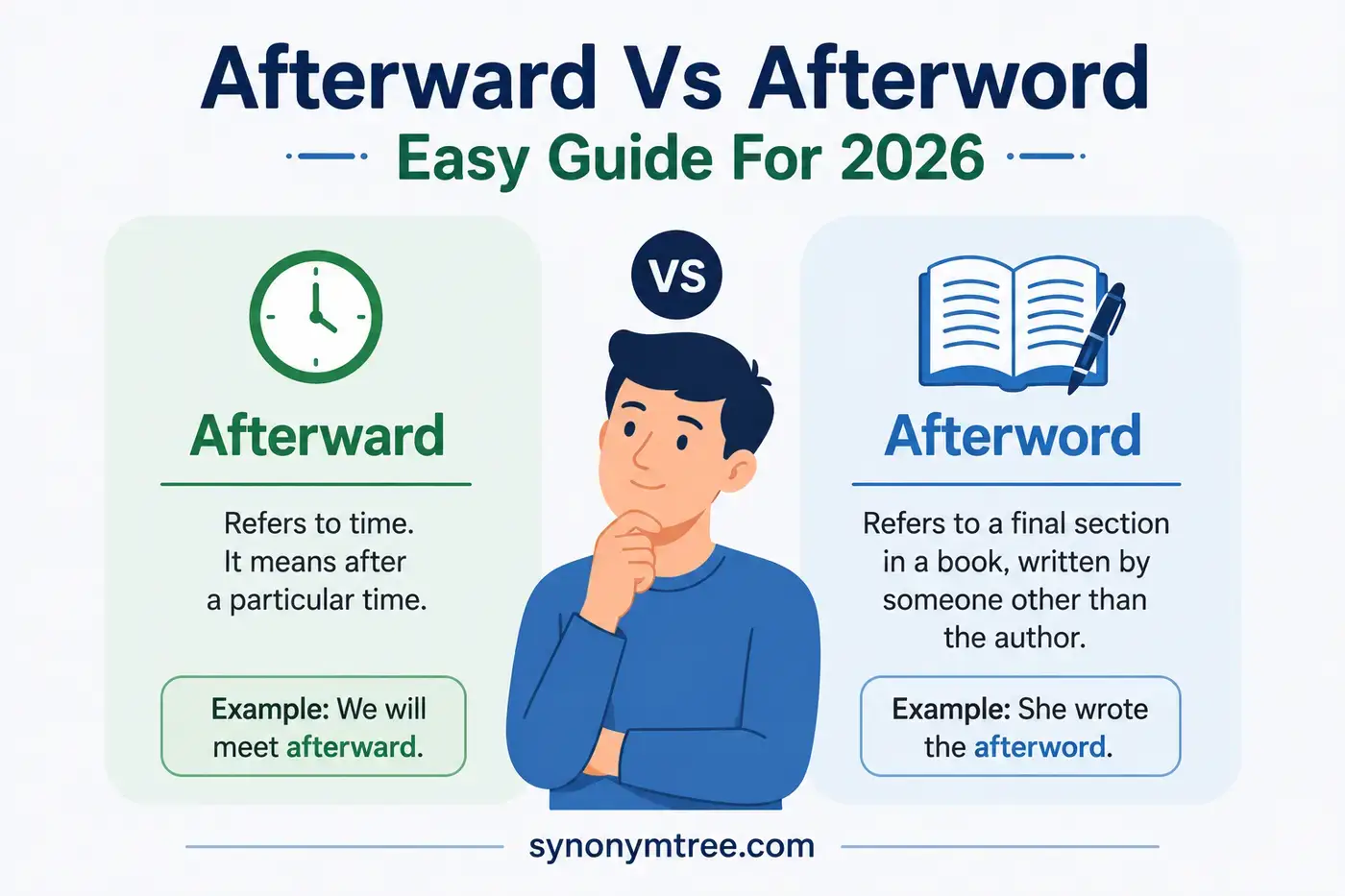
Many English learners search for afterward vs afterword because these two words look almost the same. They have very different meanings. One talks about time. The other is part of a book. Learning the difference will help you avoid a common writing mistake.
You may see both words while reading books articles or school lessons. Since they differ by only one letter many people accidentally use the wrong one. That mistake is easy to fix once you understand what each word means.
This guide explains these words in very simple English. You will learn the meaning of each word why people confuse them and how to use the correct one in real life.
Simple Answer In One Look About Afterward Vs Afterword
Afterward means later or after something happens.
Afterword is a short section at the end of a book.
What These Words Means In Simple English
The difference between these two words is simple. Afterward is about time. It tells us that something happens later. You use it when talking about events. For example you might finish dinner and afterward watch a movie. The word tells the reader what happened next. Afterword is completely different. It is a piece of writing placed at the end of a book. The author or another writer often uses it to share final thoughts explain how the book was written or tell readers what happened after the main story. Even though the words look alike they are never used in the same way. One belongs in everyday conversations. The other belongs in books. A simple way to remember the difference is this. Afterward is about time. Afterword is about words in a book.
Why People Mix Afterward Vs Afterword
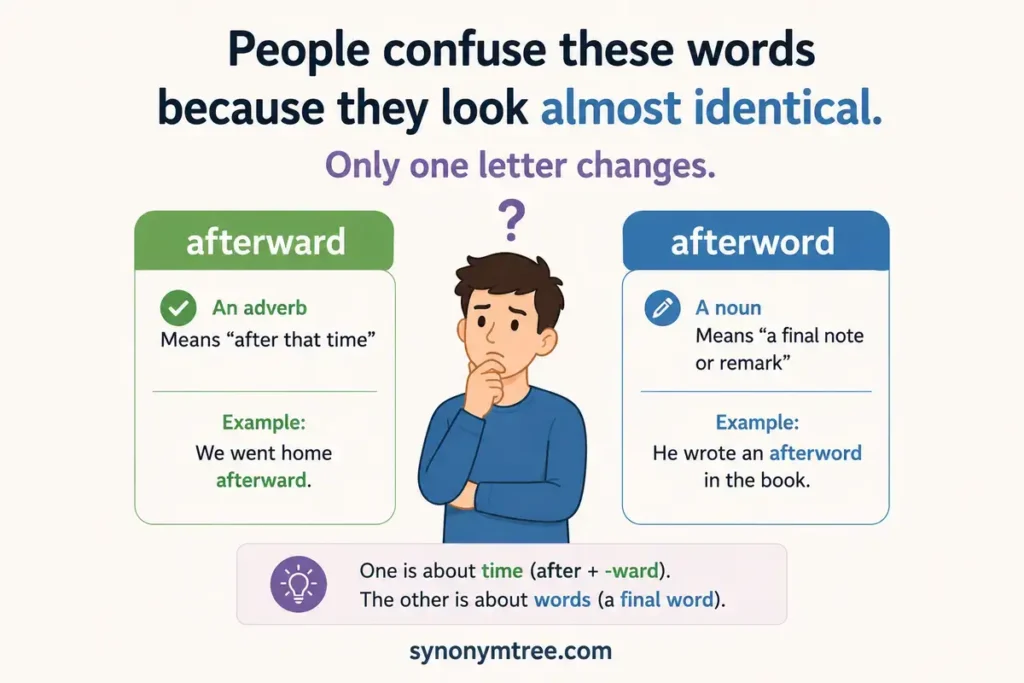
People confuse these words because they look almost identical. Only one letter changes.
Another reason is that many people hear the words before they see them in writing. Both words sound very similar in normal conversation.
Some learners also think every word ending with word must relate to writing. Others forget that afterward ends with ward and talks about time.
Typing quickly can also cause mistakes. Since spell check may not always catch the error if you use another real English word it is important to understand the meaning instead of depending only on technology.
The easiest way to avoid confusion is to ask yourself one question.
Are you talking about time or a book?
If you mean later choose afterward.
If you mean the final section of a book choose afterword.
Clear Difference Explained Simply About These Words
Here is an easy comparison.
- Afterward means later.
- Afterword is the final section of a book.
- Afterward talks about time.
- Afterword talks about writing.
- Afterward is common in everyday conversations.
- Afterword is mostly used by authors publishers and readers.
Think of it like this. Afterward answers the question when. Afterword answers the question what part of the book. That small difference makes choosing the correct word much easier.
Which Form Should You Use In Afterward Vs Afterword
Choose afterward if you are talking about something that happens later. Choose afterword if you are talking about the closing section of a book. The rule is always the same. If you can replace the word with later use afterward. If you mean extra writing at the end of a book use afterword.
Here are a few examples.
- We went home afterward.
- She called me afterward.
- I enjoyed reading the afterword.
- The author’s afterword explained why the story was written.
Reading these examples several times helps the difference become easy to remember.
Easy Real Life Sentences You Can Use With These Words
These examples show both words in everyday situations.
- We went out for lunch afterward.
- I felt much better afterward.
- The teacher asked us to read the afterword.
- The afterword shared the author’s personal story.
- We talked afterward about the game.
- I always read the afterword before closing a good book.
- They laughed afterward because everything worked out well.
- The afterword answered many questions about the novel.
Notice that afterward fits naturally with actions and events. Afterword always refers to writing at the end of a book.
Where These Words Comes From Simple History
The word afterward has been part of English for hundreds of years. It comes from older English words that meant later or following an event. People have used it for a very long time to describe something that happens next. The word afterword appeared much later. Writers and publishers began using it for a short message placed after the main part of a book. This section often includes personal thoughts notes about the writing process or information that helps readers understand the book better.
Even though the two words have similar spellings they grew for different reasons. One became a common time word. The other became a publishing term. Knowing this history makes the difference easier to remember. Think of afterward as part of everyday life because it talks about events. Think of afterword as part of a book because it is written for readers after the main story ends. Many English learners remember this rule by connecting the word word with books. That simple picture stays in the mind and helps prevent mistakes.
As your English improves you will notice both words in different places. Afterward appears in conversations emails news stories and daily writing. Afterword usually appears inside books biographies novels and nonfiction works. Small differences like this make English interesting. Once you understand them your writing becomes clearer and more accurate. Now that you understand the basic difference between these words you are ready for the next section. There you will learn how these words appear in culture stories daily life common mistakes and frequently asked questions. That extra practice will help you remember the correct word every time.
How Afterward Vs Afterword Is Understood In Culture And Stories
The words afterward and afterword appear in very different places even though they look almost the same. The word afterward is common in stories because it helps readers follow the order of events. It tells us what happens next after an important moment. A writer may describe a family eating dinner and afterward taking a walk together. This simple word keeps the story moving in a smooth and natural way.
The word afterword belongs to the world of books. After readers finish the main story they may find an afterword at the end. This section often shares the author’s thoughts feelings or the reason for writing the book. Sometimes it explains what happened after the story ended. Readers enjoy this extra section because it helps them understand the book better.
Many famous books include an afterword. Some authors thank their readers. Others explain real events that inspired the story. Even though afterward and afterword look similar they play very different roles in English.
Biblical And Mythological Meaning Of Afterward Vs Afterword
The word afterward appears many times in English Bible translations. It simply means later or after something has happened. For example people prayed and afterward received guidance. In many stories important events happened first and afterward people celebrated learned a lesson or continued their journey.
The word afterword does not have a special meaning in the Bible because books written during biblical times did not use modern publishing sections like today’s books. Modern Bible editions may include an afterword written by editors or translators but this is not part of the original text.
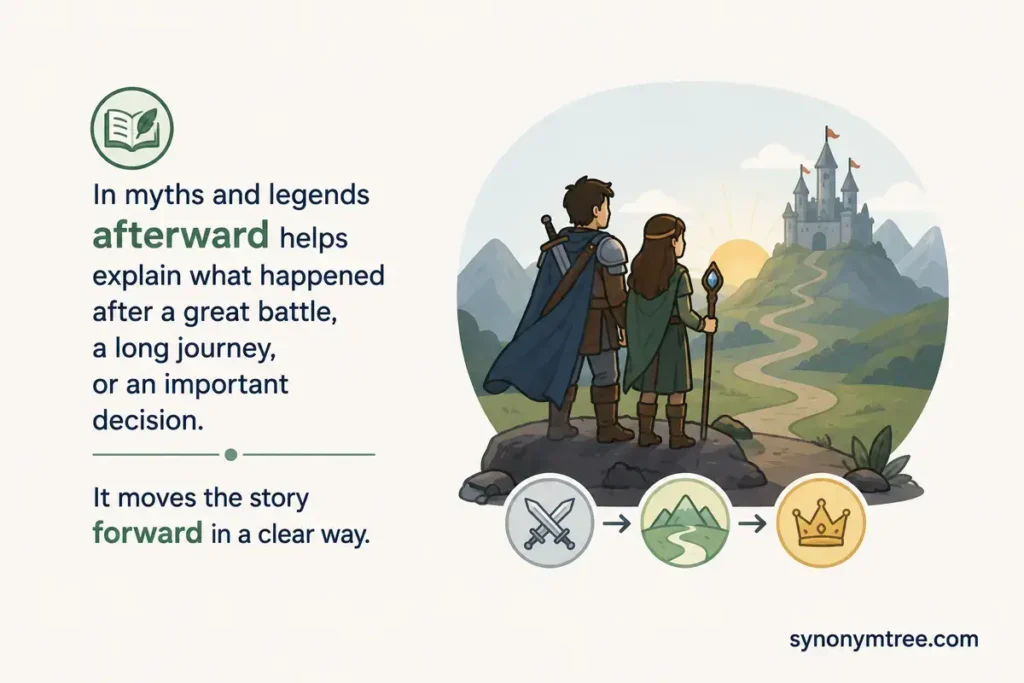
In myths and legends afterward helps explain what happened after a great battle a long journey or an important decision. It moves the story forward in a clear way.
Symbolism Explained In Simple Words
What Afterward Represents In These Words
The word afterward often represents moving forward in life. It reminds us that every event has another step waiting. Good times and hard times both have an afterward. That idea gives people hope because difficult moments do not last forever.
Stories often use afterward to show learning growth and fresh beginnings. A character faces a challenge and afterward becomes stronger wiser or kinder.
What Afterword Represents In These Words
The word afterword represents reflection and final thoughts. It gives readers one last chance to hear from the author after the story ends. It often feels like a friendly conversation between the writer and the reader.
An afterword can also represent gratitude because many authors thank the people who helped them create the book. It closes the reading journey in a thoughtful and personal way.
Related Words You Should Know About Afterward Vs Afterword
Learning similar words helps you understand English more easily.
- Later.
This means something happens after the present time.
- Then.
This shows the next event in a sequence.
- Finally.
This means the last event happens.
- Epilogue.
This is a final part of a story that tells readers what happened after the main ending.
- Preface.
This is a short section before the main part of a book.
- Introduction.
This gives readers information before the main content begins.
- Conclusion.
This is the ending part of a piece of writing.
- Appendix.
This is extra information added at the end of some books.
These words are useful because they often appear with afterward or afterword in reading and writing.
How People Actually Use Afterward Vs Afterword In Daily English
People usually use afterward in everyday conversations because it talks about time. The word afterword appears much less often because most people only see it while reading books.
Here are some natural examples.
- We went shopping afterward.
- I felt much better afterward.
- The teacher asked us to read the afterword before returning the book.
- The author’s afterword answered many questions.
- We talked afterward about the movie.
- She smiled afterward because everything worked out.
- I always enjoy reading the afterword in history books.
- They went home afterward and rested.
- The afterword explained how the true story ended.
- We had dessert afterward.
These examples show that afterward belongs to everyday life while afterword belongs to books.
Common Mistakes People Make With Afterward Vs Afterword
Many learners confuse these words because only one letter is different. That small difference changes the meaning completely.
Here are the most common mistakes.
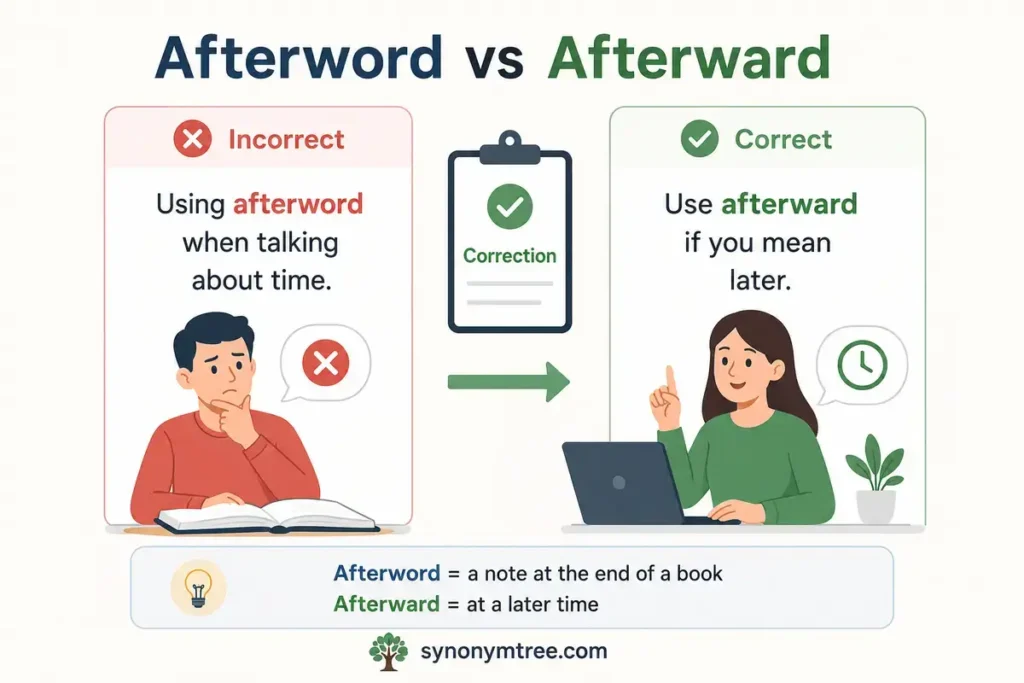
- Using afterword when talking about time.
Correction.
Use afterward if you mean later.
- Using afterward when talking about the end of a book.
Correction.
Use afterword for the final written section in a book.
- Thinking both words mean the same thing.
Correction.
They have different meanings and cannot replace each other.
- Guessing the spelling without thinking about the meaning.
Correction.
Ask yourself if you are talking about time or a book.
A simple memory trick can help. The word afterword contains the word word. That reminds you it belongs to writing and books.
Final Teacher Explanation About These Words
Imagine we are in class together. A student asks why these words are so confusing. The answer is simple. They look almost the same but they do different jobs. If you are talking about something that happens later always use afterward. If you are talking about the final section of a book always use afterword. Do not choose the word by its spelling alone. Think about its meaning first. That habit will help you make the correct choice every time. The more you read good English books and articles the easier these words become. Practice writing your own sentences and soon the difference will feel natural.
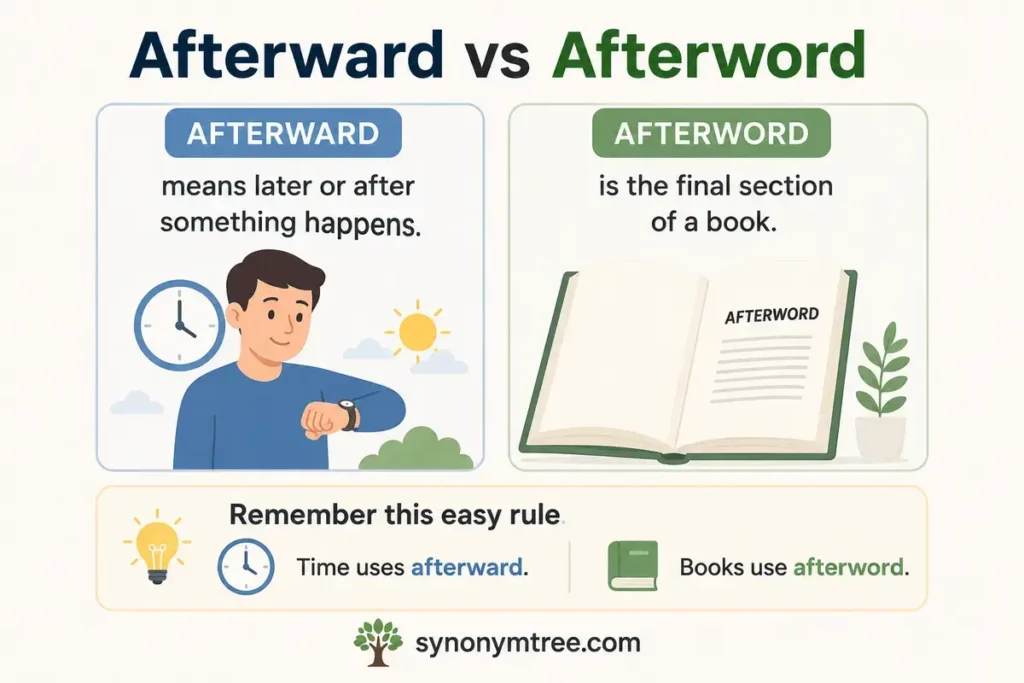
Final Answer About Afterward Vs Afterword
Afterward means later or after something happens. Afterword is the final section of a book. Remember this easy rule. Time uses afterward. Books use afterword.
Conclusion
The difference between afterward vs afterword is simple once you understand what each word does. Even though they look very similar they belong in completely different situations. One helps describe time while the other describes part of a book.
The best way to remember the difference is to focus on the meaning instead of the spelling. Read good English often and practice using both words in your own sentences. Small lessons like this help build stronger writing skills over time. Keep learning one word at a time. Every new lesson makes your English clearer more accurate and more confident.
Frequently Asked Questions About Afterward Vs Afterword
What does afterward mean in simple words?
Afterward means later or after something has happened.
What does afterword mean in simple words?
Afterword is a short section at the end of a book where the author shares final thoughts.
Is afterward or afterword correct?
Both are correct. They have different meanings and are used in different situations.
Why do people confuse these words?
They look and sound very similar but one talks about time and the other is part of a book.
When should I use afterward?
Use afterward when talking about something that happens later.
When should I use afterword?
Use afterword when talking about the closing section of a book.
Can I use both forms in writing?
Yes. Use afterward for time and afterword for books.
