
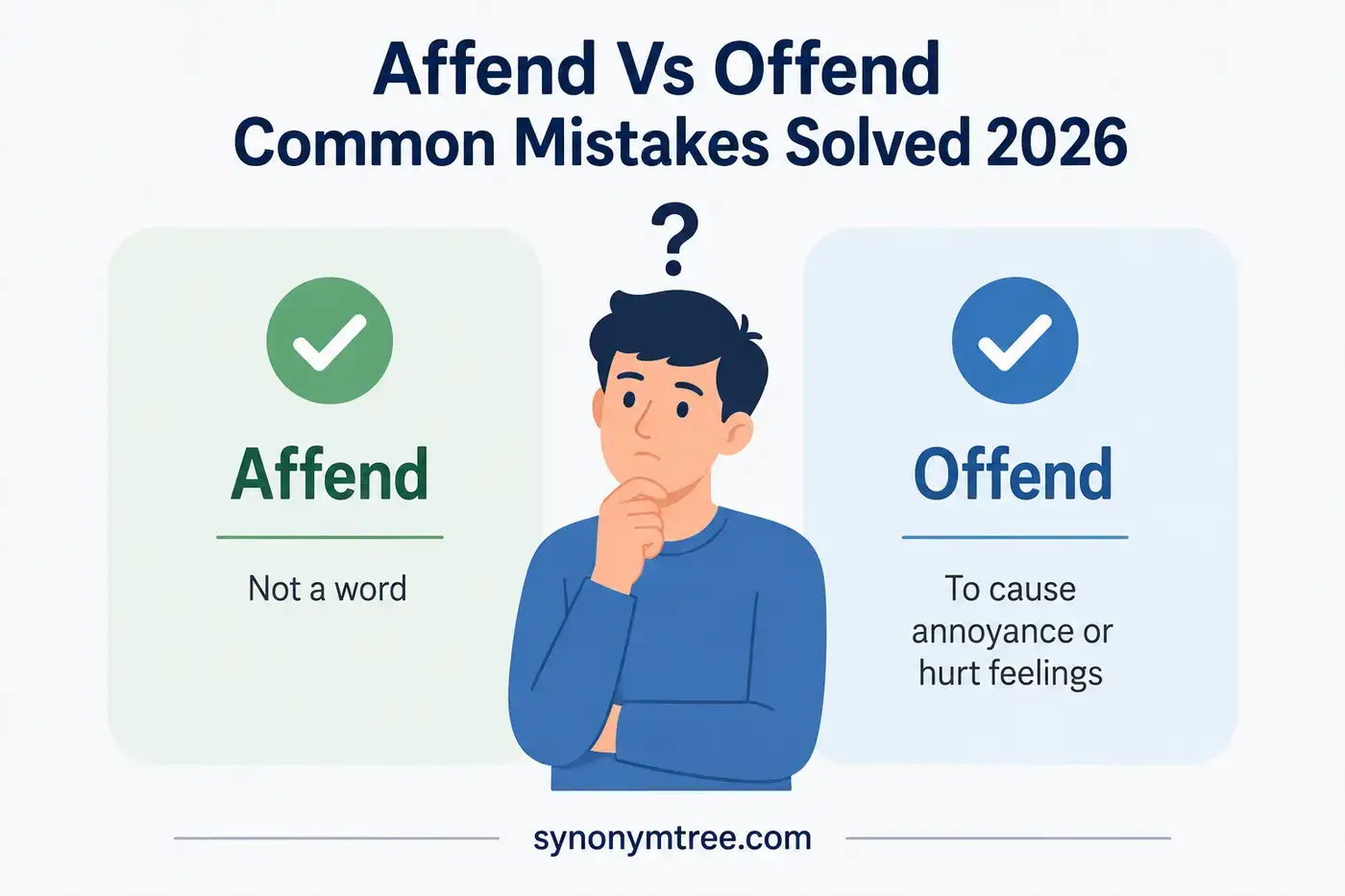
Many people search for affend vs offend because the two words look similar. One is the correct English word. The other is only a spelling mistake. Knowing the difference helps you write clearly and avoid common errors.
You may see someone type affend in a text message or online search. That usually happens because people guess the spelling or type too fast. The correct word is offend. Once you learn this simple rule you will remember it every time.
This guide explains everything in easy English. You will learn what the word means why people confuse the spellings and how to use the correct form in real life. By the end you will feel confident using the right word.
Simple Answer In One Look About The Correct Word
Offend is the correct English word. Affend is not a correct English word. It is a spelling mistake.
What Affend Vs Offend Means In Simple English
The word offend means to hurt someone’s feelings or make someone upset because of your words or actions. Sometimes people offend others by accident. Sometimes they do it on purpose. For example if someone says something rude another person may feel offended. People also use offend when talking about breaking rules or going against good manners.
Here are a few easy examples.
- I did not mean to offend you.
- His joke offended some people.
- Please do not offend your friends with unkind words.
- She was offended by the rude comment.
- Good manners help us avoid offending others.
The word affend has no meaning in English. It is simply a misspelling of offend. Whenever you write for school work emails or social media always use offend.
Why People Mix These Words
This mistake happens more often than many people think. One reason is that the words sound similar when spoken quickly. Some people hear the word but have never seen it written correctly. Another reason is that English spelling can be tricky. The letter O at the beginning of offend may sound softer in fast speech. That leads some people to type an A instead. Typing quickly also causes mistakes. Small phone keyboards and fast texting make spelling errors easy to miss. Some people also copy the wrong spelling after seeing it online. A spelling mistake can spread if others repeat it. The good news is that this mistake is easy to fix. Just remember that the correct word always starts with the letter O.
Clear Difference Explained Simply In the incorrect spelling
The difference is very easy.
- Offend is the correct English word.
- Affend is an incorrect spelling.
- Offend appears in dictionaries.
- Affend does not appear as a correct English word.
- Teachers editors and spell check tools accept offend.
- Good writing always uses offend.
Here is another simple way to remember it. The word begins with O because the correct spelling is offend. If it begins with A you have made a spelling mistake. That quick reminder helps many students remember the correct form.
Which Form Should You Use In the incorrect spelling
Always choose offend. Never use affend in homework reports business writing or everyday messages. If you accidentally write affend simply change the first letter from A to O.
Here are a few examples.
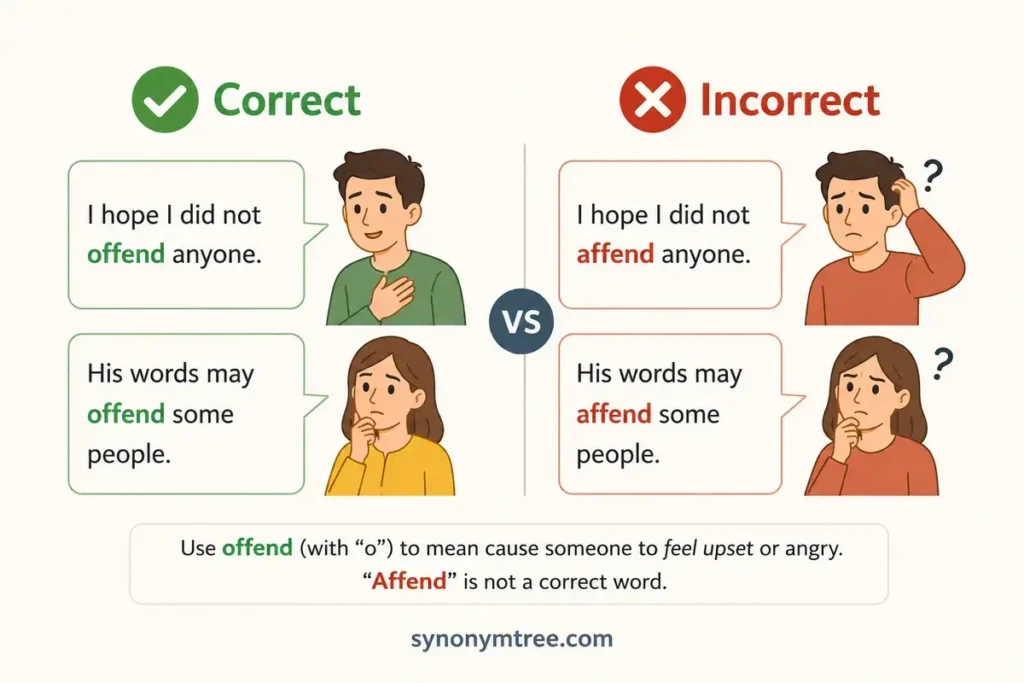
- Correct. I hope I did not offend anyone.
- Correct. His words may offend some people.
- Incorrect. I hope I did not affend anyone.
- Incorrect. His words may affend some people.
The rule never changes. If you want correct English always write offend.
Easy Real Life Sentences You Can Use With Offend
These examples sound natural in everyday American English.
- I never want to offend my friends.
- Please tell me if my words offend you.
- She apologized because she did not want to offend anyone.
- His joke did not offend me.
- Good listeners try not to offend others.
- Parents teach children not to offend people with rude words.
- The teacher explained why the comment could offend someone.
- We should speak kindly so we do not offend others.
Every example uses offend because it is the correct spelling. Replacing it with affend makes every sentence incorrect. Reading correct examples often helps you remember the spelling.
Where Affend Vs Offend Comes From Simple History
The word offend has been part of English for hundreds of years. It came from older Latin and French words that meant to strike against hurt or do something wrong. Over time English kept the spelling offend. Writers teachers and dictionaries accepted this form and it became the standard English word. The spelling affend never became part of standard English. It only appears because of typing mistakes spelling errors or confusion. That is why every trusted dictionary uses offend. The history is simple. The English language has always accepted offend as the correct spelling.
Learning the story behind a word often makes it easier to remember. When you know that offend has been used correctly for hundreds of years you are less likely to replace the first letter with A. Think of spelling like following a map. One road takes you to the right place. The other road leads the wrong way. The correct road here is offend. Every time you read books newspapers websites or school lessons you will see offend used correctly. The more often you notice it the easier it becomes to remember.
Small spelling lessons like this build strong writing skills over time. Each correct word makes your writing clearer and easier for others to understand. Now you know the basic difference between these words. In the next section you will learn how this word is used in culture stories daily life common mistakes and simple questions that many English learners ask. That extra practice will help you remember the correct spelling with confidence every time.
How Affend Vs Offend Is Understood In Culture And Stories
The word offend appears in many stories movies and everyday conversations. It often shows a moment when someone says or does something that hurts another person’s feelings.
Many stories teach children that words can be just as powerful as actions. A careless comment may offend someone even if no harm was intended. That is why many parents and teachers remind children to think before they speak.
In family stories friends sometimes offend each other by mistake. They talk about the problem say they are sorry and become friends again. These stories teach kindness honesty and respect. People also use offend when talking about good manners. Being polite helps people avoid hurting others with their words or actions. The spelling affend has no cultural meaning because it is not a real English word. It only appears because of spelling mistakes.
Biblical And Mythological Meaning Of The Correct Word
The word offend appears in many English Bible translations. It often describes actions that cause someone to stumble make someone upset or go against God’s teachings.
For example the Bible teaches people to treat others with kindness and care. Hurting others on purpose is discouraged. The focus is on love forgiveness and respect.
In old myths and legends people sometimes offended kings leaders or gods by showing disrespect or breaking important rules. These stories often teach lessons about wisdom humility and careful choices.
The spelling affend has no meaning in the Bible mythology or religious writing because it is not a correct English word.
Symbolism Explained In Simple Words
What Offend Represents In Affend Vs Offend
The word offend often represents hurt feelings.
It can remind people to choose kind words.
It can also show the importance of respect and understanding.
Many stories use this idea to teach that words have power. Speaking with care can build friendships while careless words can damage them.
Learning this word also reminds us that saying sorry can help heal hurt feelings.
What Affend Represents In These Words
The word affend does not represent any idea or symbol.
It is simply a spelling mistake.
If readers notice it they may think the writer rushed or forgot to check the spelling.
Using offend instead makes your writing look careful and correct.
Related Words You Should Know About Affend Vs Offend
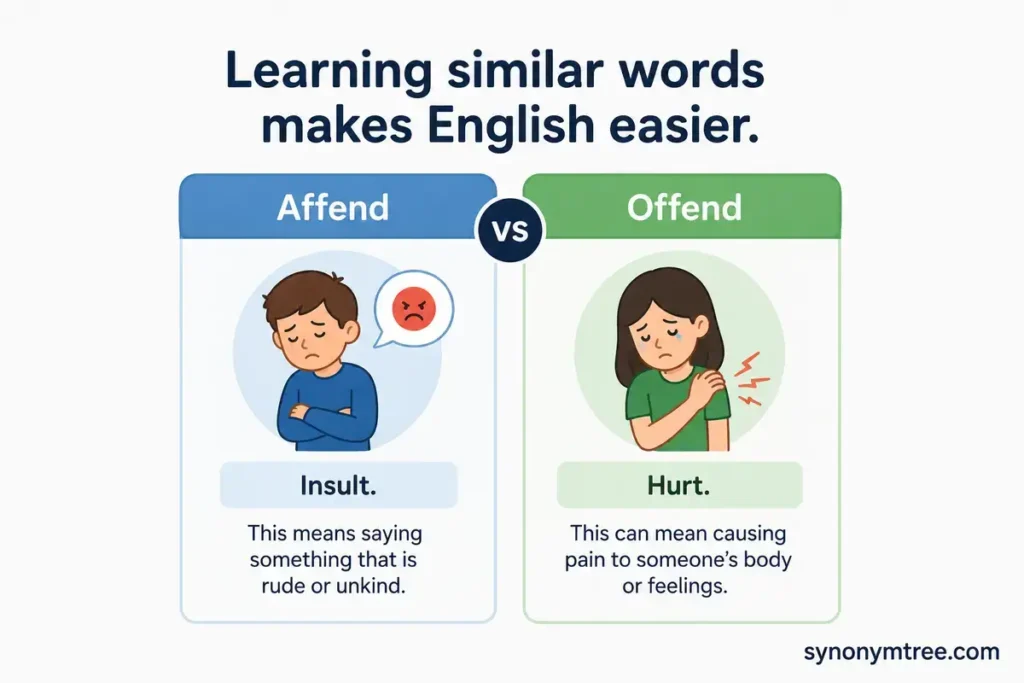
Learning similar words makes English easier.
- Insult.
This means saying something that is rude or unkind.
- Hurt.
This can mean causing pain to someone’s body or feelings.
- Upset.
This means making someone feel sad or unhappy.
- Respect.
This means treating people kindly and politely.
- Apologize.
Its means saying sorry after making a mistake.
- Forgive.
This means choosing to stop feeling angry after someone says sorry.
- Rude.
It showing bad manners.
- Polite.
This means showing kindness and good manners.
These words are often used in the same conversations as offend.
How People Actually Use These Words In Daily English
People use offend in many everyday situations.
Here are some simple examples.
- I did not want to offend my neighbor.
- Please tell me if my words offend you.
- His joke offended a few people.
- She tried not to offend anyone during the meeting.
- Good friends try not to offend each other.
- Parents teach children not to offend others with rude words.
- The teacher explained why that comment could offend someone.
- We should think before we speak so we do not offend people.
- I hope this question does not offend you.
- Kind words help us avoid offending others.
Notice that every sentence uses offend. That is always the correct spelling.
Common Mistakes People Make With Affend Vs Offend
This spelling mistake is easy to fix once you know the rule.
Here are the most common mistakes.
- Writing affend instead of offend.
Correction.
Always start the word with the letter O.
- Thinking both spellings are accepted.
Correction.
Only offend is correct in English.
- Copying the wrong spelling from online posts.
Correction.
Learn spelling from trusted dictionaries books and teachers.
- Typing too fast and missing the mistake.
Correction.
Read your writing one more time before sending it.
- Ignoring spell check.
Correction.
Spell check can quickly point out the mistake and help you fix it.
A simple memory trick can help.
Think of the word open.
It starts with O.
The word offend also starts with O.
That small reminder makes the spelling easier to remember.
Final Teacher Explanation Of Affend Vs Offend
Imagine you are sitting in class.
A student writes affend on the board.
The teacher smiles and says there is only one small mistake.
The first letter should be O.
Now the word becomes offend.
That one small change makes the spelling correct.
English has many words that confuse people. This is one of them. Making a spelling mistake does not mean you are a bad writer. It simply means you are still learning.
The best writers check their spelling often.
Every time you read write or practice English you become a little better.
Remember this simple classroom rule.
Offend is the correct word.
Affend is never correct.
If you remember that one idea you will avoid this mistake every time.
Final Answer About These Words
Offend is the correct English word. Affend is only a spelling mistake and should not be used in school work business writing or everyday English. Remember that offend always begins with the letter O.
Conclusion
Learning the difference between affend vs offend is simple once you know the correct spelling. Small spelling mistakes happen to everyone but fixing them makes your writing stronger and easier to understand.
Practice using offend in your own sentences every day. The more you read and write the more natural the correct spelling will feel. Good writing grows through small lessons like this one. Keep learning one word at a time. Every new word adds confidence and helps you become a better English writer and speaker.
Frequently Asked Questions About Affend Vs Offend
What does these words mean in simple words?
Offend is the correct English word that means to hurt someone’s feelings. Affend is not a real English word.
Is affend or offend correct?
Offend is always the correct spelling.
Why do people confuse affend vs offend?
Many people guess the spelling or type too quickly and replace the first letter with A.
Can I use affend in writing?
No. You should always use offend because it is the correct English spelling.
How can I remember the correct spelling?
Remember that offend starts with the letter O. Affend is always incorrect.
Does affend appear in dictionaries?
No. Standard English dictionaries only list offend.
Is offend used in American and British English?
Yes. Offend is the correct spelling in both American English and British English.
