
Many English learners get confused about busing or bussing because both spellings appear in books websites and everyday writing. The good news is that both forms can be correct. The best choice depends on the meaning and the style guide you are following. Once you understand the small difference you will know which spelling fits your sentence.
This lesson explains these words in very simple English. You will learn what each spelling means why people mix them up and how to use them with confidence. You do not need to memorize hard grammar rules. Just follow a few easy ideas.
By the end of this lesson you will understand the difference between these spellings and know how to use them in school work emails and everyday conversations.
Simple Answer In One Look About These Words
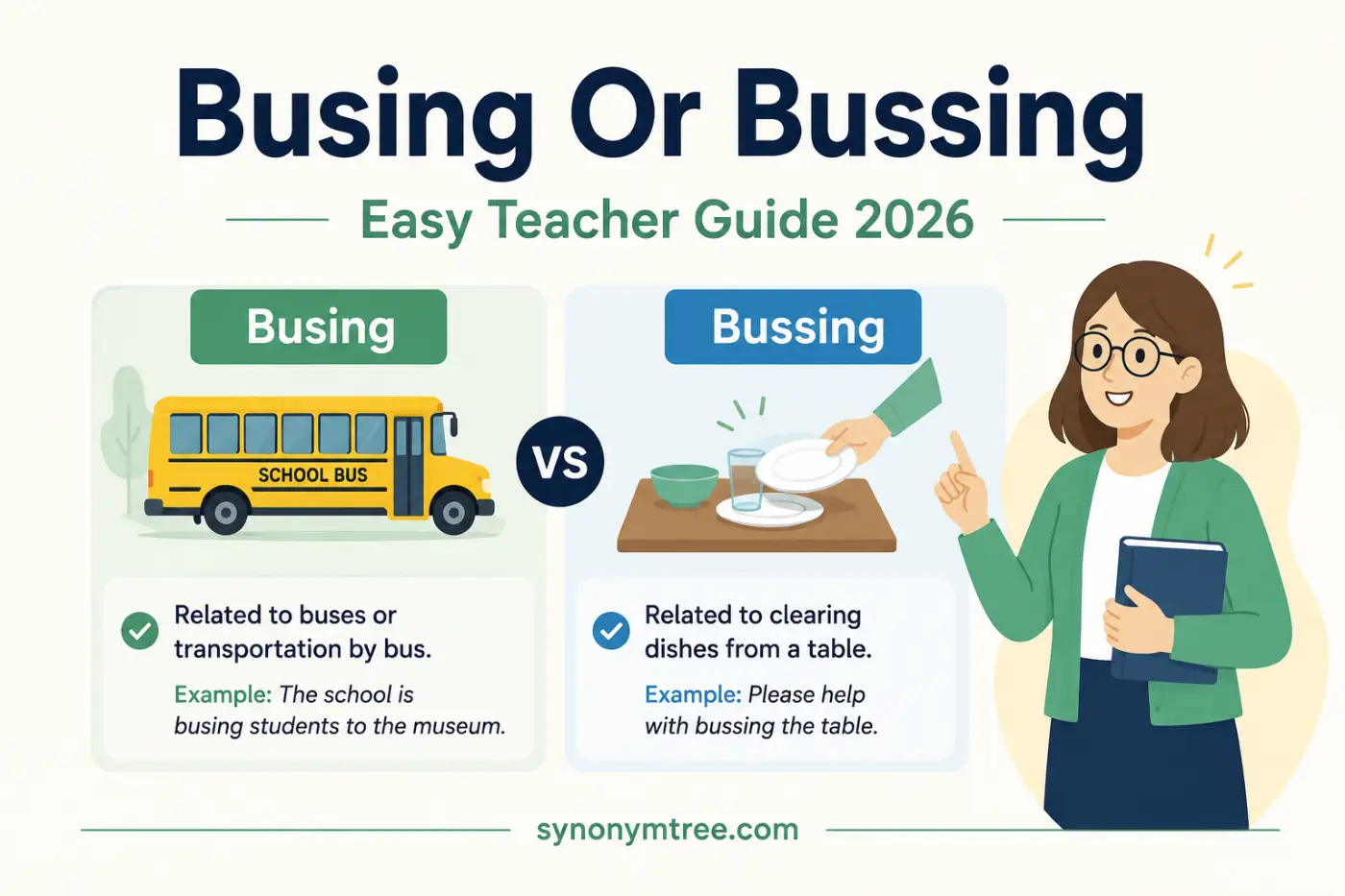
Both spellings are correct. Busing is the more common spelling for transportation. Bussing is often used for clearing tables in restaurants and is also accepted by many dictionaries for transportation.
What Busing Or Bussing Means In Simple English
The both words come from the word bus. They describe the action of moving people by bus or working with buses. In many cases they have the same meaning. For example a school may talk about busing students from one neighborhood to another. A city may also discuss busing people to special events or public places.
The spelling bussing is also correct in many dictionaries. Some writers use it for the same transportation meaning. Other writers use bussing mainly when talking about restaurant workers clearing dirty dishes from tables. That is where the confusion begins. Many style guides prefer busing for transportation because it looks cleaner and is easier to read. Many restaurants and hospitality businesses prefer bussing when talking about clearing tables because it helps readers avoid confusing it with buses.
Think about these examples.
- The school is busing students to the new campus.
- The city started busing visitors to the festival.
- The restaurant worker is bussing tables after lunch.
- She spent the afternoon bussing dishes in the café.
- The district continued busing children across town.
Notice how the meaning changes with the situation. The transportation examples use buses. The restaurant examples describe clearing tables. Sometimes you may even see bussing used for transportation in newspapers books or websites. That does not make it wrong. It simply follows a different spelling preference. The most important step is understanding the meaning of the sentence before choosing the spelling.
Why People Mix These Words
People confuse these spellings for several simple reasons. The first reason is that both spellings are accepted in English. Unlike many word pairs where one choice is wrong this pair has two correct forms. The second reason is that dictionaries do not always show the same preference. One dictionary may list busing first while another gives equal value to both spellings. The third reason is that different publishers follow different style guides. A newspaper may choose one spelling while a school textbook chooses another.
Another reason is pronunciation. Both words sound exactly the same when spoken. You cannot hear the extra letter. That makes it easy to miss the spelling difference while reading or writing. Many learners also think every word ending with ing should double the final letter. English does not always work that way. Some words double the last letter and some do not. That is why spelling patterns sometimes feel confusing.
Real life situations also add to the confusion.
Imagine reading these sentences.
- The school is busing students to a science museum.
- The school is bussing students to a science museum.
Both sentences can be correct because both spellings are accepted for transportation.
Now read these examples.
- The waiter spent the evening bussing tables.
- The server was bussing dishes before closing time.
In restaurant writing the spelling bussing is much more common because it clearly describes clearing tables instead of transporting people. Many learners ask which spelling they should choose. The answer is simple. If you are writing about transportation then busing is usually the safest choice because it is the preferred spelling in most modern American style guides.
If you are writing about restaurant work then bussing is the clearest choice because it avoids confusion. Understanding the meaning always matters more than memorizing the spelling. The more you read books news articles and everyday English the easier this choice becomes. Soon you will recognize the correct spelling almost without thinking.
Clear Difference Explained Simply About These Words
The easiest way to understand busing or bussing is to look at the meaning first. The spelling comes after that. Most confusion disappears when you focus on what the sentence is talking about. If the sentence is about transportation then most American style guides prefer busing. If the sentence is about clearing tables in a restaurant then bussing is the spelling most people expect to see.
Here is a simple comparison.
- Busing usually means transporting people by bus.
- Bussing often means clearing tables in a restaurant.
- Busing is the preferred spelling for schools cities and public transportation in American English.
- Bussing is widely used in restaurants hotels and food service jobs.
- Both spellings can describe transportation in many dictionaries.
- Context tells the reader which meaning is correct.
Now think about these everyday situations. A school district starts a new transportation program. The school is busing students from nearby neighborhoods. A busy restaurant is getting ready for dinner. Workers are bussing tables as customers leave. The two sentences use similar words but describe completely different actions.
Here are more examples.
- The city is busing visitors to the sports stadium.
- The restaurant employee is bussing tables after lunch.
- Our school started busing students last fall.
- She spent the evening bussing dishes before closing time.
- The company is busing workers to the job site.
- The waiter finished bussing every table before going home.
These examples show why context matters. The reader quickly understands the meaning because the situation is clear.
Which Form Should You Use In These Words
The best spelling depends on what you want to say. If your sentence talks about buses transporting people then choose busing. It is the spelling you will see most often in American schools government writing newspapers and education articles. If your sentence talks about restaurant work then choose bussing. This spelling helps readers understand that someone is clearing dishes wiping tables or cleaning the dining area.
You can also think about your audience. If you are writing a school paper about transportation then busing is usually the better choice.If you are writing a restaurant job description then bussing sounds more natural.Ask yourself one simple question. What is happening in the sentence. If people are riding a bus then write busing. If someone is cleaning tables then write bussing.
This simple habit makes the choice much easier. Keep in mind that some dictionaries accept bussing for transportation too. If you see it in a book or article it is not automatically wrong. It simply follows a different spelling style. Choosing one spelling and using it consistently is also a good writing habit.
Easy Real Life Sentences You Can Use With Busing Or Bussing
Practice helps you remember new words much faster. Read these examples and notice how the meaning changes with the situation.
The first group uses busing for transportation.
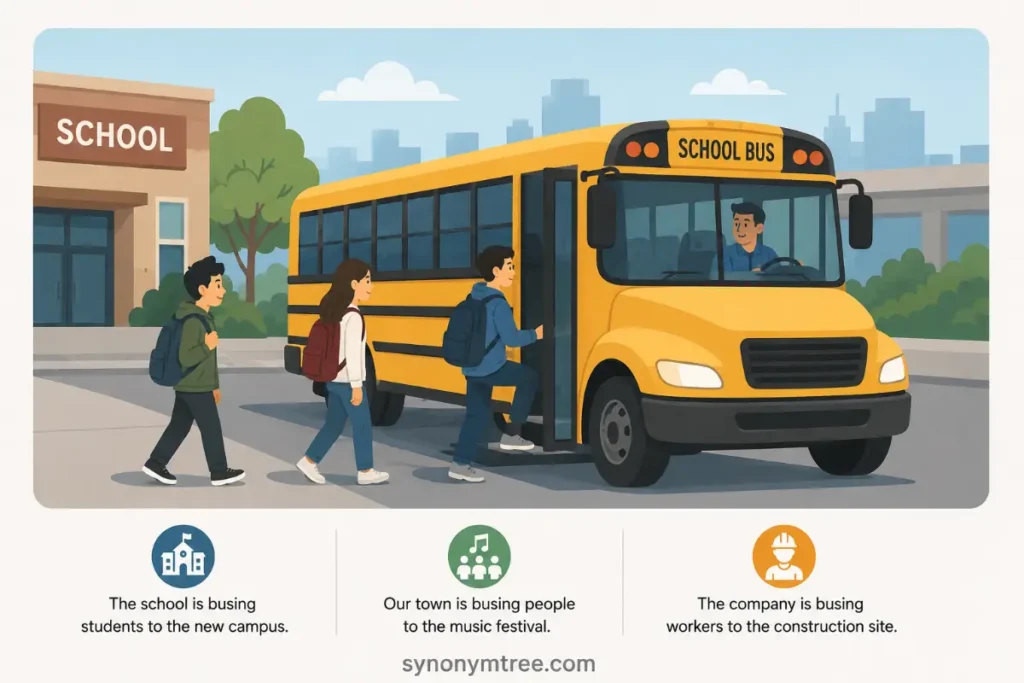
- The school is busing students to the new campus.
- Our town is busing people to the music festival.
- The company is busing workers to the construction site.
- The district started busing children across town.
- They are busing visitors from the parking area.
- The camp is busing children to the lake every morning.
Now read examples with bussing in restaurant work.
- The server is bussing tables after lunch.
- He spent the afternoon bussing dishes.
- She enjoys bussing tables because she likes staying active.
- The manager thanked everyone for bussing the dining room quickly.
- They were bussing tables before the dinner rush.
- The new employee learned bussing duties on the first day.
Now look at both meanings together.
- The school is busing students while the restaurant worker is bussing tables.
- The city keeps busing visitors during the fair and nearby restaurants stay busy bussing tables all day.
- We watched buses arrive outside while employees inside were bussing tables for the next guests.
Reading examples like these helps your brain connect each spelling with the correct situation.
Where These Words Comes From
The word bus first became popular as a short form of a longer Latin based word that described transportation for everyone. As buses became common people started creating new words from the noun. The verb bus meant to transport people by bus. From that verb came the spelling busing. Later restaurant workers also began using the verb bus to describe clearing tables and removing dirty dishes. Many people started spelling this form as bussing to make it easier to tell apart from transportation. Over time both spellings appeared in dictionaries. Modern English accepts both in different situations.
That is why you may see different spellings in books newspapers websites and job listings. English changes over time. Some words develop more than one accepted spelling. This is one of those cases. The important part is not memorizing every style guide. The important part is understanding the meaning you want to share.
When your meaning is clear your writing becomes clear too. As you continue learning English you will notice that context often matters more than spelling alone. A single word can take on different meanings depending on how people use it. In the next section you will discover how these words appears in culture everyday life common mistakes practical writing and frequently asked questions. These examples will help you remember the correct spelling with confidence.
How Busing Or Bussing Is Understood In Culture And Stories
Words often become easier to understand when you see them in real life. The same is true for these words. These spellings appear in schools restaurants news stories and everyday conversations because they describe common activities. When people hear busing they usually think about transportation. They picture yellow school buses city buses or buses carrying groups of people to events. For example a story about a school district may explain that students are busing across town to attend a different school. A news report may describe a city busing visitors to a large concert because parking is limited.
Restaurant stories usually use bussing in a different way. A manager may thank workers for bussing tables quickly during a busy dinner. A server may explain that bussing tables helped the restaurant stay clean and ready for new guests. These different situations help readers understand the meaning without needing extra explanation.
Think about these simple examples.
- The school is busing students to the science fair.
- The city is busing fans to the football stadium.
- The restaurant worker is bussing tables after lunch.
- The café stayed busy because employees kept bussing dishes.
- The hotel staff spent the evening bussing tables before closing.
Books and movies also use these words naturally. A family story may describe children busing to school every morning. A restaurant scene may show young workers bussing tables during their first job. These examples make the meanings easy to remember because they connect to everyday life.
Biblical And Mythological Meaning Of Busing Or Bussing
There is no special Biblical meaning for these words. These words are modern English words connected with transportation and restaurant work. The Bible was written long before buses existed. Because of that you will not find these words in Biblical stories. Ancient stories do describe people traveling together by walking riding animals or using boats. If those stories happened today people might travel by bus instead. The same idea applies to mythology. Old myths talk about journeys messengers and travelers but not buses or restaurant jobs. So this topic has a simple answer. There is no religious or mythological meaning connected to these words. The words keep their everyday meanings.
Symbolism Explained In Simple Words
What Busing Represents
The word busing often represents connection movement and opportunity. A school bus brings children together from different neighborhoods. A city bus helps people reach work school hospitals and parks. Because of this many people connect busing with learning community and access.
Think about these examples.
- Busing helps students reach school.
- Busing connects neighborhoods.
- Busing gives people another way to travel.
- Busing helps large events run more smoothly.
The word often suggests working together so everyone can reach the same destination.
What Bussing Represents
The word bussing usually represents service teamwork and responsibility. Restaurant workers who bus tables help keep the dining room clean. Their work allows new guests to enjoy a comfortable meal. Many people start their first job bussing tables. That is why the word also reminds people of learning responsibility and building work skills.
Think about these examples.
- Bussing tables keeps the restaurant clean.
- Bussing helps the whole team work faster.
- Bussing teaches responsibility.
- Bussing supports good customer service.
Even though the two spellings look alike they create different pictures in the reader’s mind. One points toward transportation. The other points toward restaurant service.
Related Words You Should Know
Learning related words makes English easier because you start seeing connections between ideas.
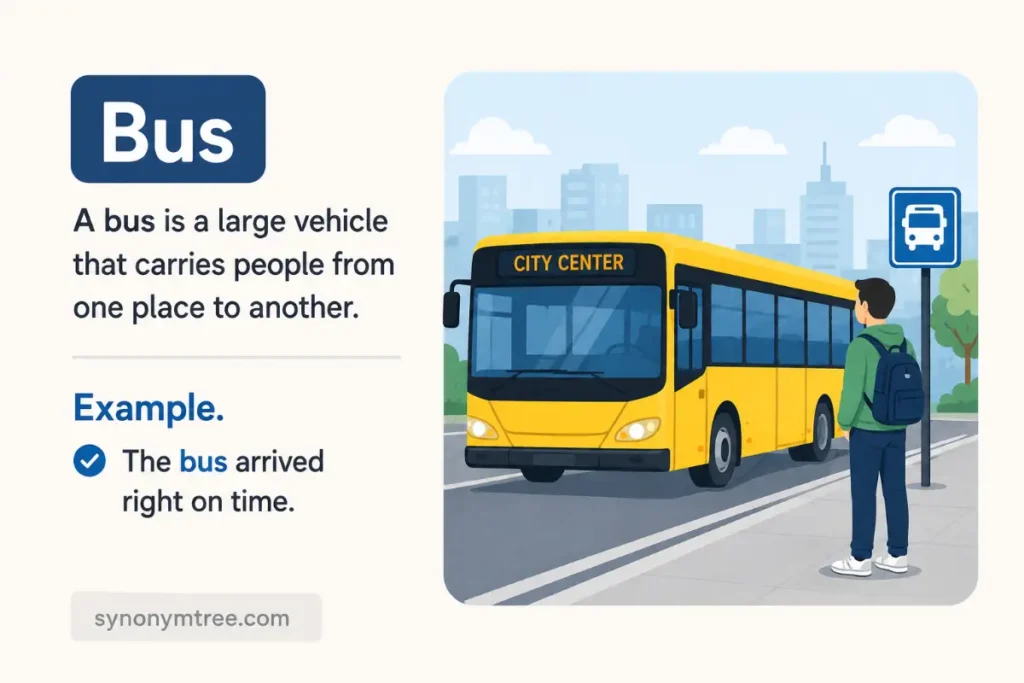
Bus
A bus is a large vehicle that carries people from one place to another.
Example.
The bus arrived right on time.
Transport
Transport means moving people or things from one place to another.
Example.
The buses transport students every morning.
Travel
Travel means going from one place to another.
Example.
Many families travel by bus during the summer.
Transit
Transit means a public transportation system.
Example.
The city improved its public transit system.
Route
A route is the path a bus follows.
Example.
The new route serves more neighborhoods.
Table Service
Table service means helping customers in a restaurant.
Example.
Good table service makes guests feel welcome.
Server
A server brings food and drinks to customers.
Example.
The server smiled at every guest.
Clear
Clear means removing dishes and cleaning a table after people finish eating.
Example.
The worker cleared every table before new guests arrived.
These related words help you understand both meanings of busing or bussing more naturally.
How People Actually Use These Words In Daily English
Most people use these words without thinking about grammar. They simply choose the spelling that matches the situation.
Here are common examples with busing.
- Our school is busing students to the museum.
- The city is busing visitors to the concert.
- The company is busing employees to the office.
- They started busing children across the county.
- The event is busing guests from the parking lot.
- The camp is busing kids to the lake every morning.
Now look at examples with bussing.
- She is bussing tables after school.
- He spent the weekend bussing dishes at a busy restaurant.
- The staff finished bussing every table before closing.
- They hired two students for bussing duties.
- Everyone helped with bussing after the large family dinner.
- Bussing tables taught him how to work quickly with a team.
These examples show that real English depends on context. Once you know the situation the correct spelling becomes much easier to choose.
Common Mistakes People Make With These Words
Many learners worry that one spelling is always wrong. That is the biggest misunderstanding. Both spellings are accepted in English, but they are not always the best choice for every situation. Another common mistake is using the restaurant spelling when writing about school transportation.
Incorrect example.
- The district is bussing students to the new school.
Better choice in American English.
- The district is busing students to the new school.
Many American style guides prefer busing when the sentence is about transportation.
People also make the opposite mistake.
Incorrect example.
- The waiter spent the evening busing tables.
Better choice.
- The waiter spent the evening bussing tables.
The spelling bussing makes the restaurant meaning much clearer.
Some writers switch between spellings in the same article without a reason. This can confuse readers.
For example.
- The city is busing visitors to the event. Later the article says the city is bussing visitors to the event.
A better choice is to stay consistent. Pick one spelling that matches your style guide and use it throughout the piece.
Here are more examples.
- The school is busing children every morning.
- The hotel worker is bussing tables after breakfast.
- The company is busing employees to the office.
- The café hired two people for bussing duties.
- The park is busing visitors from the parking lot.
When you focus on the meaning instead of the spelling pattern the correct choice becomes much easier.
Final Teacher Explanation About These Words
You do not need to remember long spelling rules to understand busing or bussing. Keep one simple idea in your mind. Think about the action. If the sentence talks about buses moving people from one place to another then busing is usually the best choice in American English. If the sentence talks about clearing tables in a restaurant then bussing is the spelling most readers expect. You may still see bussing used for transportation in some dictionaries books or articles. That does not make it wrong. English has more than one accepted spelling for some words.
Your goal is not to memorize every dictionary. Your goal is to make your meaning clear. Reading books newspapers websites and everyday conversations will help you see these spellings in real situations. The more examples you read the more natural they will feel. Soon you will stop guessing because the meaning will guide your choice.
Final Answer Quick Recap About These Words
Both busing and bussing are correct spellings. Use busing for transportation in most American writing. Use bussing when talking about clearing tables in restaurants. Always choose the spelling that matches your meaning and stay consistent.
Conclusion
The question of busing or bussing is easier than it first appears. Both spellings belong to modern English, but they are often used in different situations. Most American writers choose busing for transportation and bussing for restaurant work because this makes the meaning clear.
The best way to remember the difference is to think about the sentence before you think about the spelling. Ask yourself what the person is doing. If people are traveling by bus then busing is usually the right choice. If someone is clearing tables then bussing is the better choice. With a little practice this decision becomes quick and natural.
Frequently Asked Questions About Busing Or Bussing
Is busing or bussing correct?
Both spellings are correct. The best choice depends on the meaning and the writing style you are following.
Which spelling is better for school transportation?
Most American style guides recommend busing when writing about transportation.
Why do restaurants use bussing?
Restaurants often use bussing because it clearly refers to clearing tables and avoids confusion with transportation.
Can I use bussing for transportation?
Yes. Some dictionaries accept this spelling, but busing is more common in American English.
Why do people confuse these words?
Both words sound exactly the same and many dictionaries accept both spellings. That makes the choice confusing for many learners.
Is one spelling wrong?
No. Neither spelling is completely wrong. The meaning and the style guide usually decide which one fits best.
How can I remember the difference?
Think about the action. Transportation usually uses busing. Restaurant work usually uses bussing.
