
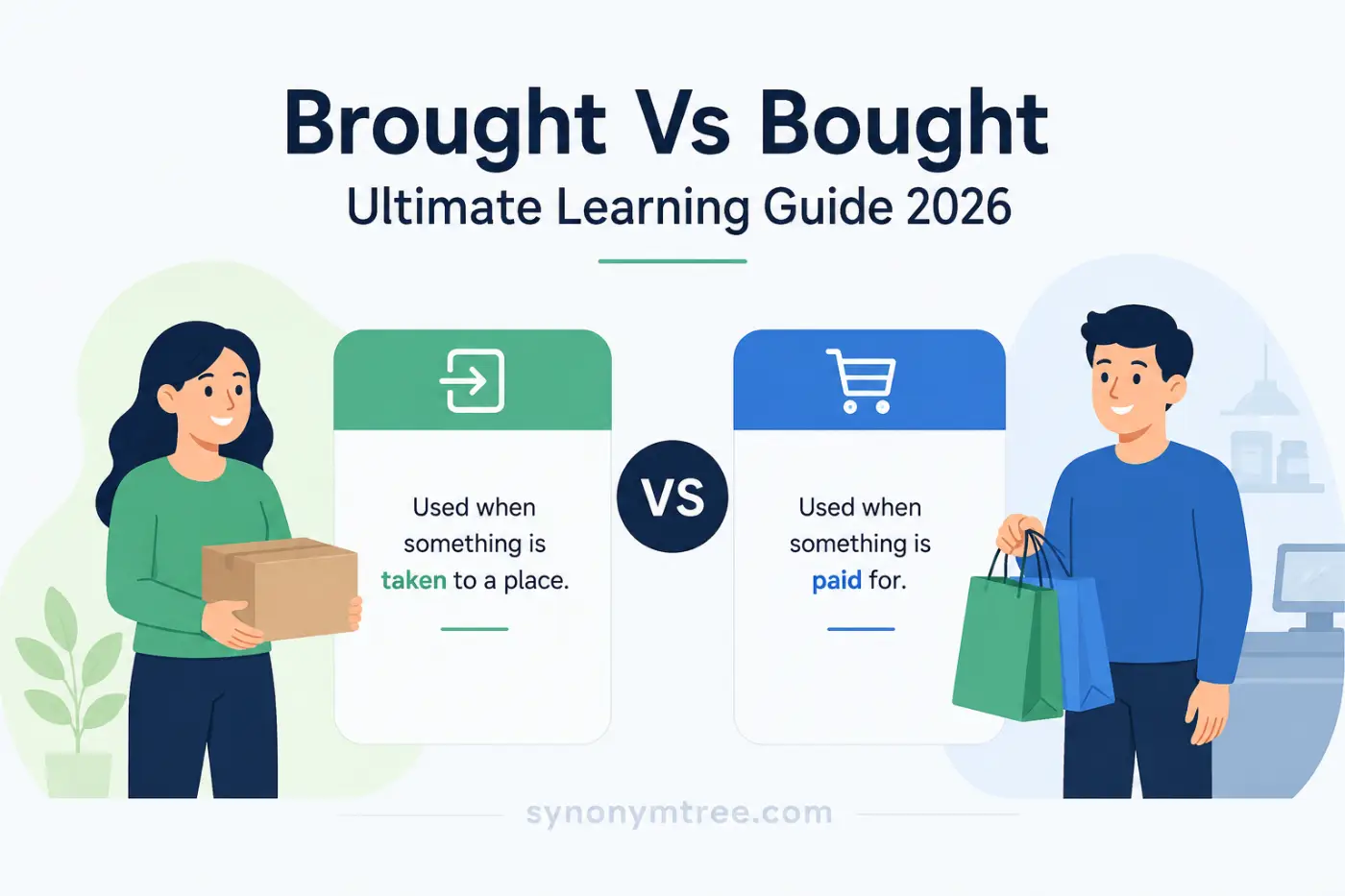
Many English learners mix up brought vs bought because the words sound almost the same. They also look similar when you read them quickly. Even native English speakers sometimes pause before using them. The good news is that the difference is very simple once you know what each word means.
If you remember one easy rule you will stop making this mistake. Bought is about buying something. Brought is about bringing something from one place to another. That is the biggest difference between brought vs bought and it works in almost every situation.
This lesson will help you understand the meaning of both words with simple explanations real life examples and easy tips you can remember. By the end you will know which word to use in everyday conversations school writing emails and work.
Simple Answer In One Look About These Words
Bought means you paid money for something. Brought means you carried or took something to a place. If money is involved use bought. If moving something is involved use brought.
What Brought Vs Bought Means In Simple English
Many people think these words have the same meaning because they sound alike. They do not. They come from two different verbs and describe two different actions. Bought is the past form of buy. You use it when you pay money to get something. It always connects to shopping spending money or getting something through payment. You can think about walking into a store paying at the checkout and leaving with your item. That action is buying. After it happens you say you bought it.
Brought is the past form of bring. You use it when someone carries takes or comes with something to another place. Money has nothing to do with this action. The focus is on moving an item from one place to another. Imagine your friend comes to your house with a pizza. Your friend brought the pizza. Nobody is talking about paying for it. The important action is bringing it. This one small difference can help you choose the correct word almost every time.
A simple memory trick makes it even easier.
Buy becomes bought.
Bring becomes brought.
The first word starts with buy and the second starts with bring. Match the past form to the correct verb and you will rarely make a mistake.
Think about these situations.
- You paid for a new phone yesterday. You bought a new phone.
- You carried the new phone to school today. You brought the new phone to school.
- Your mom paid for fresh bread. She bought fresh bread.
- She carried the bread home. She brought the bread home.
- Your friend paid for movie tickets. Your friend bought the tickets.
- Your friend carried the tickets to the theater. Your friend brought the tickets.
Why People Mix These Words
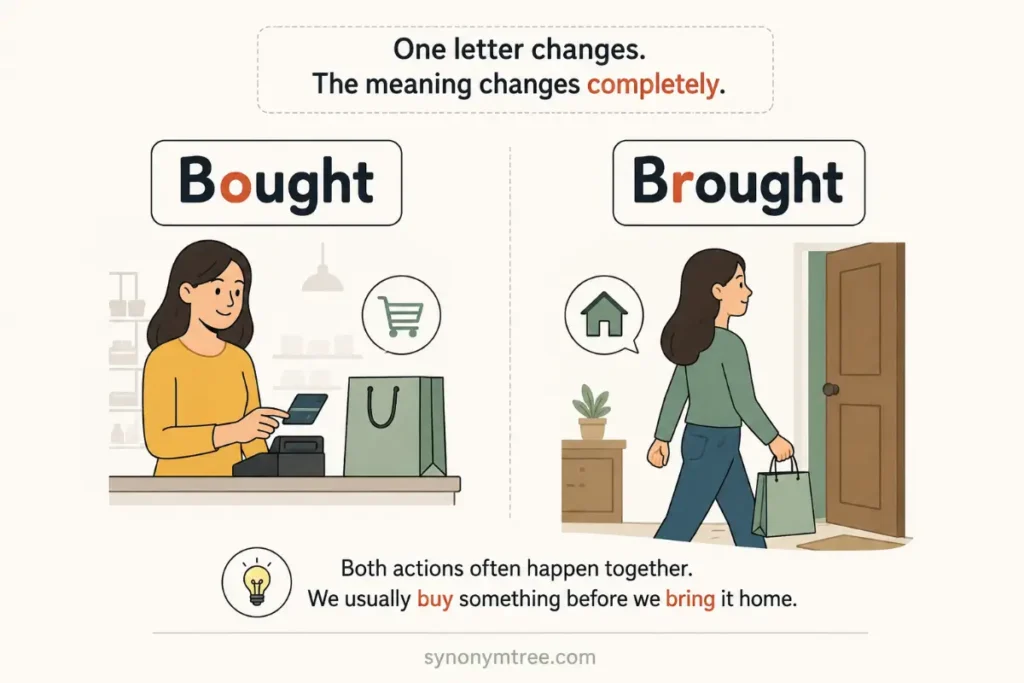
The confusion happens for several simple reasons. First both words sound very close when people speak quickly. If you are listening to a fast conversation you may not hear the small difference between the sounds. Second both words have almost the same spelling. Only one letter changes but that one letter changes the meaning completely. Third both words describe actions that often happen together. People usually buy something before they bring it home. Since these actions happen one after another many learners connect the words without noticing they describe different steps. Another reason is that many students remember vocabulary by sound instead of meaning. Since brought and bought rhyme they accidentally replace one with the other. This mistake becomes even more common during conversations because people speak naturally and do not stop to think about every word.
Here are some examples of common mistakes.
- I brought a new laptop yesterday.
- She bought the cake to the party.
- Dad brought a new car last week.
- My sister bought her homework to school.
- We brought new shoes from the mall.
Each sentence uses the wrong word because the action does not match the meaning.
Now read the corrected versions.
- I bought a new laptop yesterday.
- She brought the cake to the party.
- Dad bought a new car last week.
- My sister brought her homework to school.
- We bought new shoes from the mall.
When you ask one simple question the answer becomes clear.
Did someone pay money.
If yes use bought.
Did someone move or carry something.
If yes use brought.
This quick question works almost every time.
Clear Difference Explained Simply For These Words
The easiest way to understand brought vs bought is to compare them side by side. Instead of memorizing long grammar rules focus on the action happening in the sentence.
If the action is paying money then the correct word is bought.
If the action is carrying or taking something somewhere then the correct word is brought.
Here is a simple comparison.
- Bought comes from the verb buy.
- Brought comes from the verb bring.
- Bought means paid money for something.
- Brought means carried something to a place.
- Bought is about shopping.
- Brought is about moving something.
- Bought answers the question What did you purchase.
- Brought answers the question What did you carry.
Now think about a simple story.
Emma went to the grocery store. She bought apples milk and bread. Then she brought the bags home for dinner.
The first action is buying.
The second action is bringing.
The same person used both words correctly because each action was different.
Here is another story.
Jake bought a birthday gift on Friday. He wrapped it at home. On Saturday he brought the gift to his friend’s party.
Again buying happened first.
Bringing happened later.
Stories like these help you remember the difference naturally instead of memorizing rules.
Many teachers tell students to picture a shopping bag.
When you pay for the bag you bought it.
When you carry the bag home you brought it.
That picture stays in your mind and makes the choice much easier.
Which Form Should You Use In Brought Vs Bought
The easiest way to choose the right word is to look at the action in your sentence. You do not need long grammar rules. Just ask yourself one simple question.
Did someone carry take or come with something.
If the answer is yes then use brought.
This simple habit can help you avoid the mistake almost every time. After a little practice your brain will start picking the correct word without thinking too much.
Think about these situations.
- You paid for a cup of coffee before work. You bought a cup of coffee.
- You carried the coffee into your office. You brought the coffee to work.
- Your dad paid for a new bike. He bought a new bike.
- He took the bike to your house. He brought the bike home.
- Your teacher paid for new books. The teacher bought new books.
- The teacher carried the books into the classroom. The teacher brought the books to class.
If you can replace the word with carried or took then brought is the correct choice.
Look at these examples.
- I bought a sandwich for lunch. You could also say I paid for a sandwich for lunch.
- I brought my sandwich to school. You could also say I carried my sandwich to school.
- She bought a new jacket yesterday. She paid for a new jacket yesterday.
- She brought her jacket because it was cold. She carried her jacket because it was cold.
If the replacement makes sense then you have chosen the correct word. Sometimes learners try to guess based on sound. That usually leads to mistakes. Always think about the action instead. Actions never lie.
Many students find it helpful to practice with short questions.
- Did you pay for it. Use bought.
- Did you carry it. Use brought.
- Did your friend pay for the tickets. Use bought.
- Did your friend take the tickets to the movie. Use brought.
- Did your parents pay for dinner. Use bought.
- Did your parents bring dinner home. Use brought.
The more you connect each word to its action the faster you will remember it in real conversations.
Easy Real Life Sentences Using These Words
Real life examples help you understand English much faster than memorizing rules.
The first group shows how to use bought. Every sentence includes paying money for something.
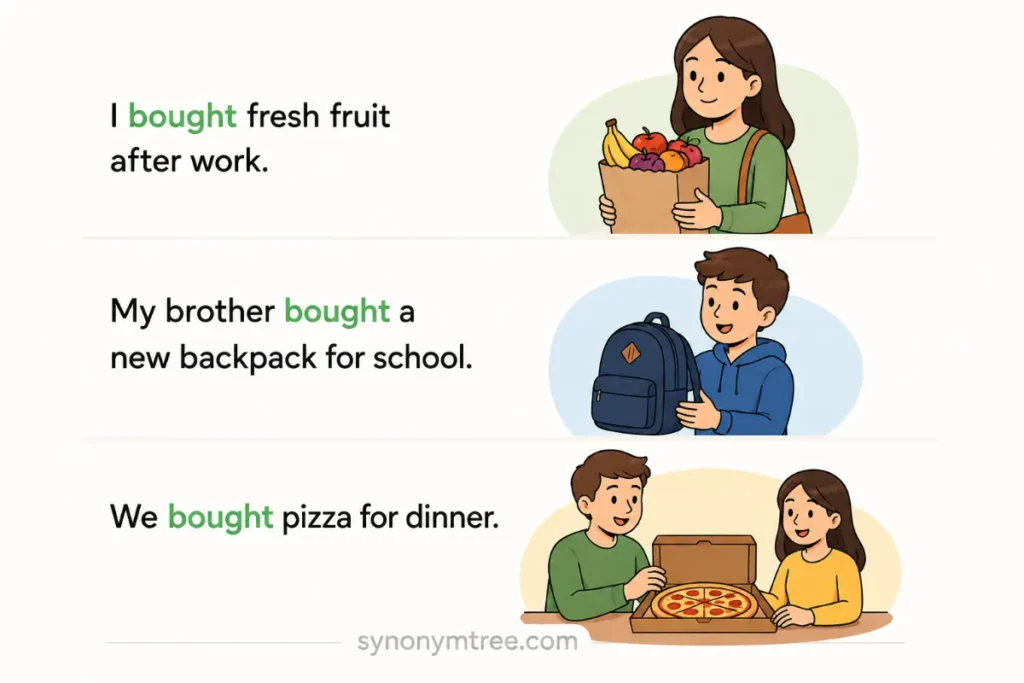
- I bought fresh fruit after work.
- My brother bought a new backpack for school.
- We bought pizza for dinner.
- Sarah bought flowers for her mother.
- They bought a small house near the park.
- Dad bought new tires for the car.
- I bought a notebook because mine was full.
- The family bought a television during the holiday sale.
Now read another group with brought. Every sentence shows someone carrying taking or coming with something.
- I brought my lunch to school.
- My sister brought her camera on vacation.
- He brought extra chairs for the guests.
- We brought blankets because it was cold.
- Dad brought groceries home after work.
- She brought her dog to the park.
- They brought dessert to the family dinner.
- The teacher brought colorful markers to class.
Now look at examples that use both words in the same situation. This helps you see the difference even more clearly.
- I bought a birthday cake and brought it to the party.
- She bought a new dress and brought it on vacation.
- We bought snacks and brought them to the game.
- Dad bought paint and brought it home.
- My friend bought coffee and brought it to the office.
- They bought gifts and brought them to the wedding.
Notice the order in every sentence. Buying happens first because someone pays for the item. Bringing happens later because someone moves the item to another place. That simple pattern appears in everyday English all the time. You can also practice by making your own sentences. Think about something you bought this week. Then think about where you brought it.
Where Brought And Bought Come From
Knowing a little history can make words easier to remember. You do not need to study language history in detail. Just knowing the basic story is enough. The word buy has been part of English for hundreds of years. People used it when talking about paying money to get goods food animals clothing and other things. Over time its past form became bought. Today people still use bought in exactly the same way. Anytime money changes hands and someone gets something the word bought fits naturally.
The word bring is also very old. People used it when talking about carrying leading or taking something from one place to another. As English changed over many years its past form became brought. Even though bought and brought sound similar they did not grow from the same verb. They belong to different word families. You can think of them like two cousins with similar names but different jobs. Bought belongs to the buy family. Brought belongs to the bring family.
That is why they cannot replace each other. English has several word pairs that sound alike but have different meanings. These are common because English borrowed words from many languages over hundreds of years. The good news is that brought and bought are much easier than they first appear. Once you connect each word to its action you will remember them naturally.
A simple picture can help. Picture yourself in a store. You pay for a backpack. You bought the backpack. Now picture yourself walking into school with that backpack on your shoulder. You brought the backpack to school. The backpack is the same but the action changes. That is the secret to remembering these two words for life.
How Brought Vs Bought Is Understood In Culture And Stories
Words become easier to remember when you see them in stories. That is true for brought vs bought too. These two words appear in books movies television shows and everyday conversations because people often buy things and bring them somewhere. Think about a birthday party. One person buys a gift at a store. Later that person brings the gift to the party. Both actions happen in the same story but they mean different things.
Children hear these words from a young age.
- Mom bought cookies at the store.
- She brought the cookies home.
- Grandpa bought a toy.
- Grandpa brought the toy to my birthday.
- My friend bought balloons.
- My friend brought them to the party.
Stories like these help children understand the words without memorizing grammar rules. They learn from real situations.
Many family stories also use these words.
A parent may say that they bought school supplies before the first day of school. Later they may say they brought the supplies into the classroom.
Holiday stories use these words all the time too.
Someone buys decorations from a store. Later they bring those decorations home to decorate the house.
These simple actions happen every day. That is why you hear both words so often.
Movies and television shows also help people remember the difference.
A character may say.
I bought dinner.
Later another character may ask.
Did you bring it home.
The first sentence talks about paying.
The second sentence talks about carrying.
The same pattern appears again and again in everyday English.
Biblical And Mythological Meaning Of These Words
The word bought does not have a special meaning in the Bible or in myths. It simply keeps its everyday meaning of paying for something. The word brought appears much more often because many stories describe people bringing gifts food animals or offerings.
For example people brought gifts to kings.
Families brought food during celebrations.
People brought offerings as part of worship.
In these stories the important action is moving something from one place to another.
The word never means paying for something unless the story also says that someone bought the item first.
Many famous Bible stories include people bringing something.
- They brought gifts.
- They brought food.
- They brought animals.
- They brought good news.
- They brought help to others.
These examples show that brought often connects with kindness sharing service and giving.
In old myths people also brought treasures magical objects or messages to heroes and rulers.
Again the focus is on carrying something.
The action of buying is usually a separate event.
Understanding this makes reading older stories much easier.

Symbolism Explained In Simple Words
What Brought Represents
The word brought often suggests giving helping sharing or caring. When someone brings something they usually help another person or make a situation better.
Think about these examples.
- A neighbor brought soup to a sick friend.
- A student brought flowers for a teacher.
- A family brought food to a community event.
- A child brought a smile to everyone.
In these examples the word is not only about carrying something. It also creates a feeling of kindness generosity or support.
Sometimes brought is even used with ideas instead of objects.
- The news brought happiness.
- Her words brought hope.
- The rain brought fresh air.
- His visit brought comfort.
Nothing is physically carried in these sentences but something meaningful arrives. That is why brought often has a warm emotional feeling.
What Bought Represents
The word bought usually represents choice value effort or planning. Buying something often means someone worked earned money and decided how to spend it.
Think about these examples.
- She bought her first home.
- He bought books to learn English.
- They bought fresh food for dinner.
- We bought new shoes before school started.
These examples show planning and purpose.
Sometimes people also use bought in expressions.
For example someone may say.
Money cannot buy happiness.
This reminds us that some valuable things cannot be purchased.
The word bought usually focuses on ownership because someone paid for something.
The word brought usually focuses on movement because someone carried something somewhere.
Remembering these ideas makes the difference even clearer.
Related Words You Should Know
Learning related words helps your vocabulary grow. These words connect naturally with brought and bought.
Buy
Buy means to pay money for something.
Example.
I want to buy a new notebook.
Bring
Bring means to carry or take something to a place.
Example.
Please bring your homework tomorrow.
Purchase
Purchase means the same as buy but sounds a little more formal.
Example.
They purchased a new computer.
Carry
Carry means to hold and move something.
Example.
She carried her bag to school.
Take
Take means to move something from one place to another. The direction depends on the speaker.
Example.
Please take these papers to the office.
Receive
Receive means to get something from another person.
Example.
I received a birthday card yesterday.
Gift
A gift is something given to another person.
Someone may buy a gift first and later bring it to a celebration.
Delivery
A delivery is something brought to your home or another place.
The company may buy supplies first but the driver brings the package to you.
Learning these related words helps you understand everyday English more naturally.
How People Actually Use Brought Vs Bought In Daily English
Most people never stop to think about grammar when they speak. They simply use the correct word because they understand the action. Listen to everyday conversations and you will hear these words often.
Someone shopping might say.
- I bought fresh vegetables this morning.
- We bought new shoes for the kids.
- My sister bought concert tickets online.
- Dad bought coffee on the way home.
- They bought a beautiful table last weekend.
Later the same people may talk about bringing those things somewhere.
- I brought the vegetables to Grandma.
- We brought snacks for everyone.
- She brought her laptop to work.
- Dad brought coffee for the whole team.
- They brought extra chairs for the picnic.
Notice that real conversations often include both words because buying and bringing happen one after the other. Here is one complete example. Yesterday I bought a cake from the bakery. Then I brought it to my friend’s birthday party. This sounds natural because each word describes a different action. Many English learners become more confident after practicing everyday situations like shopping family dinners school activities vacations and parties. These situations give you many chances to use both words correctly and naturally.
Common Mistakes People Make With These Words
Many people mix up brought vs bought because the words sound very similar. The mistake is common and easy to fix. Once you focus on the action instead of the sound you will usually choose the correct word.
One common mistake is using brought when talking about shopping.
Incorrect.
- I brought a new phone yesterday.
Correct.
- I bought a new phone yesterday.
The phone was paid for. Nobody is talking about carrying it. That is why bought is correct.
Another common mistake is using bought when talking about carrying something.
Incorrect.
- She bought her lunch to school.
Correct.
- She brought her lunch to school.
She carried her lunch to school. She did not pay for it at school.
Some people also mix both words in longer sentences.
Incorrect.
- We brought a birthday gift at the mall and bought it to the party.
Correct.
- We bought a birthday gift at the mall and brought it to the party.
The first action is paying for the gift. The second action is taking the gift to the party.
Here are more examples.
- Dad bought a new chair and brought it home.
- My friend bought flowers and brought them to my birthday.
- We bought drinks before the game and brought them into the stadium.
- Mom bought fresh bread and brought it home for dinner.
- They bought school supplies and brought them to class.
A simple question can save you from this mistake every time.
Did someone pay for it.
If yes use bought.
Did someone carry it.
If yes use brought.
This habit becomes natural after enough practice.
Final Teacher Explanation About These Words
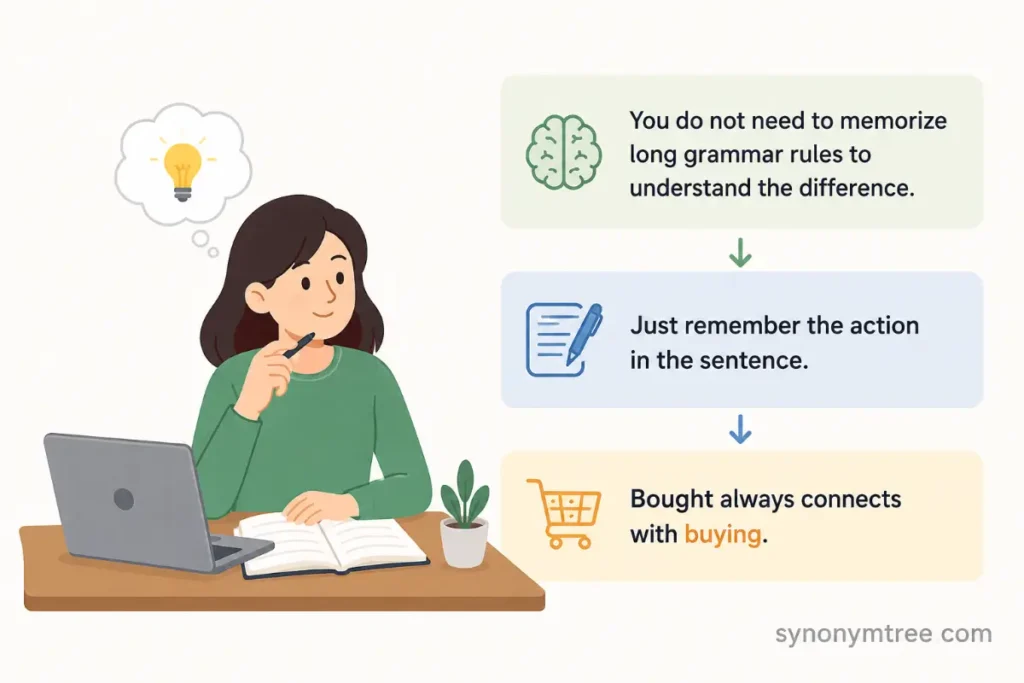
You do not need to memorize long grammar rules to understand brought vs bought. Just remember the action in the sentence. Bought always connects with buying. Someone pays money and gets something. Brought always connects with bringing. Someone carries takes or comes with something. Many real life situations use both words together. Think about shopping.
You buy groceries at the store. Then you bring the groceries home. The same object appears in both sentences but the action changes. That is the secret. Do not look at how the words sound. Look at what the person is doing. If money changes hands use bought. If something moves from one place to another use brought.
Keep practicing with short everyday sentences. Read books. Listen to conversations. Write your own examples. Little by little the correct word will come naturally. Learning English is like building a house. Every small lesson becomes another strong brick. Understanding brought vs bought is one of those bricks that makes your English stronger and more confident.
Final Answer Quick Recap About These Words
Bought means someone paid money for something.
Brought means someone carried or took something to another place.
Remember one easy rule. Buy becomes bought. Bring becomes brought. Think about the action and you will almost always choose the correct word.
Conclusion
Many English words look or sound alike but they have different meanings. Brought vs bought is one of the easiest examples once you know the simple rule. Bought is about paying for something. Brought is about carrying something somewhere. Keep that idea in your mind and the confusion quickly disappears.
Practice with everyday situations like shopping school family dinners vacations and birthday parties. The more you read speak and write these words the more natural they will feel. Every small step helps you become a more confident English speaker and writer.
Frequently Asked Questions About Brought Vs Bought
What is the difference between these words?
Bought means you paid money for something. Brought means you carried or took something to a place.
Is brought the past tense of buy?
No. Brought is the past form of bring. Bought is the past form of buy.
Can I say I brought a new phone yesterday?
Only if you mean you carried the phone somewhere. If you mean you paid for it then say I bought a new phone yesterday.
Why do people confuse these words?
The words sound very similar and have almost the same spelling. They also appear together in many real life situations.
How can I remember these words?
Remember that buy becomes bought and bring becomes brought. Then think about the action in the sentence.
Can one sentence use both brought and bought?
Yes. For example. I bought a cake and brought it to the party.
Which word should I use in school writing?
Use bought when writing about paying for something. Use brought when writing about carrying something to a place.
Are brought and bought interchangeable?
No. They have different meanings and cannot replace each other.
