
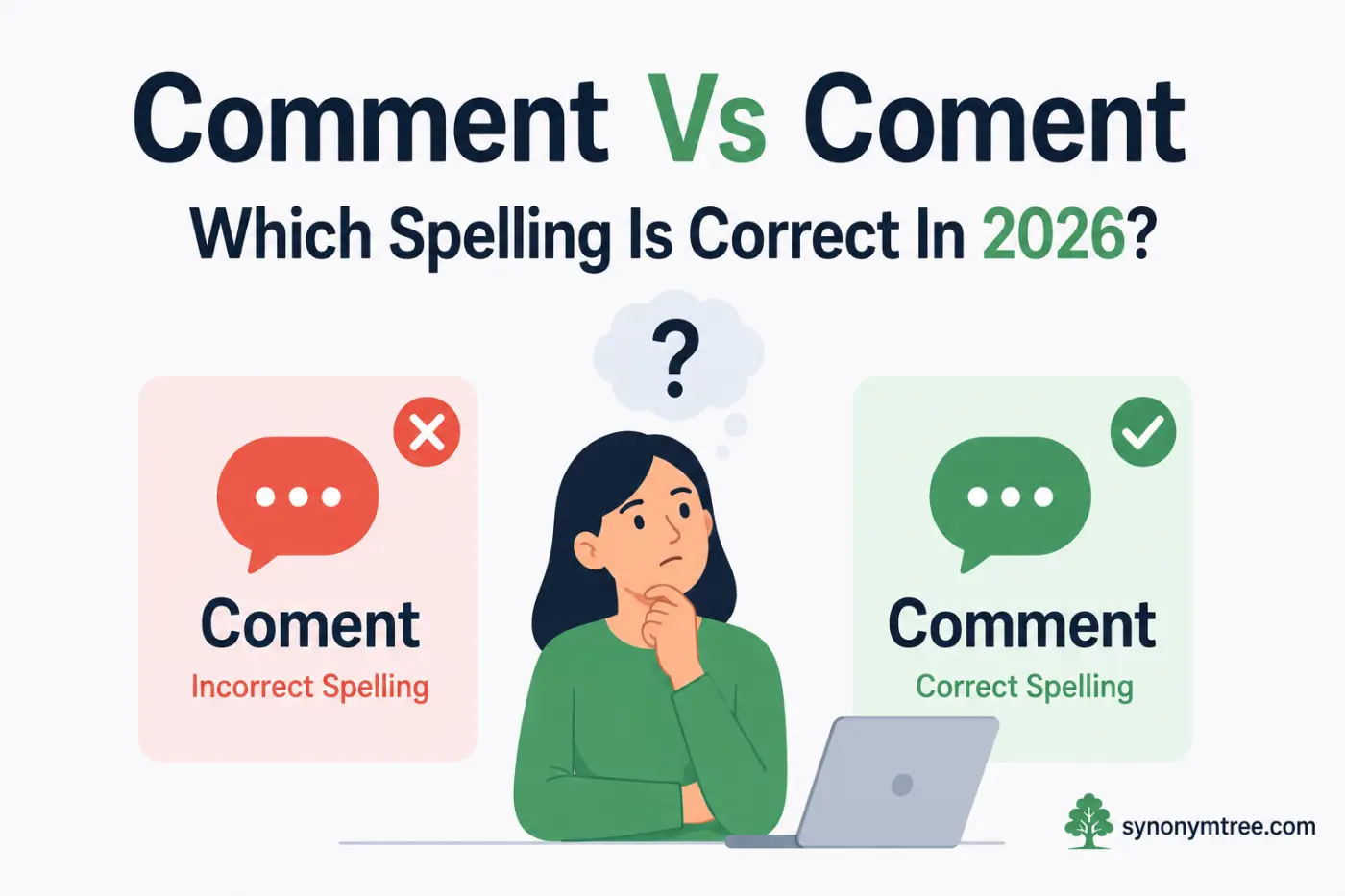
If you’re searching for comment vs coment the correct spelling is comment. The word coment is not the standard English spelling. You should write comment when you mean a remark or an opinion that someone shares.
The word comment can work as both a noun and a verb. You can make a comment about a topic. You can also comment on a post or comment on someone’s idea. The spelling stays the same in both uses.
This spelling mistake happens because English words do not always follow simple sound patterns. When people hear comment they may leave out one of the letters because the second m sound is easy to miss. Once you see the correct spelling and learn how to use it you can avoid this common mistake.
Simple Answer In One Look
The correct spelling is comment. Coment is incorrect in standard English. Use comment when you mean a written or spoken remark or when you mean to give an opinion about something.
The easiest way to remember it is to keep both m letters in comment. You can use the word in sentences such as I left a comment on the video or She made a helpful comment during class.
What This Means In Simple English
A comment is something you say or write about a person topic idea event or piece of content. It can be short or long. It can share an opinion. It can give information. It can also show a reaction.
For example if your friend posts a picture and you write Nice photo that message is a comment. If your teacher says Your answer is clear that statement is also a comment.
The word comment has two common uses. As a noun it means a remark or statement. As a verb it means to give an opinion or say something about a topic.
The spelling does not change between these uses. You write comment in both cases.
The noun form appears often in online conversations. Social media websites news sites blogs and video platforms may allow users to leave comments under posts or videos. In school or work you may also hear someone ask for comments about an idea or project.
The verb form is common in everyday speech too. You might say Please comment on my draft. This means you want someone to give feedback about your writing.
The related word commenting also uses the same spelling pattern. For example you might say People are commenting on the new video. The word commenter also comes from comment and usually describes someone who makes comments.
These related forms can help you remember the spelling. The base word always keeps the double m.
Why People Mix Comment Vs Coment
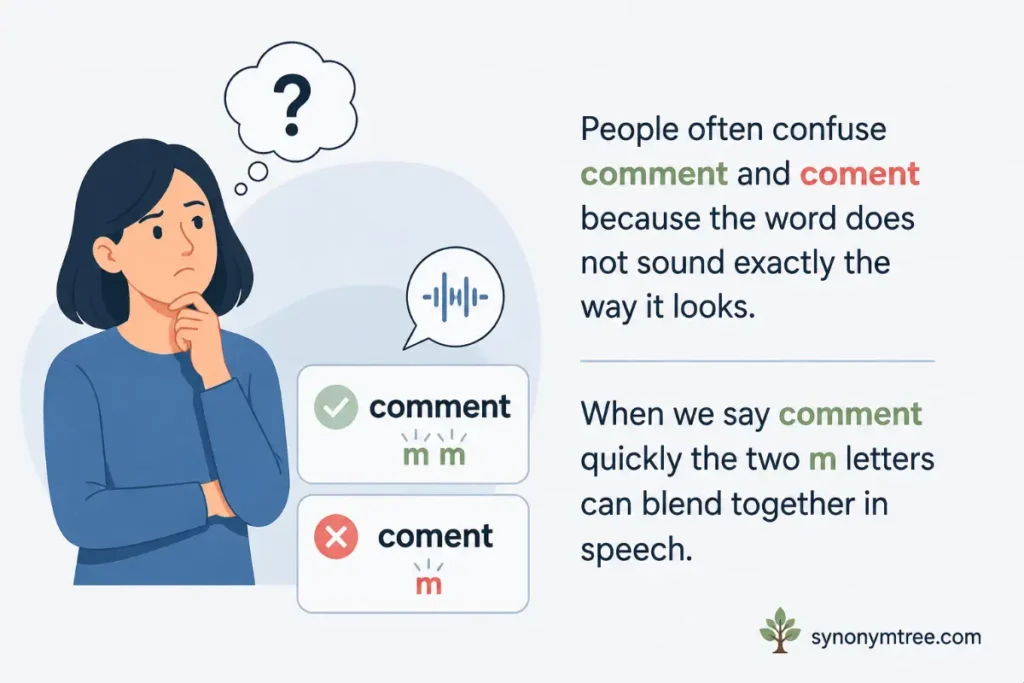
People often confuse comment and coment because the word does not sound exactly the way it looks. When we say comment quickly the two m letters can blend together in speech.
That can make it easy to remember only one m when you write the word. This happens often with English words that contain repeated letters.
Another reason involves typing. When people write quickly they may type coment without noticing the missing letter. Spell check tools can catch this mistake in many situations but you should still know the correct spelling yourself.
The mistake can also appear because some English words do use only one m. For example you may know words such as come or comic. Your brain may use that familiar pattern when you type comment.
The key point is simple. Comment has two m letters. Coment has only one m and is not the correct spelling in standard English.
You may also see the mistake in searches such as comment spelling. comment meaning. comment or coment. comment definition. and how to spell comment. These searches all point toward the same answer.
When you write online content you should pay close attention to this spelling. A single missing letter can make a sentence look careless even when the rest of the writing is strong.
Consider these examples.
- Please leave a comment below.
- She made a useful comment during the meeting.
- I want to comment on your idea.
- The teacher asked for comments about the story.
- Many readers commented on the article.
Each sentence uses the same base spelling. The double m stays in comment.
Clear Difference Explained Simply
The difference between comment and coment is very simple. Comment is the correct English spelling. Coment is a spelling mistake.
You can think of the two forms like this. Comment has two m letters. Coment has one m letter. If you are writing in standard English always choose comment.
The word comment can describe a remark or opinion.
For example you might say My teacher made a helpful comment about my essay. Here comment is a noun because it names the remark.
Comment can also describe the action of giving an opinion.
For example you might say I want to comment on this issue. Here comment is a verb because it describes an action.
The difference becomes even clearer when you look at common forms of the word.
- Comment means a remark or an opinion.
- Comments means more than one remark or opinion.
- Commented means someone gave a remark or opinion in the past.
- Commenting means someone is giving a remark or opinion now.
- Commenter means a person who makes comments.
All of these forms keep the double m in the base word.
This is useful because you do not need to memorize several unrelated spellings. Learn comment first. Then you can recognize the related forms more easily.
Which Form Should You Use
Use comment every time you need the standard English word. Do not use coment in school writing professional emails essays articles or social media posts.
If you are talking about one remark you can use comment. If you are talking about several remarks use comments.
The choice also depends on how the word works in the sentence. If comment names a remark it acts as a noun. If comment describes the action of giving an opinion it acts as a verb.
You can use a simple question to check the sentence. Are you talking about something someone said or wrote. Then comment is probably a noun. Are you talking about the act of giving an opinion. Then comment is probably a verb.
Look at these natural examples.
- I read your comment this morning.
- Please comment on my new draft.
- Her comment made everyone laugh.
- The article received hundreds of comments.
- He commented on the latest news.
- She is commenting on the video right now.
- The teacher asked students to comment on the story.
Notice that every form starts with comment. The double m remains part of the spelling.
There is no standard English situation where you should replace comment with coment. If you see coment in a text or online post it is most likely a spelling error.
Easy Real Life Sentences You Can Use
The word comment appears in many everyday situations. You can use it when talking about social media posts. You can use it in school discussions. You can use it in work emails. You can also use it when sharing opinions during normal conversations.
Here are some simple examples that show how the word works naturally.
- I left a comment on your post.
- She made a funny comment about the movie.
- Please comment on my essay.
- His comment was helpful.
- The teacher asked for comments from the class.
- Many people commented on the news story.
- I don’t have a comment about that issue.
- She added a comment to the document.
These examples show why context matters. A comment does not always mean criticism. It can be positive negative helpful funny serious or neutral.
For example a friend might say Your presentation was excellent. That is a positive comment. Another person might say The introduction needs more detail. That is also a comment.
In professional writing the word often appears when people discuss feedback. A manager might ask an employee to add comments to a report. A teacher might write a comment on a student’s assignment. A customer might leave a comment about a service.
Online the word has become even more common. People leave comments under videos photos articles and posts. They may agree with the writer. They may ask a question. They may share a personal experience.
The meaning stays simple. A comment is something said or written about a topic.
Where This Word Comes From Simple History
The English word comment has a long history. It comes from Latin roots connected with thinking and explaining. The word later entered English through French.
Over time comment developed into the common English word we use today for a remark or explanation about something.
You do not need to know its full history to spell it correctly. Still the history helps explain why the word has several related uses. Today comment can refer to a spoken remark. It can describe written feedback. It can also describe an online response.
Modern technology has made the word even more familiar. Before social media became common people could comment on books articles events speeches and ideas. Now people comment on videos posts photos and online discussions every day.
The spelling has stayed the same. You still write comment with two m letters.
That gives you a simple rule to remember. If you mean a remark an opinion or the act of giving an opinion write comment. Never use coment in standard English.
The difference between comment vs coment may look tiny but it matters in clear writing. A missing letter can change a correct word into a spelling error. Once you remember the double m in comment you can use the word confidently in school writing online conversations professional messages and everyday English.
The basic rule is easy. Comment is correct. Coment is incorrect. Keep the two m letters and you’ll have the standard spelling every time.
How Comment And Coment Are Understood In English
The spelling difference between comment and coment becomes much clearer when you look at how people use the word in everyday English. Comment is the standard spelling in American English. It can mean a spoken or written opinion about something. You may leave a comment on a social media post or make a comment during a conversation.
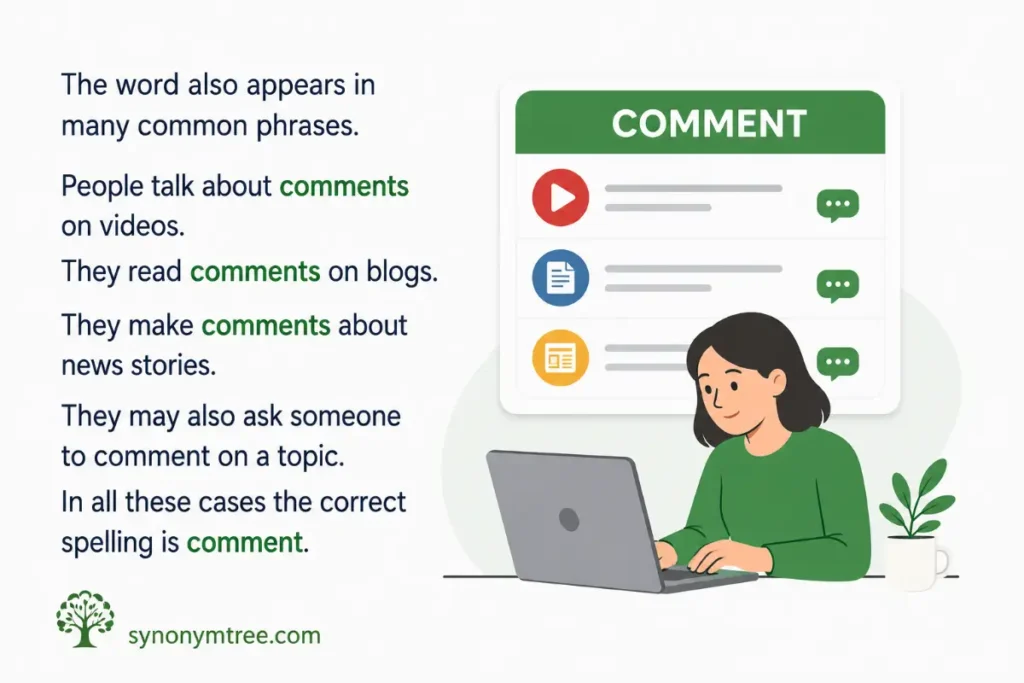
The word also appears in many common phrases. People talk about comments on videos. They read comments on blogs. They make comments about news stories. They may also ask someone to comment on a topic. In all these cases the correct spelling is comment.
Coment is not the standard English spelling. You may see it when someone makes a typing or spelling mistake. It can look reasonable because some English words use one consonant in similar positions. However comment has two m letters.
This is a useful spelling pattern to remember. The word starts with com and ends with ment. Keeping the double m helps you write comment correctly every time.
In American English you may use comment as both a noun and a verb. As a noun it refers to an opinion or statement. As a verb it means to give an opinion or response.
For example you might write the following sentences in everyday English.
- I left a comment on her post.
- His comment made everyone laugh.
- She asked me to comment on the article.
- The teacher made a helpful comment about my writing.
- Please comment below and share your thoughts.
- He refused to comment on the report.
Notice that the spelling stays the same in each example. The meaning changes slightly based on the sentence but the spelling does not.
Biblical And Mythological Meaning If Applicable
Comment does not have a special biblical or mythological meaning. It is a common English word used for an opinion observation or response. Its meaning comes from ordinary language rather than from a particular biblical story or myth.
You may find comments when people explain religious texts or discuss stories from the Bible. For example a teacher or writer may add a comment to explain the meaning of a passage. In this situation comment still means an explanation or observation.
The same idea applies to mythology. Someone writing about Greek mythology may add a comment about a story or character. That comment gives extra information or an opinion.
The spelling coment does not gain a different meaning in religious writing mythology or literature. It remains a misspelling of comment in standard English.
So if you are writing about religion history literature or mythology you should still use comment. The subject does not change the correct spelling.
Symbolism Explained In Simple Words
The word comment does not have a strong symbolic meaning by itself. It is mainly a practical word that describes an opinion observation explanation or response.
Still the idea behind a comment can represent communication. A comment gives someone a chance to respond. It can add information to a discussion. It can also show agreement disagreement support or criticism.
What Comment Represents
Comment can represent a voice in a conversation. It allows someone to share an idea or reaction.
For example a student may comment on a lesson. A reader may comment on an article. A customer may comment on a product. A viewer may comment on a video.
In each case the comment adds another voice to the discussion.
What Coment Represents
Coment does not represent a separate meaning in standard English. It is normally a spelling error caused by missing one of the two m letters in comment.
This distinction matters because spelling can change how professional your writing looks. A correct spelling helps readers understand your message without stopping to question the word.
If you remember that comment has two m letters you can avoid the common spelling mistake.
Related Words You Should Know
Learning related words can make the difference between comment and coment easier to remember. These words appear often in conversations social media writing schoolwork and professional communication.
Comment means an opinion statement or response about something.
Commentary means spoken or written discussion about a subject. Sports commentary is a common example.
Commenter means a person who writes or gives a comment.
Commenting means the act of giving a comment.
Remark means a spoken or written statement. It often works as a synonym for comment.
Observation means something someone notices and points out.
Opinion means what someone thinks or believes about a subject.
Response means an answer or reaction to something.
Feedback means information about how well something works or how it could improve.
Criticism means an opinion that points out problems or weaknesses.
These words are related but they are not always interchangeable. For example feedback usually aims to help someone improve. A comment can simply express an opinion.

How People Actually Use Comment In Daily English
People use comment in many everyday situations. You may see it in school conversations social media posts work emails news stories and casual discussions.
The word is especially common online. Websites and social platforms often have comment sections where readers can respond to content.
Here are some natural examples that show how Americans commonly use comment.
- I read your comment this morning.
- She left a nice comment on my photo.
- Did you see his comment about the new movie.
- The teacher wrote a comment on my paper.
- Please leave a comment if you have a question.
- He made an interesting comment during the meeting.
- I don’t have anything else to comment on.
- The manager asked employees to comment on the new plan.
- Her comment helped me understand the problem.
- Several readers posted comments after the article.
The word can also appear in professional communication. A manager may ask an employee to comment on a report. A writer may ask an editor for comments. A teacher may leave comments on student work.
The spelling stays comment in all these situations. You should not change it to coment.
Common Mistakes People Make
The most common mistake is writing coment with one m. This usually happens because the writer remembers the sound but does not remember the full spelling.
The correct form is comment.
The incorrect form is coment.
You can avoid this mistake by breaking the word into simple parts in your mind. Think of it as com plus ment. The two m letters meet in the middle.
Another common mistake involves adding unnecessary letters. Some writers may try to spell the word as commment with three m letters. That spelling is also incorrect.
The correct spelling has exactly two m letters.
A second mistake happens when people confuse comment with commentary. These words are related but they do not always have the same use. A comment can be one short opinion. Commentary usually means a longer discussion or explanation.
For example you can say I left a comment on the video. You can also say The sports commentator provided live commentary during the game.
A third mistake involves using comment when feedback is the better word. A comment can simply express an opinion. Feedback usually focuses on helping someone improve.
For example a teacher may give feedback on a student’s essay. The teacher may also leave a comment about one part of the essay.
Another mistake is using comment when you mean answer. A comment may respond to something but it does not always provide a direct answer.
Good word choice comes from looking at the meaning of the full sentence.
Final Teacher Explanation
If you are still wondering about comment vs coment the answer is simple. Comment is the correct standard English spelling. Coment is a misspelling.
Think about the double m. That small detail is the key.
Comment can work as a noun. It can also work as a verb. As a noun it means an opinion or statement. As a verb it means to give an opinion or response.
You may write I left a comment on the website. You may also write She asked me to comment on the proposal.
The word stays comment in both sentences.
The spelling mistake often happens because people hear only one clear m sound. English spelling does not always match pronunciation perfectly. That is why it helps to remember the written pattern instead of relying only on sound.
Here is the classroom rule I would give a student.
Write comment with two m letters.
Do not write coment.
Once you remember that rule the choice becomes easy.

Final Answer Quick Recap
Comment is the correct spelling in standard American English. Coment is incorrect.
Use comment when you mean an opinion statement response or observation. Remember the two m letters in the middle.
Conclusion
The difference between comment and coment is small but the correct choice is clear. Comment is the standard English spelling and works as both a noun and a verb. You can leave a comment online. You can make a comment during a conversation. You can also comment on a report or discussion.
The easiest way to remember the spelling is to keep the double m in mind. If you are checking your writing before posting a social media response or sending a professional message take a quick look at the word. Comment should have two m letters.
Good spelling often comes from learning small patterns and using them again and again. Once you know the difference between comment vs coment you can write the correct form with confidence.
Frequently Asked Questions
Is comment the correct spelling?
Yes. Comment is the correct spelling in standard English. Coment is a common spelling mistake.
Is coment a word in English?
No. Coment is not the standard English spelling of the word. Use comment instead.
Why does comment have two m letters?
Comment follows the standard spelling pattern with two m letters in the middle. Remembering this pattern can help you avoid the common spelling error.
What does comment mean?
Comment means an opinion statement observation or response. It can also mean to give an opinion about something.
Can comment be a verb?
Yes. You can use comment as a verb. For example you can say Please comment on the report.
What is the plural of comment?
The plural is comments. For example you can say The article received many comments.
What is the difference between comment and commentary?
A comment is usually a short opinion or response. Commentary usually means a longer discussion explanation or running description.
How can I remember the spelling of comment?
Remember that comment has two m letters. The simple pattern is com plus ment. Avoid the spelling coment.
