
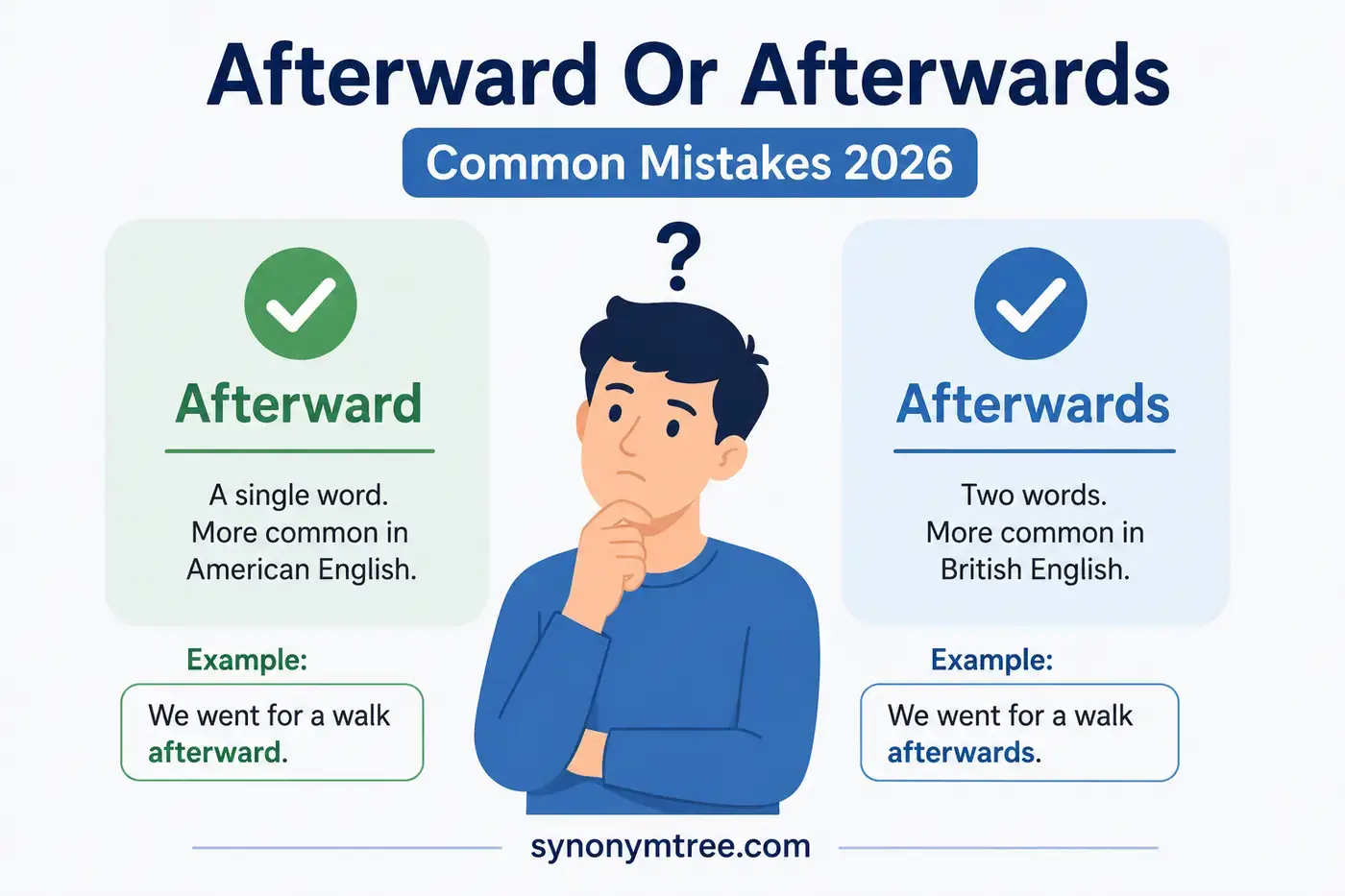
Many English learners search for afterward or afterwards because both words seem correct. The good news is that they are both correct. The only real difference is the style of English you are using. Once you understand this small difference you can choose the right word with confidence.
You may notice afterward in American books and websites. You may also see afterwards more often in British writing. Both words have the same meaning and both are accepted in standard English.
This guide explains everything in simple English. You will learn the difference between these words why people get confused and how to use each one in everyday conversations and writing.
Simple Answer In One Look About These Words
Both afterward and afterwards are correct. American English usually prefers afterward. British English often prefers afterwards.
What Afterward Or Afterwards Means In Simple English
Both words mean the same thing. They mean later or after something has happened. People use these words when talking about events that happen next. Imagine you finish dinner. Later you watch a movie.
You can say:
- We watched a movie afterward.
- We watched a movie afterwards.
Both sentences are correct.
Here are more easy examples.
- We went home afterward.
- She called me afterwards.
- They played outside afterward.
- He felt better afterwards.
- We talked afterward about the game.
Every sentence tells us something happened later. That is the simple meaning of both words.
Why People Mix Afterward Or Afterwards
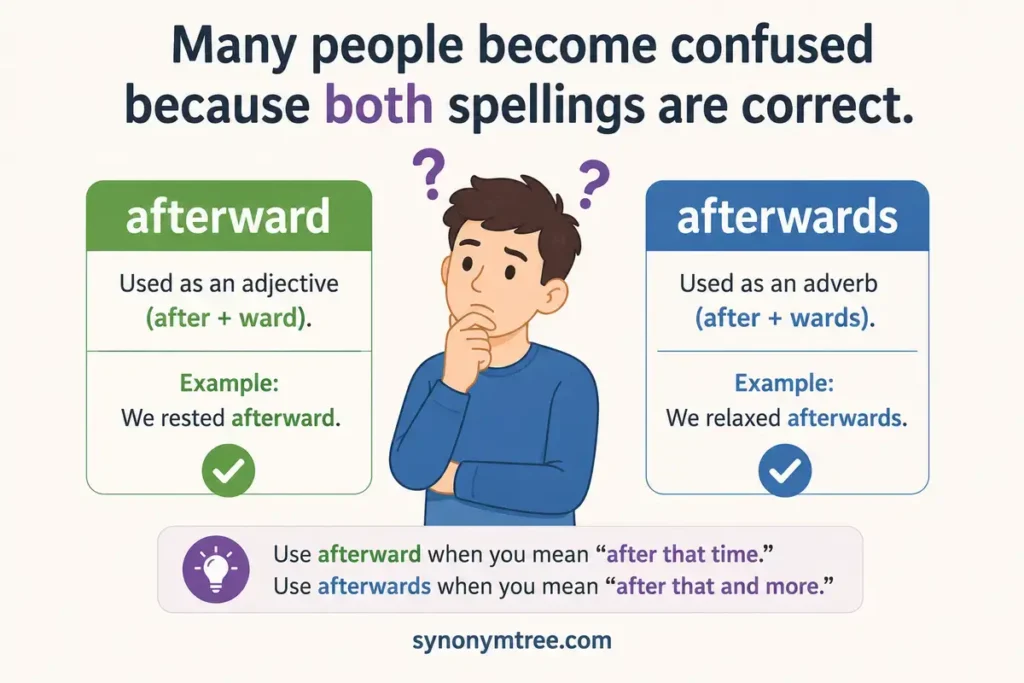
Many people become confused because both spellings are correct.
Most spelling mistakes happen because people think only one word is accepted.
Another reason is that American English and British English often spell some words differently.
For example American English usually drops the final S from a few words. British English often keeps it.
People also copy the spelling they see in books movies websites or school lessons.
If someone learns English from American teachers they will probably write afterward.
If someone learns English from British teachers they may write afterwards.
Both choices are correct.
The important thing is to stay consistent in the same piece of writing.
Clear Difference Explained Simply About These Words
The difference is small.
- Afterward is more common in American English.
- Afterwards is more common in British English.
- Both words mean later.
- Both are correct in standard English.
- Neither word changes the meaning of a sentence.
- Choose one style and use it throughout your writing.
Think of them like two roads leading to the same place. The destination never changes. Only the road is different.
Which Form Should You Use In These Words
The answer depends on your audience.
If you are writing for people in the United States choose afterward.
If you are writing for people in the United Kingdom choose afterwards.
If your school workplace or publisher has a style guide follow that style.
If there is no style guide either word is acceptable.
The most important rule is simple.
Do not switch between afterward and afterwards in the same article unless there is a special reason.
Keeping one style makes your writing look clean and professional.
Easy Real Life Sentences You Can Use With These Words
These examples sound natural in everyday English.
- We went out for ice cream afterward.
- She finished her homework afterwards.
- I felt tired afterward.
- They cleaned the room afterwards.
- We talked afterward about our trip.
- He thanked everyone afterwards.
- The rain stopped and afterward the sun came out.
- We laughed afterwards because everything worked out well.
Notice that every sentence still makes sense if you replace afterward with afterwards or afterwards with afterward. The meaning stays exactly the same.
Where Afterward Or Afterwards Comes From Simple History
The words afterward and afterwards have been used in English for hundreds of years.
Both grew from the simple word after.
As English changed over time some words developed two accepted forms. One form ended with S and the other did not.
American English slowly began using afterward more often.
British English continued using afterwards in many books newspapers and conversations.
Even though the spellings became different the meaning stayed the same.
That is why both words appear in modern dictionaries.
Neither spelling is newer or better than the other.
They simply reflect different styles of English.
Knowing this history makes the choice much easier.
If you are writing for an American audience afterward is usually the best choice.
If you are writing for a British audience afterwards will sound more familiar.
Learning small differences like this helps you become a stronger English writer. It also makes reading books from different countries much easier because you will recognize both forms right away. Think of afterward and afterwards like two friendly neighbors. They look a little different but they both do the same job. Once you understand that simple idea you will never have to wonder which one is correct.
Now that you know the basic meaning and difference between these words you are ready to learn more. In the next section you will discover how these words appear in culture stories daily conversations common mistakes and frequently asked questions. That extra practice will help you choose the right form with confidence every time.
How Afterward Or Afterwards Is Understood In Culture And Stories
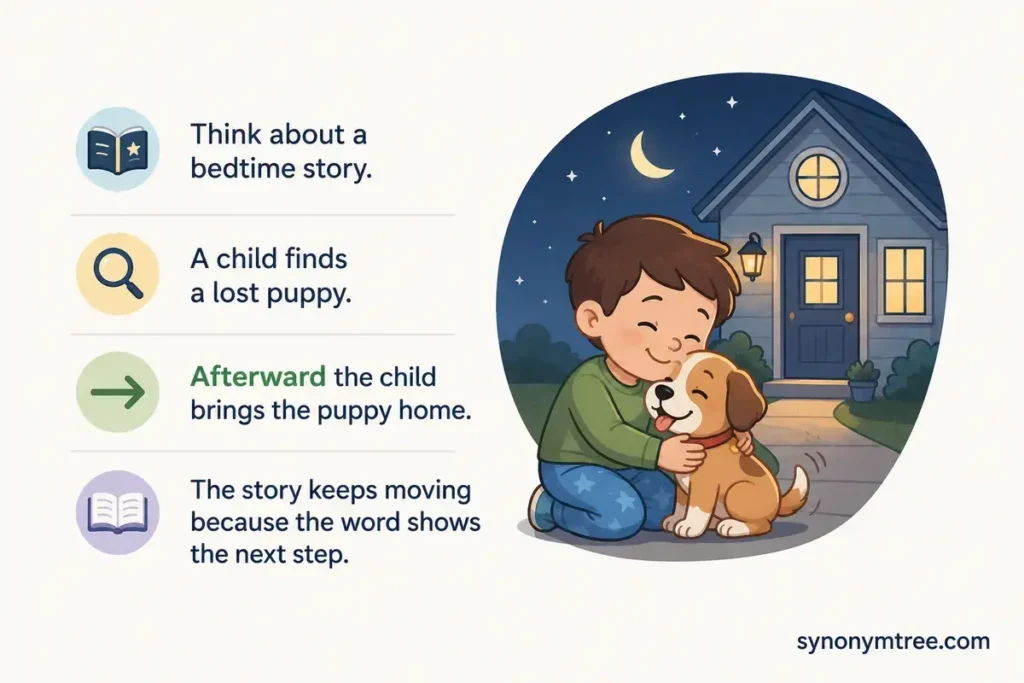
The words afterward and afterwards often appear in stories because they help show what happens next. They move the reader from one event to another in a smooth and natural way. Think about a bedtime story. A child finds a lost puppy. Afterward the child brings the puppy home. The story keeps moving because the word shows the next step. Movies also use this idea. A hero wins a big battle. Afterwards everyone celebrates together. The word helps connect one moment to another. People use these words in everyday life too. They help explain the order of events in a clear way. No matter which spelling you choose the meaning stays the same. The only difference is the style of English.
Biblical And Mythological Meaning Of These Words
The word afterward appears many times in English Bible translations. It usually means later or after something has happened. For example a person may pray and afterward receive good news. Another story may describe an event and afterward explain what happened next. Some Bible translations use afterward while others use afterwards. The choice depends on the translation style instead of the meaning. In myths and old stories heroes often finish a difficult journey. Afterwards they return home wiser and stronger. The word simply helps tell the next part of the story. Neither spelling has a special religious meaning. Both simply show that one event happens after another.
Symbolism Explained In Simple Words
What Afterward Represents In These Words
Afterward often represents moving forward.
It reminds people that every event has a next step.
It can also suggest hope because difficult times are often followed by better days.
Many stories use afterward to show learning growth and new beginnings.
What Afterwards Represents In These Words
Afterwards represents the same idea.
It shows that something happens later.
The only real difference is that this spelling is more common in British English.
It carries the same feeling of progress change and moving ahead.
Related Words You Should Know About Afterward Or Afterwards
Learning similar words makes English easier.
- Later.
This means at a future time.
- Then.
This means the next thing happens after another event.
- Next.
This shows the following step.
- Soon.
This means after a short time.
- Finally.
This means the last event in a series.
- Eventually.
This means something happens after some time has passed.
- Before.
This means earlier than another event.
- Meanwhile.
This means something happens at the same time as another event. These words help explain time and the order of events in daily English.
How People Actually Use Afterward Or Afterwards In Daily English
People use these words every day in conversations. Here are some natural examples.
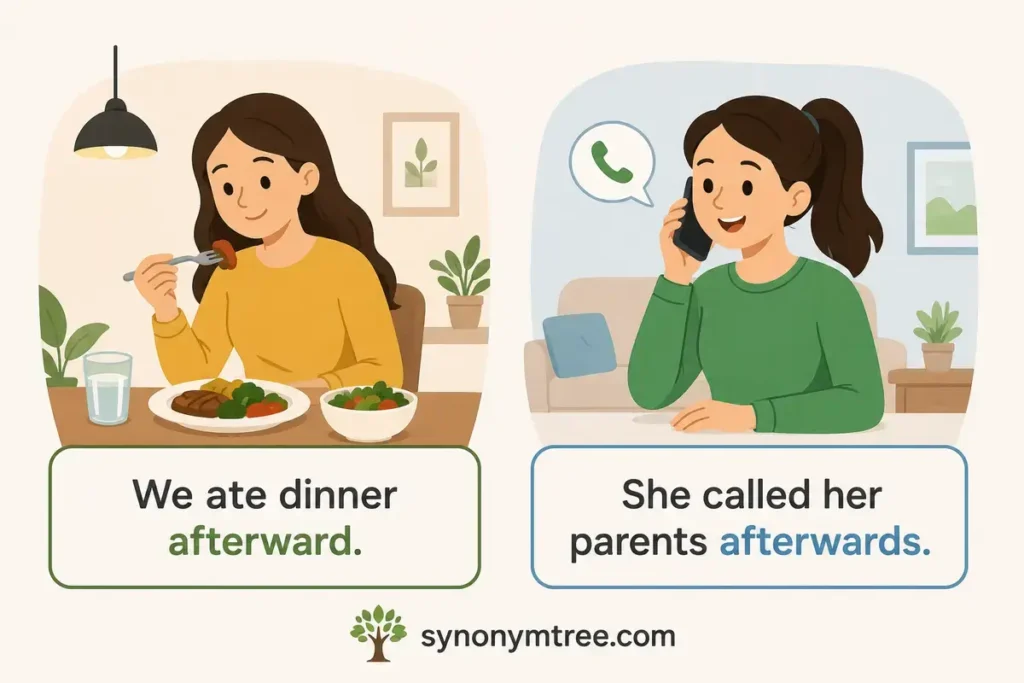
- We ate dinner afterward.
- She called her parents afterwards.
- I finished my homework afterward.
- They went shopping afterwards.
- We talked afterward about the movie.
- He took a short walk afterwards.
- The meeting ended and afterward everyone went home.
- We cleaned the kitchen afterwards.
- I felt much better afterward.
- They laughed afterwards because everything turned out well.
Every sentence sounds natural. You can choose words based on the style of English you are using.
Common Mistakes People Make With These Words
Many learners make small mistakes with these words.
Here are the most common ones.
- Thinking only one spelling is correct.
Correction.
Both afterward and afterwards are correct.
- Mixing both spellings in the same article.
Correction.
Choose one style and stay consistent.
- Thinking the meaning changes.
Correction.
The meaning stays exactly the same.
- Using afterward before an event.
Correction.
These words always talk about something that happens later.
- Forgetting the audience.
Correction.
Use afterward for American English and afterwards for British English if you want to match local style.
A simple memory trick can help.
Think about your reader.
American readers usually expect afterward.
British readers usually expect afterwards.
Final Teacher Explanation About Afterward Or Afterwards
Imagine you are in class. A student asks if afterward and afterwards have different meanings. The answer is easy. No. Both words mean later. The only difference is the style of English. If you are writing for people in the United States afterward is the better choice. If you are writing for people in the United Kingdom afterwards is more common. That does not mean the other spelling is wrong. It simply matches a different style. Remember one classroom rule. Pick one spelling. Use it all the way through your writing. That makes your work look neat clear and professional.
Final Answer About Afterward Or Afterwards
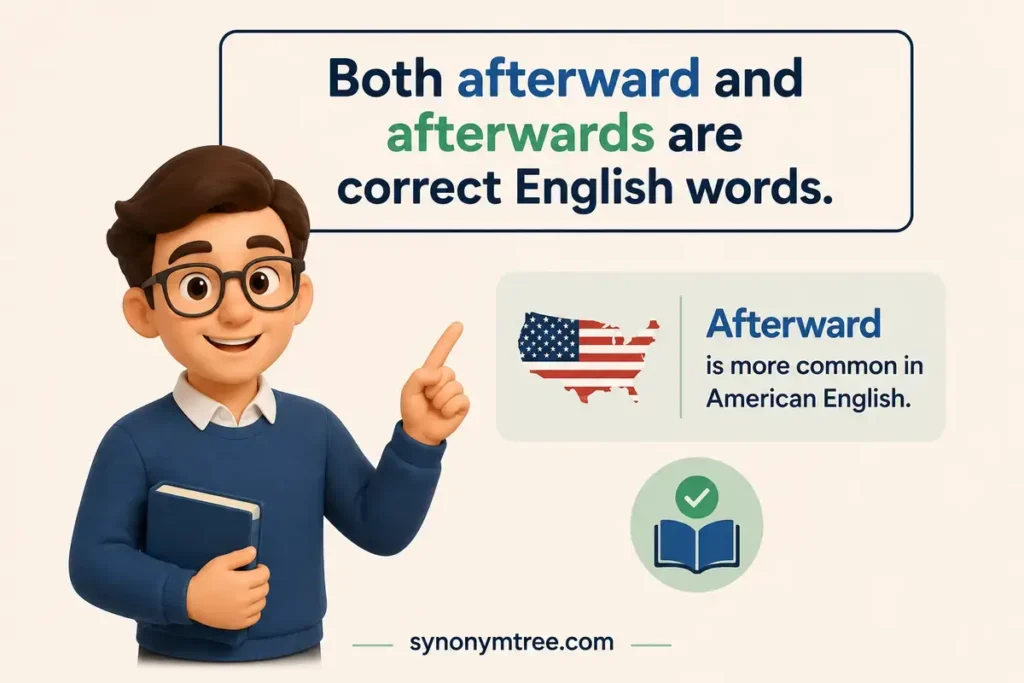
Both afterward and afterwards are correct English words. Afterward is more common in American English. Afterwards is more common in British English. Choose one style and use it consistently.
Conclusion
The difference between afterward or afterwards is much simpler than many people think. Both spellings are correct and both have the same meaning. The only real difference is the style of English you choose to follow.
As you continue learning English you will notice many words with small spelling differences like this. Reading books articles and trusted websites will help you recognize both forms with confidence.
Keep practicing with simple sentences every day. Small lessons like this build stronger writing skills and help you communicate more clearly in school work and everyday life.
Frequently Asked Questions About Afterward Or Afterwards
What does these words mean in simple words?
Both words mean later or after something has happened.
Is afterward or afterwards correct?
Both are correct. Afterward is more common in American English and afterwards is more common in British English.
When should I use afterward?
Use afterward when writing in American English or for readers in the United States.
When should I use afterwards?
Use afterwards when writing in British English or for readers in the United Kingdom.
Why do people get confused between these words?
People think only one spelling is correct even though both are accepted in standard English.
Can I use both forms in the same article?
It is better to choose one spelling and use it throughout your writing.
Do afterward and afterwards have different meanings?
No. They both mean exactly the same thing.
