
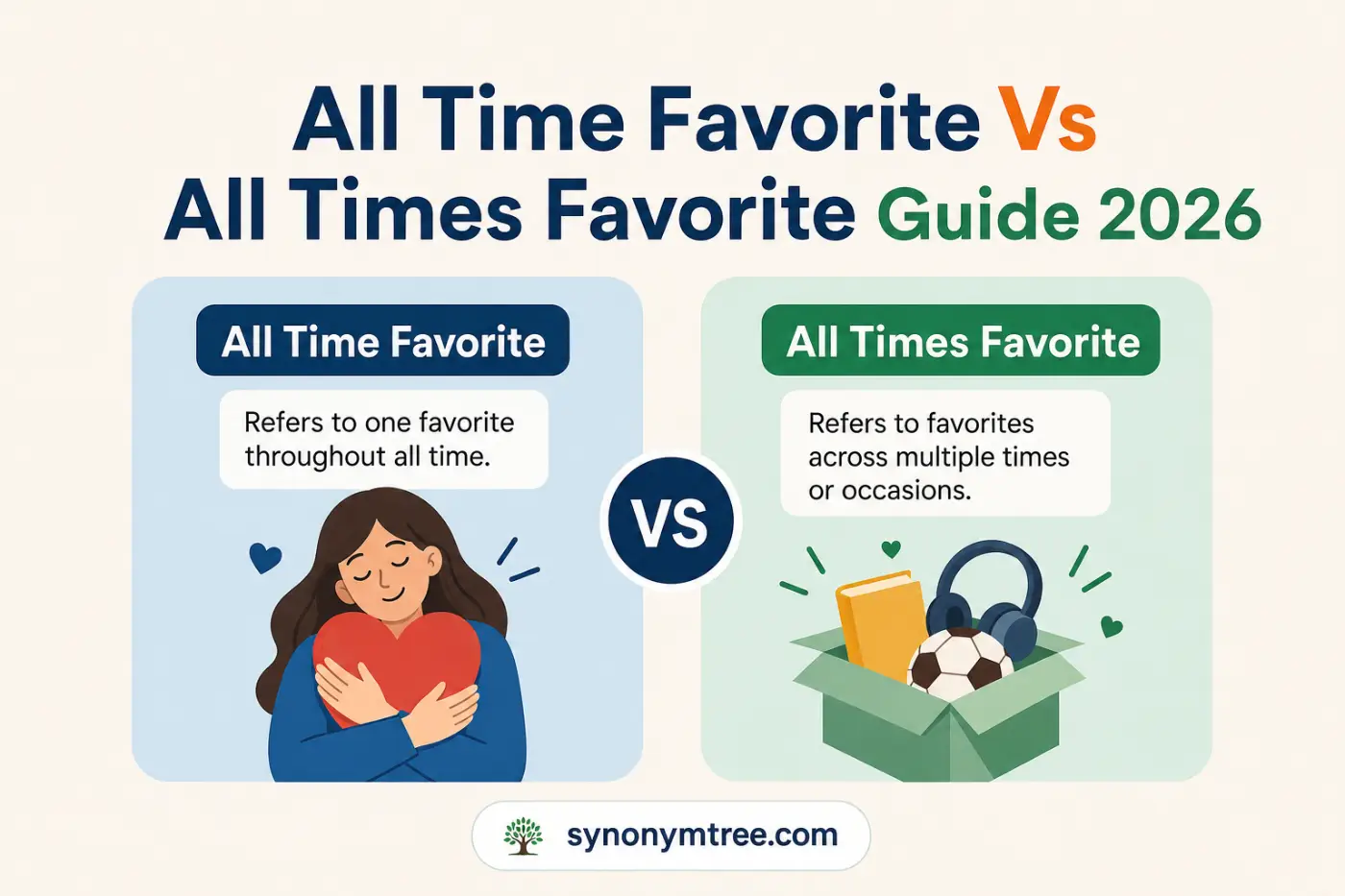
Many people search for all time favorite vs all times favorite because both phrases sound similar. The correct phrase is all time favorite. The phrase all times favorite is not standard English and should not be used.
You may hear people talk about their favorite movie song food or sports team. When they want to say it is the best one they have ever liked they say it is their all time favorite.
This guide explains all time favorite or all times favorite in very simple English. You will learn the correct phrase why people get confused and how to use it naturally in everyday conversations and writing.
Simple Answer in One Look
“All time favorite” is correct. “All times favorite” is not correct. The word “time” stays singular here, even though it describes something across many years.
What This Means in Simple English
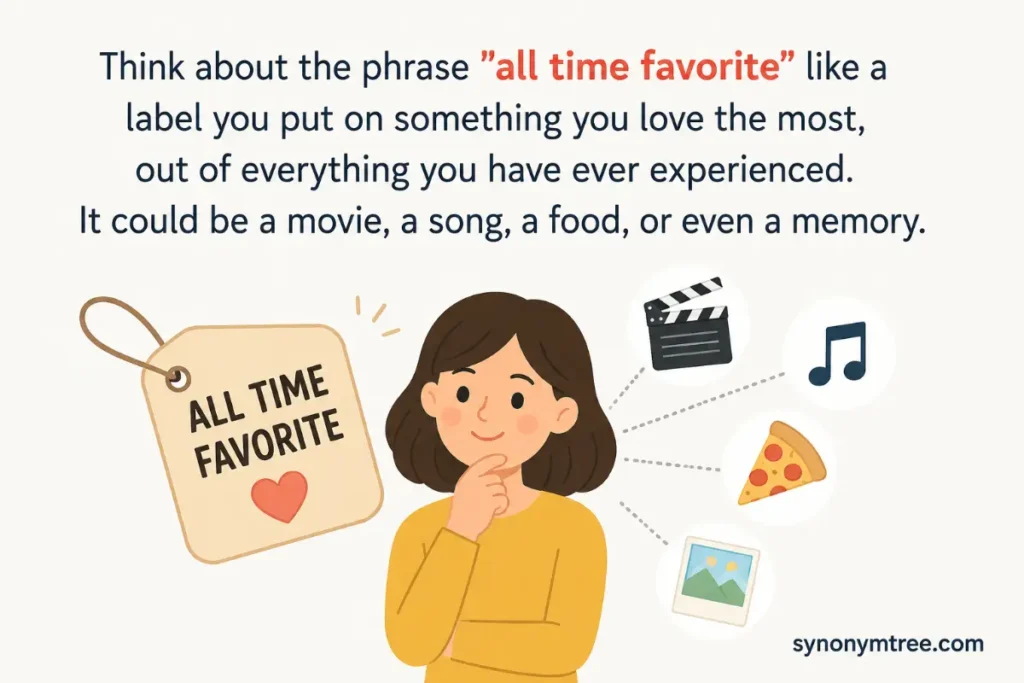
Think about the phrase “all time favorite” like a label you put on something you love the most, out of everything you have ever experienced. It could be a movie, a song, a food, or even a memory.
The word “time” in this phrase does not mean a single clock time. It means “throughout history” or “ever.” So when someone says “this is my all time favorite book,” they mean it is the best book they have ever read, not just their favorite this year or this month.
Now here is the part that confuses people. Since the phrase talks about many years and many moments, it feels natural to add an “s” to “time.” Our brain wants to match the plural idea with a plural word. But English does not always work that way.
In this case, “all time” acts as one single describing word. It works like an adjective. And when two words team up to describe something, they usually do not take an “s,” even if the meaning feels plural.
Why People Mix These Words
Let’s look at why so many smart people still get this wrong.
- The meaning feels plural. Since “all time” refers to many years, adding an “s” seems logical.
- Autocorrect does not always catch it. Some phones and apps skip this specific error.
- It sounds similar when spoken. In fast speech, “all time” and “all times” sound almost the same.
- Other phrases use plural forms. Words like “always” or “sometimes” already have an “s,” so people assume this phrase should too.
- Regional habits play a role. In casual speech across parts of the U.S., people sometimes add extra sounds without noticing.
None of these reasons make “all times favorite” correct. They just explain why the mistake feels natural.
Clear Difference Explained Simply
Here is the difference laid out in the simplest way possible.
- All time favorite. This is correct. It means the best one ever, across all history.
- All times favorite. This is incorrect. It breaks the natural grammar pattern of compound adjectives in English.
- Correct example. “Pizza is my all time favorite food.”
- Incorrect example. “Pizza is my all times favorite food.”
Notice how the correct version reads smoothly, almost like one single word. That smooth flow is a good sign you are using it the right way.
Which Form Should You Use?
Always use “all time favorite” when you are describing something as the best one you have ever experienced. Here is a simple rule you can remember. When two words work together before a noun to describe it, like “all time,” they usually stay in their base form. They do not take an “s,” even if the meaning feels bigger or wider than usual.
You can test this with other similar phrases too. We say “a five year plan,” not “a five years plan.” We say “a two hour meeting,” not “a two hours meeting.” The describing words stay singular, even though the meaning includes more than one year or more than one hour. “All time favorite” follows this exact same pattern. Once you notice this rule, it becomes much easier to remember.
Easy Real Life Sentences You Can Use
Here are some everyday sentences using the correct form. Read them out loud a few times. This helps the correct version stick in your memory.
- This song is my all time favorite from the entire album.
- She said the beach vacation was her all time favorite trip.
- My all time favorite teacher taught me how to write clearly.
- Chocolate cake is still his all time favorite dessert.
- That movie remains our all time favorite to watch every winter.
- Grandma’s soup recipe is the family’s all time favorite.
- This city is my all time favorite place to visit in summer.
- Reading mystery novels is my all time favorite hobby.
Notice how “all time favorite” fits naturally before the noun in every single sentence. That is exactly how it should sound.
Where This Word Expression Comes From (Simple History)
The phrase “all time” has been used in English for a very long time to mean “throughout history” or “ever recorded.” You can see it in old sports records, where people talk about the “all time high score” or the “all time best player.”
Over the years, this same pattern moved into everyday language. People started using “all time favorite” for anything they loved the most, not just sports records. That is how the phrase became so common today, showing up in conversations about food, music, movies, and even people. Since the phrase was built from sports and record keeping language, the singular “time” carried over naturally. That history is part of why the grammar rule stayed the same.
Now that you understand what makes “all time favorite” correct, it helps to see how this fits into a bigger picture. Many phrases in English follow this same quiet rule, and once you spot the pattern, you start noticing it everywhere. In the next part, we will look deeper into common mistakes people make with similar phrases, along with a few tricks that make correct grammar feel automatic instead of something you have to think about every time.
How This Word Is Understood in Culture and Stories
People use “all time favorite” everywhere in daily life, and it carries a warm feeling. It shows up in movie reviews, music playlists, food blogs, and even wedding speeches. When someone calls a song their all time favorite, they are not just picking a song. They are sharing a small piece of their story.
This phrase became part of everyday culture because it feels personal. A list of “top ten” songs feels like data. But an “all time favorite” song feels like a memory. That small difference is why writers, teachers, and everyday people reach for this phrase so often.
Symbolism Explained in Simple Words
Even though “all time favorite” is a grammar phrase, it carries a bit of emotional weight too. Let’s look at what each version tells a reader, and why one feels right while the other feels off.
What One Version Represents
“All time favorite” feels smooth, confident, and correct. When you read it in a sentence, your brain does not stumble. It signals that the writer knows the rule and used it naturally. This builds trust with readers, especially in blogs, resumes, and professional writing.
What the Other Version Represents
“All times favorite” feels slightly off, even to readers who cannot explain why. It creates a tiny pause while reading, almost like a small speed bump in a sentence. This can lower trust in your writing, even if the reader cannot name the exact grammar mistake.
Related Words You Should Know
Here are a few related terms that often appear near “all time favorite.” Knowing them helps you write with more confidence.
- Personal favorite. This means something you like the most, based only on your own taste.
- Top pick. This means your number one choice from a list of options.
- Best ever. This means the highest quality you have experienced, similar in tone to all time favorite.
- Go to. This means something you choose often because you trust it.
- Timeless classic. This means something that stays loved across many years, similar to the idea behind all time.
How People Actually Use It in Daily English
Real conversations use this phrase in many casual and natural ways. Here are examples you might hear or read every day.
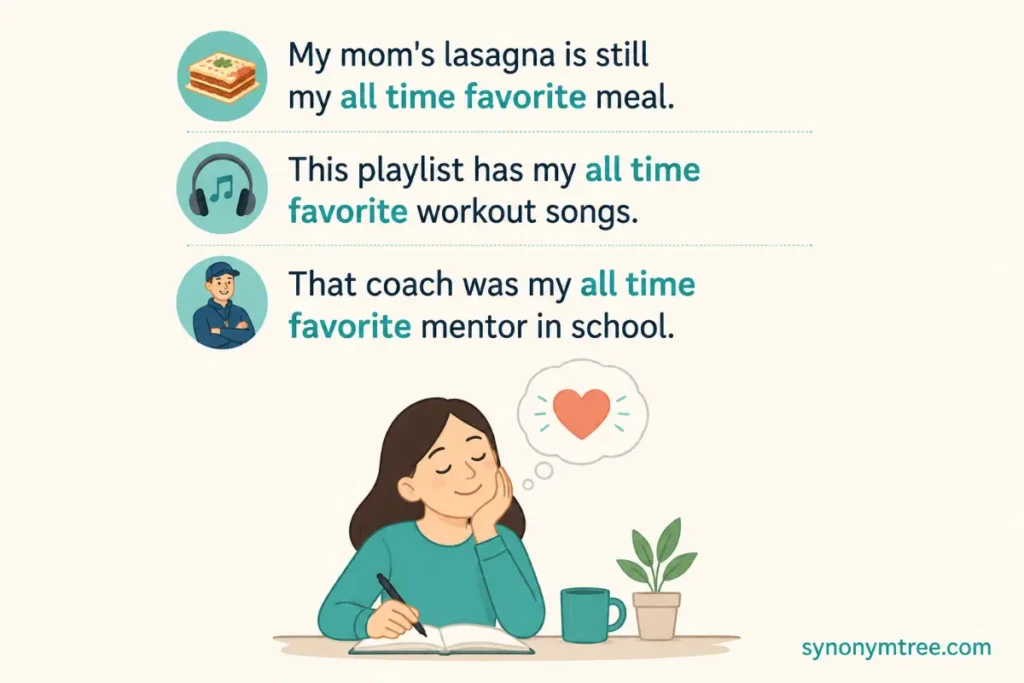
- My mom’s lasagna is still my all time favorite meal.
- This playlist has my all time favorite workout songs.
- That coach was my all time favorite mentor in school.
- Friends remains my all time favorite show to rewatch.
- New York is my all time favorite city to explore.
- This is hands down my all time favorite pair of shoes.
- Her wedding speech mentioned her all time favorite childhood memory.
- This bakery makes my all time favorite cinnamon rolls.
Notice how natural and simple each sentence sounds. That is the goal. Correct grammar should feel invisible, not forced.
Common Mistakes People Make
Even careful writers slip up sometimes. Here are the most common mistakes and how to fix them quickly.
- Adding an extra “s” to time. Wrong: all times favorite. Right: all time favorite.
- Forgetting the hyphen when used before a noun. Wrong: all time favorite book. Right: all time favorite book stays fine in casual writing, though formal style guides often write it as all time favorite without breaking the flow.
- Mixing it with unrelated phrases. Wrong: all the time favorite. Right: all time favorite.
- Overusing the phrase in one piece of writing. Try mixing in words like top pick or personal favorite so your writing does not repeat itself.
- Using it in very formal writing without checking tone. This phrase works best in casual and semi formal writing, like blogs, social posts, and everyday conversation.

Final Teacher Explanation (Very Important)
Let’s bring this all together, the way a teacher would sum it up at the end of class. “All time favorite” is the correct form because “all time” acts as one describing phrase before a noun, and describing phrases like this usually stay in their simple, singular form in English.
Even though the meaning feels big, like it covers years and years of experience, the grammar itself stays small and simple. That is the beauty of this rule. Once you see it, you cannot unsee it. And once you practice it a few times, using “all time favorite” correctly becomes automatic, just like riding a bike.
Final Answer (Quick Recap)
“All time favorite” is correct. “All times favorite” is not correct. Use “all time favorite” any time you want to describe the best one you have ever experienced. Keep the word “time” singular, and your sentence will always read smoothly and correctly.
This small rule carries a big lesson. English often keeps describing words simple, even when the meaning behind them feels large. Once you notice this pattern with “all time favorite,” you will start spotting it in other everyday phrases too.
Grammar rules like this one are not meant to trip you up. They are meant to help your writing sound clear and natural. With a little practice, using “all time favorite” correctly will feel just as easy as saying your own name. So next time you want to describe your favorite song, meal, or memory, you already know exactly what to say.
Frequently Asked Questions (FAQs)
Is it all time favorite vs all times favorite?
It is all time favorite. The word time stays singular in this phrase, even though the meaning covers many years.
What does all time favorite mean in simple words?
It means the best one you have ever experienced, out of everything, not just recently.
Why do people get confused between all time favorite and all times favorite?
The meaning feels plural, so people naturally want to add an s to time, even though the grammar rule does not allow it.
Can I use all times favorite in casual writing?
No. All times favorite is incorrect in both casual and formal writing. Stick with all time favorite.
When should I use the phrase all time favorite?
Use it whenever you want to describe your number one choice, like a favorite movie, song, meal, or memory.
Does all time favorite need a hyphen?
Many style guides write it without a hyphen in casual use, though you may see all time favorite hyphenated in some formal or edited writing. Both readings stay clear to readers either way.
Is all time favorite formal or casual English?
It leans casual to semi formal. It fits blogs, social posts, and everyday conversation more than very formal writing.
What can I say instead of all time favorite?
You can use personal favorite, top pick, best ever, or timeless classic, depending on the tone you want.
