

Have you ever wondered if you should write how are you faring or fairing in a text message, email, or conversation? These two words sound the same, so it is easy to mix them up. However, they have different meanings, and only one is correct when you ask someone how they are doing.
The correct expression is how are you faring. The word faring means doing, getting along, or dealing with a situation. For example, you can ask, “How are you faring at your new job?” This means you want to know how the person is doing at work.
The word fairing has a different meaning. It usually refers to a protective or shaped covering on a vehicle, such as a motorcycle or airplane. In this guide, you will learn the difference between faring and fairing, how to use each word, and how to avoid this common English mistake.
Simple Answer in One Look.
How are you faring is correct when you want to ask someone how they are doing. Faring means managing or getting along. Fairing usually refers to a shaped covering on a vehicle.
For example, write, “How are you faring after your move?” Do not write, “How are you fairing after your move?”
What This Means in Simple English.
Imagine that your friend has started a new job. You want to know if the work is going well, if the people are friendly, and if your friend feels comfortable.
You could ask, “How are you faring at your new job?”
This question means, “How are you doing at your new job?” It can also mean, “Are things going well for you?”
The word faring helps you ask about a person’s progress or experience. You can use it when someone is facing a change, dealing with a problem, or trying something new.
For example, a student might be learning a difficult subject. A family might be adjusting to a new home. A friend might be looking for work. In each case, you can use faring to ask how things are going.
Here are some simple examples.
- How are you faring in your new school?
- How is your brother faring after his illness?
- How are the students faring in math class?
- How is your team faring this season?
- How are you faring with your new schedule?
Each question asks about progress, health, or how someone is handling a situation.
Now think about the word fairing. It does not mean doing well or getting along. In vehicles, a fairing is a shaped cover that helps guide air around part of a machine. You might see a fairing on a motorcycle, airplane, or racing vehicle.
Why People Mix These Words.
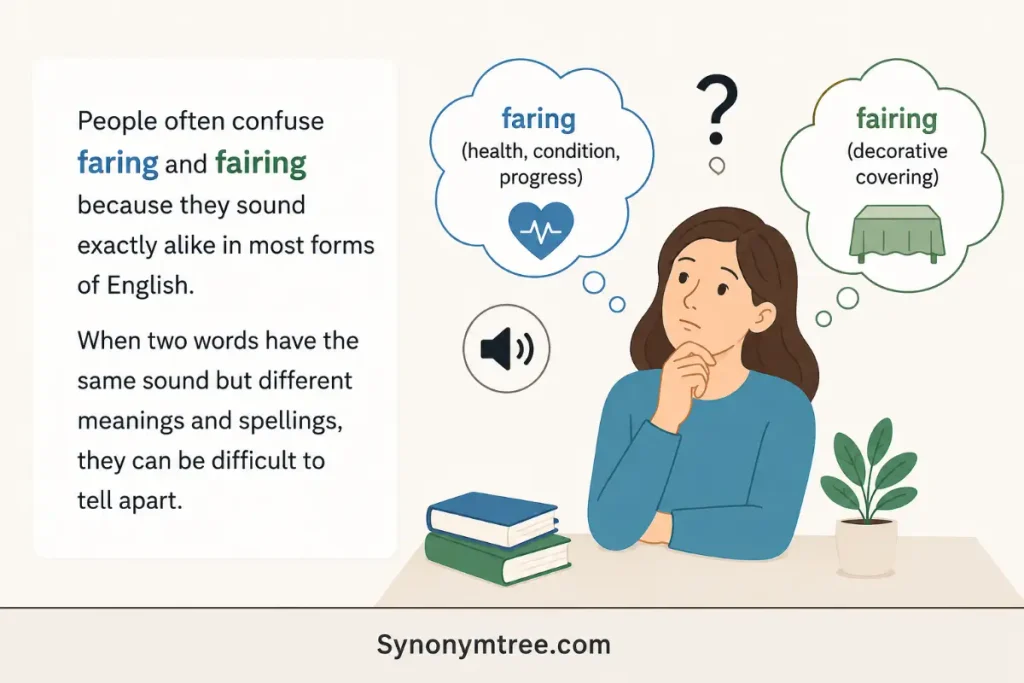
People often confuse faring and fairing because they sound exactly alike in most forms of English. When two words have the same sound but different meanings and spellings, they can be difficult to tell apart.
You cannot always choose the correct spelling by listening to a sentence. You need to think about what the sentence means.
For example, imagine that you hear someone say, “How are you fairing?” You might understand the question right away. The speaker probably wants to know how you are doing. However, the correct spelling for that meaning is faring.
This mistake happens because fair is a familiar English word. People use it when talking about fairness, equal treatment, or something that is acceptable. They may naturally think of fairing when they hear the sound.
However, the two words serve different purposes.
The word faring comes from the verb fare. In this expression, fare means to get along or do in a particular situation. You can use it to ask about a person’s progress or experience.
The word fairing comes from fair in a different sense related to shaping or smoothing a surface. In engineering, a fairing is designed to make the shape of an object smoother and help air move around it.
Here are some examples that make the difference clear.
- Correct. How are you faring in college?
- Incorrect for this meaning. How are you fairing in college?
- Correct. The airplane’s fairing was damaged.
- Incorrect for this meaning. The airplane’s faring was damaged.
The first sentence asks about a person’s experience at college. The third sentence talks about a physical part of an airplane.
This is why meaning matters more than sound. Once you know what each word means, choosing the correct spelling becomes much easier.
Clear Difference Explained Simply.
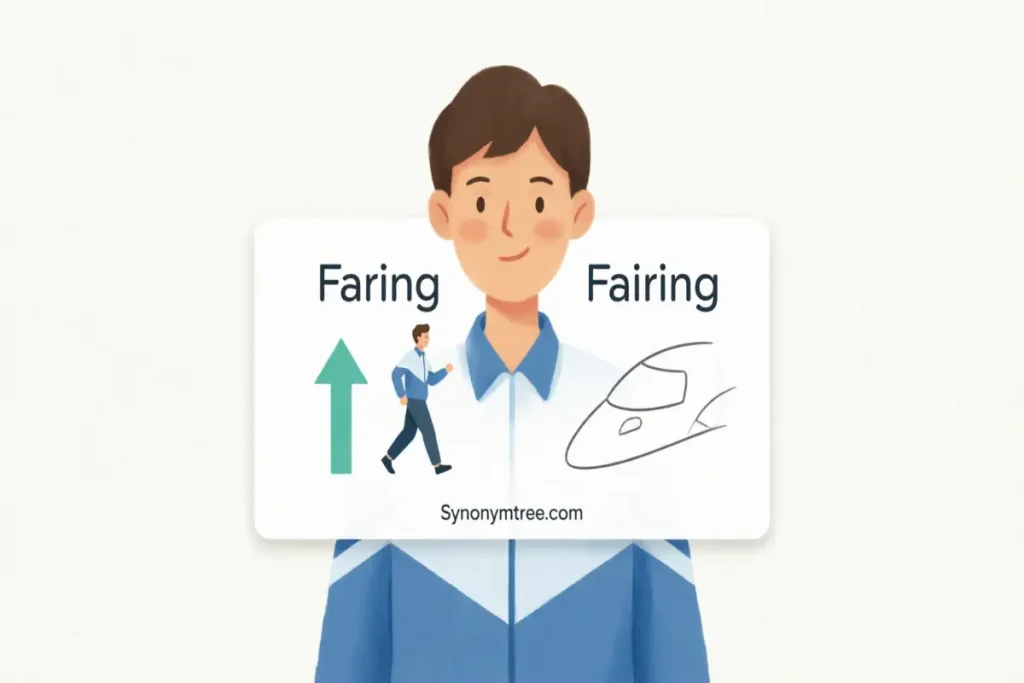
The difference between faring and fairing depends on what you want to say. Faring describes how someone is doing. Fairing usually names a physical covering used on a vehicle or machine.
Faring
Correct for asking how someone is doing.
Faring means managing, progressing, or getting along in a situation.
Example. How are you faring at your new job?
Fairing
Used for a physical covering.
A fairing is a shaped cover on a vehicle or machine. It can help reduce air resistance.
Example. The mechanic replaced the motorcycle fairing.
You can remember this difference with two simple ideas. Faring is about how things are going. Fairing is about a part of a machine.
Consider these sentences.
- How are you faring after the difficult week?
- The motorcycle’s front fairing is cracked.
- The company is faring well this year.
- The airplane’s fairing helps guide air around the structure.
In the first and third sentences, faring describes how someone or something is doing. In the second and fourth sentences, fairing refers to a physical structure.
Both words are real English words. Neither spelling is wrong in every situation. The mistake happens when you use fairing to ask about someone’s well being or progress.
Which Form Should You Use.
Use faring when you want to ask how someone is doing or describe how a person, group, or business is performing. Use fairing when you are talking about a shaped covering on a vehicle or another machine.
A quick way to choose is to replace the word with doing. If the sentence still makes sense, faring is probably the correct choice.
For example, “How are you faring at work?” means “How are you doing at work?” Both questions make sense.
Now try replacing fairing with doing in this sentence. “The motorcycle fairing is damaged.” The result, “The motorcycle doing is damaged,” makes no sense. That tells you that fairing is the correct word for the physical part.
Here are more examples to help you practice.
- How are you faring in your new role? Use faring because the question asks about your experience.
- The racing bike has a new fairing. Use fairing because the sentence names a physical part.
- How is your family faring after the move? Use faring because the question asks how the family is managing.
- The airplane’s fairing needs a closer inspection. Use fairing because the sentence refers to a structure.
- Our business is faring better this year. Use faring because the sentence describes the business’s performance.
Easy Real Life Sentences You Can Use.
The best way to learn the difference is to see how people use these words in everyday situations. You may hear faring in conversations about school, work, health, sports, or family life.
The word fairing is more likely to appear in discussions about motorcycles, airplanes, racing, or engineering. Most people will not need to use it in everyday conversation unless they work with vehicles or have an interest in machines.
Here are some natural sentences you can use.
- How are you faring at your new school?
- I hope you are faring well after your move.
- How is your team faring in the tournament?
- Our small business is faring better than last year.
- How are your parents faring these days?
- She is faring well in her new position.
- The mechanic repaired the damaged fairing on the motorcycle.
- The airplane’s fairing was checked before the flight.
Notice that the first six examples describe how people or groups are doing. The last two refer to physical parts.
You can use faring in a question, such as “How are you faring?” You can also use it in a statement, such as “She is faring well.” The word works in both forms.
The phrase faring well means doing well or managing successfully. The phrase faring poorly means having difficulty or not doing well.
For example, you could say, “The team is faring well this season.” You could also say, “The business is faring poorly because sales have dropped.” Both sentences use the word correctly.
If you are writing to a friend, a teacher, or a coworker, choose the form that matches your meaning. If you want to ask about someone’s life, write faring. If you are describing a vehicle part, write fairing.
Where This Expression Comes From.
The word faring comes from fare, an old English verb that has long been used to talk about how a person gets along or how something turns out. The word can describe someone’s condition, progress, or experience.
You may have heard the phrase “fare well.” It expresses the idea of doing well or having a good experience. Over time, the verb fare became part of expressions such as “How are you faring?” and “The company is faring well.”
The word fairing has a different history connected to shaping a surface. In engineering and vehicle design, a fairing helps create a smoother shape. On some vehicles, it covers parts and helps air flow around them.
Although the words sound alike, their meanings developed in different ways. One is linked to a person’s condition or progress. The other is linked to the shape of a physical object.
You do not need to remember their full history to use them correctly. Just connect faring with how things are going and fairing with a vehicle covering.
Now that you understand the basic spelling and meaning, you can look at how people use the expression in stories, daily conversations, and more formal writing.
How This Expression Is Understood in Culture and Stories.
The expression “How are you faring?” is a thoughtful way to ask someone how life is going. It often appears in stories, letters, news reports, and conversations about people facing a change or a challenge.
The phrase can sound a little more formal than “How are you doing?” In everyday American English, people often use the shorter question when greeting friends or coworkers. However, “How are you faring?” can be a good choice when you want to ask about someone’s progress or experience.
The word fairing has a different place in stories. It may appear in a story about motorcycle racing, airplane design, or a trip on a fast vehicle. In those settings, a fairing is a physical cover that helps shape the vehicle and guide air around it.
Here are a few examples of how the words might appear in different situations.
- A teacher asks a new student, “How are you faring in your classes?”
- A news report says that small businesses are faring better this year.
- A mechanic explains that a motorcycle fairing needs to be replaced.
- A story about an airplane describes damage to its outer fairing.
These examples show why the meaning of the sentence matters. Both words are correct in the right setting, but they cannot replace each other.
Biblical and Mythological Meaning.
The expression “How are you faring?” does not have a special biblical or mythological meaning. It is an ordinary English question about how someone is doing. Still, the older verb fare appears in traditional language about a person’s condition, journey, or final outcome.
In religious writing, people often ask for guidance, strength, or comfort during difficult times. They may talk about how they are getting along in life or how they are facing a challenge. The word faring can describe such experiences in general English, but the expression itself does not belong to one particular religious teaching.
For example, a person might say, “I am faring well because my family has supported me.” This sentence describes the person’s experience. It does not have a special religious meaning unless the speaker adds that meaning through the rest of the message.
The word fairing has no common biblical or mythological meaning either. Its main use today is connected to vehicle design and engineering. You are most likely to see it in writing about motorcycles, airplanes, racing, and machines.
It is best to keep these meanings separate. Faring describes how someone or something is doing. Fairing usually describes a physical cover. Neither word needs a religious or mythological explanation to be used correctly.
Symbolism Explained in Simple Words.
Symbolism means using something to suggest a bigger idea. A road can represent a journey through life. A light can represent hope. In the same way, the word faring can sometimes suggest a person’s progress through a difficult or changing time.
However, faring and fairing do not have fixed symbolic meanings that apply to every story. Their meaning depends on how the writer uses them. One describes a condition or result, while the other names a physical object.
What One Version Represents.
The word faring can suggest progress, struggle, recovery, or success. It helps readers understand how a person or group is handling a situation.
For example, a writer might say, “The family is faring well after the move.” This suggests that the family is adjusting to its new home and managing the changes.
Another writer might say, “The team is faring poorly this season.” This suggests that the team is struggling to win games or reach its goals.
The word itself does not promise success or failure. It simply describes how things are going.
What the Other Version Represents.
The word fairing refers to a shaped cover on a vehicle or machine. It does not usually represent a person’s feelings or progress.
In a story about motorcycle racing, a fairing might represent speed, design, or the technology used to improve a vehicle. These ideas come from the setting of the story, not from a special meaning built into the word.
For example, “The rider replaced the damaged fairing before the race” describes a repair. It does not describe how the rider is feeling or performing.
The difference is simple. Faring describes how things are going. Fairing names a physical part. Any deeper meaning depends on the larger story.
Related Words You Should Know.
Learning related words can help you understand faring and fairing more clearly. Some describe how a person is doing, while others refer to objects, shapes, or conditions.
1. Fare. This is the verb used in the expression “How are you faring?” It can mean doing or getting along in a situation.
2. Faring. This means managing, progressing, or doing in a certain way. For example, “She is faring well at school.”
3. Fared. This is the past form of fare. For example, “The team fared well in the final match.”
4. Fair. This word can mean just, equal, or reasonable. For example, “The teacher gave everyone a fair chance.”
5. Fairing. This is a shaped cover on a vehicle or machine. For example, “The mechanic repaired the motorcycle fairing.”
6. Doing. This is a common and simple word used to ask about someone’s condition. “How are you doing?” is a natural everyday greeting.
7. Managing. This means dealing with a task or situation. For example, “How are you managing your new schedule?”
8. Progressing. This means moving forward or making progress. For example, “The students are progressing well in class.”
9. Performing. This describes how well a person, team, or business is doing a task. For example, “The team is performing well this season.”
10. Condition. This describes the state someone or something is in. For example, “The mechanic checked the condition of the fairing.”
These words can help you explain the same general idea in different ways. If you want simple everyday English, doing and managing are often good choices. If you want to sound more formal or describe progress, faring may fit better.
How People Actually Use It in Daily English.
People use “How are you faring?” when they want to know how someone is managing a situation. The question is useful when a person has started a new job, moved to a new place, faced a challenge, or experienced a big change.
It can sound more thoughtful than a quick greeting. For example, asking “How are you faring after your move?” shows that you remember the move and want to know how the person is adjusting.
Here are examples of how to use the expression naturally.
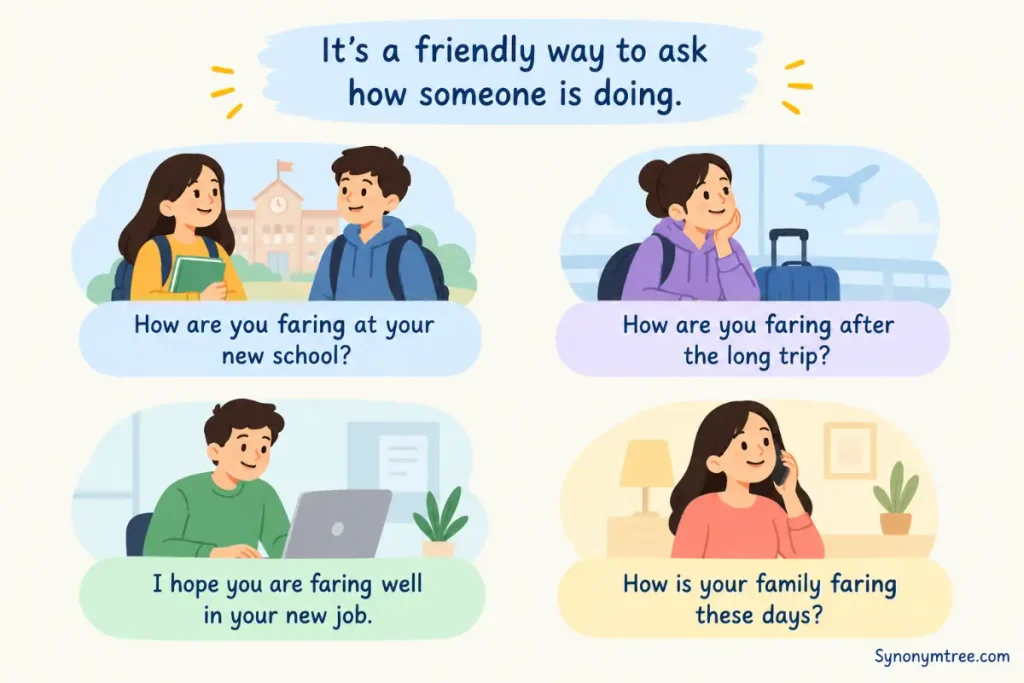
1. How are you faring at your new school?
2. How are you faring after the long trip?
3. I hope you are faring well in your new job.
4. How is your family faring these days?
5. The students are faring well in their reading lessons.
6. Our business is faring better than it did last year.
7. How are you faring with all your new duties?
8. The team is faring poorly because several players are injured.
9. I wanted to check in and see how you are faring.
Notice that faring can be used in both questions and statements. In a question, it asks how someone is doing. In a statement, it describes the person’s or group’s progress.Common Mistakes People Make.
One common mistake is writing “How are you fairing?” when asking someone how life is going. The reader will probably understand the question, but the spelling is incorrect for that meaning.
Final Teacher Explanation.
Imagine we are back in the classroom. I write two words on the board: faring and fairing. They sound the same, but I ask you to think about their meanings before choosing one.
First, consider the question, “How are you faring?” It asks how you are doing or how you are managing life. You might answer, “I am faring well at my new school.” The word describes your experience.
Next, consider the sentence, “The motorcycle fairing is damaged.” This sentence is about a physical cover on a motorcycle. The word fairing names that part.
Both words are real. The right choice depends on the meaning you want to express.
You can use a simple memory trick. Think of faring as being about how things are going. Think of fairing as a part you might see on a motorcycle or airplane.
If the word still feels confusing, replace it with a simpler phrase. “How are you faring?” can become “How are you doing?” If that is the meaning you want, use faring.
You do not need to worry about making every sentence sound formal. Clear language is often the best choice. Use the word that helps your reader understand you.
Final Answer Quick Recap.
How are you faring? is the correct expression when you want to ask how someone is doing.
Fairing refers to a shaped cover on a vehicle or machine. Both words are correct in their own settings, but they have different meanings.
Conclusion.
Choosing between faring and fairing becomes easy once you understand what each word means. Faring describes how someone or something is doing. Fairing usually names a physical cover used on a vehicle or machine.
The next time you write a message asking about a friend’s new job or a family member’s recovery, use “How are you faring?” If you are writing about a motorcycle or airplane part, fairing is the correct word.
Keep the difference in mind and check the meaning of your sentence before choosing the spelling. A small detail like this can make your English clearer and more accurate.
Frequently Asked Questions (FAQs).
Is it how are you faring or fairing?
“How are you faring?” is correct when asking how someone is doing. Fairing refers to a physical cover on a vehicle or machine.
What does how are you faring mean in simple English?
It means “How are you doing?” or “How are you managing?” It often asks about someone’s progress or experience.
Why do people confuse faring and fairing?
The words sound the same in most forms of English. Their meanings and spellings are different, so you need to use the meaning of the sentence to choose correctly.
Is faring a real word?
Yes. Faring is the form of the verb fare used to describe how someone or something is doing.
Is fairing always incorrect?
No. Fairing is correct when you mean a shaped cover on a vehicle or machine. It is incorrect when you use it to ask how someone is doing.
Is how are you faring formal or informal?
It is correct English but can sound more formal or thoughtful than “How are you doing?” It often fits conversations about changes or challenges.
Can I write I hope you are faring well?
Yes. This is correct and polite. It means you hope the person is doing well or managing a situation successfully.
What is another way to say how are you faring?
You can say “How are you doing?” or “How are things going?” Both are common and natural alternatives.

2 thoughts on “How Are You Faring or Fairing The Complete Lesson 2026”